

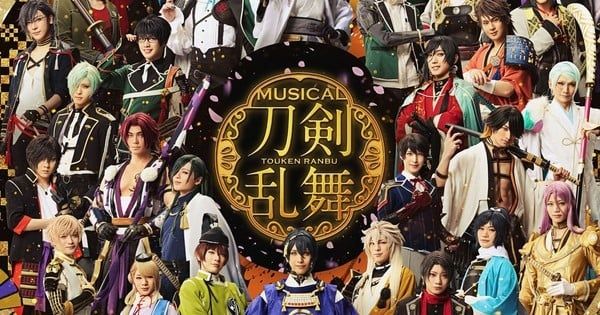
Final Curtain: Touken Ranbu Musical Series to Conclude in 2027 After Decade-Long Run

📷 Image source: animenewsnetwork.com
The Final Performance
A Decade of Stage Swords Comes to a Close
The stage lights will dim for the final time on the Touken Ranbu musicals in December 2027. According to an announcement on the official website, the long-running stage adaptation of the popular multimedia franchise will conclude its run after over a decade of performances. The production committee confirmed that the musical series, which brings historical swords personified as beautiful warriors to life, will hold its last performances that month.
This news, reported by animenewsnetwork.com on December 2, 2025, marks the planned end of a significant pillar of the franchise's live entertainment expansion. While specific details about the final productions or a potential commemorative tour were not disclosed, the announcement signals a deliberate conclusion rather than a sudden cancellation. The decision provides a three-year runway for the production to craft a finale for its dedicated fanbase.
From Browser to Broadway
The Origins of a Stage Phenomenon
The Touken Ranbu musicals, known as "Touken Ranbu: The Musical" in Japan, began their journey in 2016. They are an adaptation of the "Touken Ranbu -ONLINE-" browser and smartphone game launched by DMM Games and Nitroplus in 2015. The game's core premise involves players taking the role of a "Saniwa," a sage who awakens historical Japanese swords as male warriors, known as "Touken Danshi," to defend history from time-altering forces.
The musicals were a key part of a massive multimedia push that included anime series, films, and stage plays. They distinguished themselves by focusing on musical theater storytelling, featuring original songs and choreography that expanded the characters' narratives beyond their video game origins. The stage productions became renowned for their elaborate costumes, stylized fight choreography, and the actors' embodiment of these beloved, historically-inspired characters.
A Timeline of Steel and Song
Key Milestones in the Musical Series
The musical franchise's history can be charted through its major productions. The first musical, simply titled "Touken Ranbu: The Musical," premiered in 2016, introducing audiences to the concept of the Honmaru citadel and its sword warriors on stage. This was followed by successive productions like "Touken Ranbu: The Musical -Mihotose no Komoriuta-" and "Touken Ranbu: The Musical -Kazabana no Shou-" which continued to introduce new sword characters and deepen existing storylines.
A significant evolution came with the "Touken Ranbu: The Musical -Atsukashiyama Ibun-" series, which presented more complex, multi-part narratives. The productions were not confined to Japan; several shows had successful runs in other Asian cities, including Shanghai and Taipei, demonstrating the franchise's international appeal. The timeline now points toward a final act, with all future productions leading to the December 2027 conclusion.
The Engine of a Franchise
How the Musicals Expanded the Touken Ranbu World
The musicals operated as a crucial expansion point for the Touken Ranbu universe. While the game provided character profiles and basic lore, the stage was where these warriors were given emotional depth, interpersonal conflicts, and narrative arcs that spanned multiple performances. The productions often featured original storylines that, while consistent with the game's setting, allowed for greater dramatic freedom and character development not possible in the game's format.
From a production standpoint, the musicals served as a talent incubator. Many actors who portrayed the sword warriors gained significant fame through their roles, which often required training in swordplay, dance, and singing. The stage productions also generated substantial secondary revenue through merchandise like live-viewing tickets for cinema broadcasts, original soundtracks, and performance Blu-rays, creating a robust economic ecosystem around each show.
Cultural Impact and Fandom
Beyond the Stage
The impact of the Touken Ranbu musicals extended far beyond the theater walls. They cultivated a passionate, predominantly female fanbase that engaged deeply with the material. Fans, known collectively as "Saniwa," would often attend multiple performances, participate in fan gatherings, and create extensive fan art and fiction based on the stage interpretations of the characters. The musicals made historical swords—many of which are designated national treasures in Japan—recognizable pop culture icons.
This fandom had tangible economic effects, contributing to a tourism phenomenon known as "pilgrimages" or "seichi junrei." Fans would visit the real-world museums and shrines that house the actual swords featured in the musicals, such as the Tokyo National Museum or the Kushibiki Hachimangu Shrine. The musicals, therefore, acted as a bridge between contemporary 2.5-dimensional stage culture and Japan's historical heritage, fostering a unique form of cultural appreciation.
The 2.5-Dimensional Theater Landscape
Touken Ranbu's Place in a Crowded Field
The Touken Ranbu musicals exist within the thriving Japanese genre of "2.5-dimensional musicals." This term refers to stage adaptations of two-dimensional source material like manga, anime, and video games. The genre includes massively popular franchises like "The Prince of Tennis," "Sailor Moon," and "My Hero Academia." Within this competitive landscape, Touken Ranbu carved out a distinct niche with its historical aesthetic, all-male cast of warrior characters, and its integration of traditional Japanese motifs with modern pop music.
The announcement of its conclusion comes at a time when the 2.5D stage market is both saturated and evolving. New franchises constantly emerge, and audience attention is fragmented. The planned finale for Touken Ranbu may reflect a strategic choice to conclude the story on a high note rather than risk diminishing returns. It also opens a space in the market for other historical or game-based franchises to attempt to capture its audience.
Comparative Finales
How Other Long-Running Stage Adaptations Have Ended
The conclusion of a long-running stage series is not without precedent in Japan. Other major 2.5D musical franchises have navigated similar transitions. For instance, the "Musical: The Prince of Tennis" series, which began in 2003, has undergone several cast renewals and shifts in production style rather than a single declared endpoint. This approach focuses on perpetual renewal. In contrast, series based on completed manga narratives, like "Naruto" or "Rurouni Kenshin," have a defined story endpoint to adapt.
Touken Ranbu's situation is unique because its source game is ongoing and continuously adds new characters. The musicals, therefore, are concluding their own original narrative cycle independent of the game's continuity. This strategy allows for a curated and complete theatrical experience for the audience, providing narrative closure that the open-ended game cannot. It sets a precedent for how live adaptations of live-service games might manage their lifecycles.
The Business of Final Bows
Economic and Logistical Implications
Announcing a finale three years in advance is a significant business decision. It allows the production committee to market the remaining years as a "final chapter," potentially driving increased ticket sales and merchandise revenue from fans eager to experience the last performances. It provides a clear timeline for the creative team, including writers, composers, and directors, to craft a culminating story arc that satisfies long-time viewers.
Logistically, it gives the large rotating cast of actors—who often balance these roles with other television, film, or stage work—ample notice to plan their commitments. It also allows for the possibility of a final, grand-scale production or a farewell tour. However, the announcement also carries risk, as it could potentially dampen interest in new storylines if audiences perceive the series as already being in its epilogue phase.
Unanswered Questions and Future Speculation
What the Announcement Leaves Unsaid
The official announcement, as reported, leaves several key questions unanswered. The specific narrative reason for the conclusion was not provided. It is unclear if the final story will involve a definitive plot resolution, such as the end of the time-traveling conflicts, or simply represent the end of the stage adaptation's particular telling. Furthermore, the fate of the intellectual property for future stage use is unknown; the committee did not specify if the conclusion is permanent or if a reboot or new adaptation could emerge after a hiatus.
There is also no information regarding whether the final performances will attempt to bring back actors from past productions for a reunion, a common practice in long-running stage series. The potential for an archival project, such as a complete box set of recordings or a documentary about the musicals' history, remains unconfirmed. These uncertainties will likely be points of discussion and anticipation within the fandom in the coming years.
Legacy of the Blade
How the Musicals Will Be Remembered
The legacy of the Touken Ranbu musicals will be multifaceted. Artistically, they will be remembered for their successful translation of game mechanics and character designs into compelling live theater. They demonstrated that a video game about collecting characters could be transformed into a narrative-driven musical with emotional stakes. The productions set a high standard for costume and set design within the 2.5D genre, meticulously recreating the elaborate armor and kimono seen in the original artwork.
Culturally, the musicals' lasting impact may be their role in popularizing Japanese sword culture and history for a new generation. By giving names, faces, and personalities to historical artifacts, they created an accessible entry point into a subject often considered academic. The franchise's model of intertwining pop culture with heritage tourism provides a case study for other nations seeking to engage younger audiences with their own history. The final curtain in 2027 will not erase a decade of influence on stagecraft, fandom culture, and cultural outreach.
Perspektif Pembaca
The conclusion of the Touken Ranbu musicals marks the end of an era for a specific corner of fan culture. For those who have followed the series, whether from the front row or from afar, its finale is more than just a production schedule change.
What do you believe is the most significant impact a stage adaptation can have on its original source material? Can a live-action version fundamentally change how audiences perceive characters from a game or anime, and does this theatrical legacy continue to influence engagement with the core franchise long after the final bow?
Share your perspective on how live performances, like these musicals, create a different kind of connection compared to digital or animated media. Have you ever had your appreciation for a fictional world deepened by its stage adaptation?
#ToukenRanbu #Musical #StagePlay #Finale #2027


