

Hideaki Anno's Cultural Stand: Why Global Anime Fans Must Embrace Japanese Storytelling

📷 Image source: static.animecorner.me
A Director's Decisive Declaration
Anno Challenges the Global Audience
In a statement that has ignited widespread discussion within the international anime community, acclaimed director Hideaki Anno has articulated a firm stance on cultural exchange in entertainment. According to a report from animecorner.me published on December 26, 2025, Anno argues that it is overseas audiences, not Japanese creators, who should adapt to the nuances of Japanese storytelling. This perspective directly challenges a prevailing trend in global media where content is frequently altered to suit perceived international tastes.
The director, best known for seminal works like the 'Neon Genesis Evangelion' series and the recent 'Shin Godzilla' and 'Shin Ultraman' films, made these comments in a broader discussion about the creative process. His viewpoint positions authentic cultural expression as a non-negotiable core of his artistic output. For Anno, the responsibility for bridging the comprehension gap lies not with the storyteller diluting their vision but with the viewer engaging with the work on its own terms.
Deconstructing the Core Argument
Authenticity Over Accessibility?
Anno's central thesis, as reported, rejects the notion that Japanese narratives must be simplified or westernized for global consumption. He implies that the unique structural and emotional cadences found in Japanese storytelling—such as indirect conflict resolution, emphasis on collective harmony, or specific cultural symbolism—are integral features, not flaws to be corrected. This stance advocates for a form of active viewership where audiences undertake the work of understanding a different cultural lens.
The director's position raises immediate questions about the balance between artistic integrity and commercial reach. In an era where streaming platforms aggressively compete for global subscribers, there is significant pressure to produce universally 'accessible' content. Anno's comments suggest a prioritization of the former, positing that the genuine article, with all its cultural specificity, holds more value than a homogenized version designed for the lowest common denominator.
The Anno Legacy: A Foundation for the Stance
A Career Built on Uncompromising Vision
To understand the weight of Anno's statement, one must look at his decades-long career, which serves as a living testament to his philosophy. From the psychologically dense and thematically ambitious 'Evangelion,' which deconstructed the mecha genre, to his recent 'Shin' series that recontextualizes Japanese pop culture icons, his work has never shied away from complexity. These projects are deeply interwoven with Japanese post-war anxiety, religious iconography, and societal structures, making them challenging even for some domestic audiences.
His success, both critical and commercial, arguably provides the credibility for his current argument. Anno has demonstrated that deeply personal and culturally specific stories can achieve legendary status and foster passionate global fandoms. The very fans who dissect every frame of 'Evangelion' are engaging in the exact type of adaptive understanding he describes, seeking out explanations for the series' countless references to Kabuki theater, Judeo-Christian symbolism, and Japanese psychology.
Global Reception: Fandom and Friction
How International Audiences Have Historically Engaged
The global anime fandom has a long history of adaptation, but largely on the viewer's side. Before widespread simulcasts and official translations, international fans engaged in 'fansubbing'—painstakingly translating and subtitling shows themselves, often including detailed notes explaining cultural puns, historical references, and social customs. This grassroots effort was a pure form of the audience adaptation Anno champions, driven by a desire to access the original work in its full context.
However, the modern streaming ecosystem operates differently. Algorithms recommend content based on broad preferences, and the economic incentive is to minimize 'friction' for new viewers. This environment can be at odds with Anno's ideal. When a platform acquires a series, decisions about translation, what to note in on-screen captions, and even what titles to license can subtly steer the viewing experience toward a more generalized, less culturally particular interpretation.
The Industry Counterpoint: The Allure of Localization
Business Realities and Cultural Bridges
The practice of localization—adapting content for a regional market—exists for pragmatic reasons. Proponents argue that effective localization builds a bridge, making the initial entry point easier for international audiences. This can involve changing food names to more recognizable equivalents, adapting jokes, or slightly altering character dynamics to better resonate with local sensibilities. The goal is often to preserve the story's emotional core while smoothing over cultural references that would otherwise be complete mysteries.
Critics of strict adherence to Anno's view might ask where the line is. Does preserving authenticity mean leaving a pun about a specific Japanese holiday completely untranslated, potentially breaking a scene's comedic timing? Industry veterans might argue that some adaptive work by distributors is a necessary and respectful part of introducing any culture's stories to another, acting as a curator rather than a censor. The debate hinges on whether this curation enhances understanding or inadvertently dilutes the creator's specific voice.
Case Study: The 'Evangelion' Phenomenon
A Blueprint for Demanding Viewership
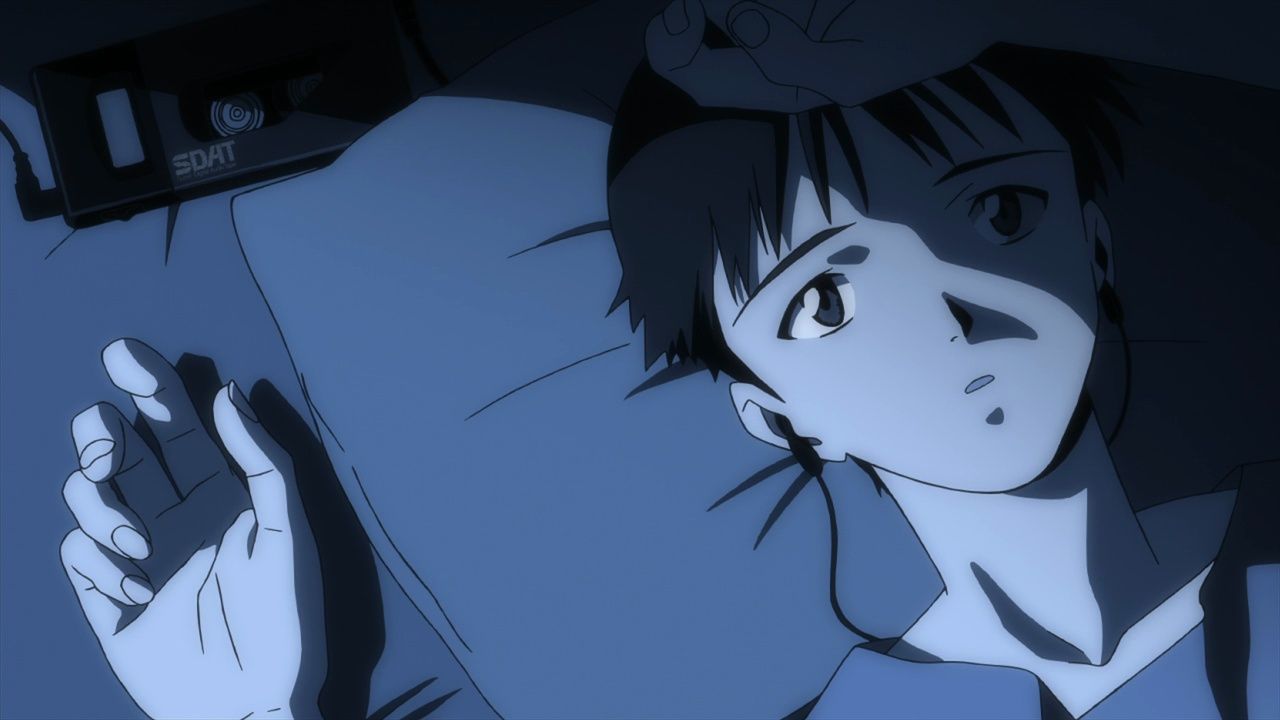
'Neon Genesis Evangelion' stands as the perfect case study for Anno's argument. When it reached Western audiences in the late 1990s and early 2000s, it was a cultural shock. Its narrative was non-linear, its characters were deeply flawed and psychologically traumatized, and its ending was famously abstract. There was no attempt to conform to Western storytelling norms of clear-cut heroes, explicit exposition, and conclusive resolutions. Yet, it became a global phenomenon.
Its success was not in spite of its difficulty but because of it. The series demanded engagement. Fans formed clubs, wrote exhaustive online analyses, and debated interpretations for years. They sought out information about the Japanese references to understand the show better. In doing so, they were not just consuming a cartoon; they were inadvertently studying aspects of Japanese culture, philosophy, and animation history. This organic, viewer-driven process of adaptation and deep dive is the model Anno seems to be advocating for in his statement.
Beyond Anime: A Broader Cultural Debate
Parallels in Global Cinema and Literature
Anno's stance echoes a wider debate in global arts. Acclaimed international filmmakers have long grappled with pressure to make their work more 'accessible' for the lucrative American market, sometimes resulting in recuts or altered endings. Similarly, translated literature faces constant questions about how faithfully to render idioms and cultural concepts. The purist argument holds that true appreciation of any culture requires accepting some degree of unfamiliarity and doing the work to overcome it.
This debate touches on issues of cultural power dynamics. There is a historical pattern of dominant entertainment industries, particularly Hollywood, remaking foreign films and series into more palatable local versions. Anno's position can be seen as a pushback against this unidirectional flow of adaptation. He is asserting the value and completeness of the original Japanese narrative as a finished product, worthy of engagement on its own terms rather than as raw material for reinterpretation.
The Role of Streaming Platforms as New Gatekeepers
Curators or Compromisers?
Today's primary gatekeepers for international anime distribution are global streaming platforms. Their policies have a monumental impact on what audiences see and how they see it. These platforms must decide between a 'purist' approach (offering a direct translation with minimal explanatory text) and a 'localized' approach (employing adaptive scripts and cultural notes). Their choices are influenced by data on viewer completion rates and engagement metrics, which may favor less challenging content.
Anno's declaration is, in part, a message to these corporate intermediaries. It encourages them to trust the audience's capacity for growth and to value artistic authenticity as a unique selling point. It suggests that there is a substantial market for content that treats viewers as intelligent and curious individuals willing to meet a story halfway. This could influence future licensing decisions, prompting platforms to market certain titles specifically for their authentic, unadulterated cultural perspective.
Potential Risks and Limitations of the Stance
The Threat of Elitism and Reduced Reach
While principled, Anno's viewpoint is not without potential drawbacks. A strict interpretation could be perceived as cultural elitism, suggesting that only audiences willing to undertake academic-level engagement are 'worthy' of appreciating the work. This could alienate casual viewers who seek entertainment rather than an educational experience, potentially shrinking the audience for niche or experimental anime. It risks creating a high barrier to entry that might stifle the growth of the medium internationally.
Furthermore, the argument somewhat idealizes the audience's ability to access contextual information. Not every viewer has the time, resources, or awareness to research the cultural underpinnings of a show. Without any guiding framework, crucial thematic elements could be entirely missed, leading to misinterpretation or simple disinterest. The challenge, then, is finding a middle ground where the work remains authentic but the industry provides voluntary, non-intrusive tools—like companion guides or optional cultural commentary tracks—to facilitate understanding without mandating it.
The Future of Cross-Cultural Storytelling
A Call for Active Cultural Exchange
Hideaki Anno's comments, as reported by animecorner.me, ultimately frame the consumption of international media as an active, two-way street. The ideal outcome is not a passive viewer receiving a predigested story but an engaged participant in a cross-cultural exchange. This model enriches the viewer's world understanding and respects the creator's cultural context. It moves beyond mere consumption to a form of dialogue, albeit one mediated through a finished artistic work.
This perspective may influence a new generation of creators, both in Japan and abroad. It empowers them to draw deeply from their own cultural wells without preemptive compromise. For global audiences, it serves as an invitation—and a challenge—to expand their horizons. The long-term impact could be a media landscape less dominated by a single homogenized narrative style and more vibrant with distinct, authentic voices from around the world, understood through effort and empathy.
Perspektif Pembaca
The conversation around cultural authenticity in media is evolving with global connectivity. Hideaki Anno's perspective places significant agency on you, the viewer.
We want to hear from you. Based on your own experiences watching anime or other international media, what is your perspective? Do you find yourself seeking out cultural context to better understand a story, or do you believe distributors have a responsibility to adapt content for clarity? Share your viewpoint on where the responsibility for bridging the cultural gap should primarily lie.
#HideakiAnno #JapaneseStorytelling #AnimeCulture #CulturalIntegrity #Evangelion


