

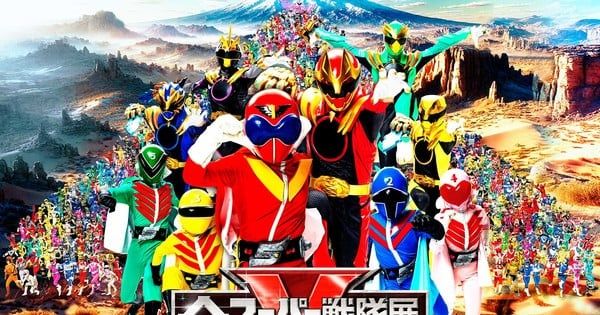
The Final Transformation: Why Toei is Ending Super Sentai's 49-Year Television Legacy

📷 Image source: animenewsnetwork.com
An Era Concludes
The Announcement That Shocked a Fandom
On December 1, 2025, Toei Company delivered news that resonated through the global entertainment industry: the Super Sentai television series, a cornerstone of Japanese pop culture for nearly half a century, will conclude its broadcast run. According to the report from animenewsnetwork.com, the final episode is scheduled to air in February 2026, marking the end of a continuous, 49-year streak of new television seasons.
The decision was explained by Toei's head producer, who cited a fundamental shift in the company's strategic vision for its iconic superhero franchise. This move does not signify the death of Super Sentai but rather a profound metamorphosis in how its stories will be told and consumed by audiences worldwide. The announcement has sparked intense discussion among long-time fans and industry observers about the future of tokusatsu, the live-action special effects genre the series helped define.
The Producer's Rationale
Beyond the Weekly Broadcast Model
In the statement covered by animenewsnetwork.com, Toei's head producer framed the end not as a cancellation, but as a necessary evolution. The core reasoning centers on the limitations of the traditional, year-long television production cycle. This model, while successful for decades, is now seen as restrictive for creative storytelling and character development, forcing narratives to fit a rigid 45-50 episode structure regardless of the plot's natural arc.
Furthermore, the producer highlighted the changing media landscape. The dominance of weekly linear television has been eroded by streaming platforms and on-demand viewing, which favor different content formats and release strategies. Toei's vision is to reimagine Super Sentai for this new environment, freeing it from the constraints of a Saturday morning timeslot to explore varied formats like limited series, films, and direct-to-streaming productions that can have global simultaneous releases.
A Legacy in Numbers
The Scale of a Half-Century Journey
The sheer volume of content produced under the Super Sentai banner is staggering. Since its inception in 1975 with *Himitsu Sentai Gorenger*, the franchise has spawned 49 distinct teams, each with its own theme, color-coded heroes, giant combining robots (known as mecha), and villains. This translates to over 2,200 individual television episodes, a feat of continuous production unmatched by most live-action series globally.
Beyond television, the franchise's economic and cultural footprint is immense. It has driven a massive toy and merchandise industry for generations, pioneered special effects techniques, and served as the direct source material for the internationally popular *Power Rangers* adaptation. The end of the weekly TV series represents the closing of the primary engine that fueled this expansive multimedia ecosystem for five decades.
The International Ripple Effect
Implications for Power Rangers and Global Fans
The most immediate international impact is on the *Power Rangers* franchise. For over 30 years, Saban Brands and later Hasbro have adapted Super Sentai footage into the American series. The end of new Sentai television seasons removes the primary source of fight scenes, monster suits, and mecha footage that Power Rangers has relied upon. This forces a fundamental reinvention for Power Rangers, potentially leading to fully original productions.
For global fans who watch Sentai directly with subtitles, the change is equally significant. The consistent annual rhythm of a new team to discover each winter will cease. Future projects may be less predictable in their release schedule and format, moving from a reliable staple to event-based storytelling. This shifts the fan experience from seasonal anticipation to awaiting specific, potentially higher-budget announcements.
Creative Liberation vs. Cultural Constant
Analyzing the Trade-Offs
The producer's explanation points to clear creative advantages. Without the need to produce 45 minutes of content every week for a year, writers and directors can craft tighter, more focused narratives. They can experiment with genres, tones, and story lengths that were impossible under the old model, perhaps telling a complete story in a 10-episode season or a trilogy of films. This could attract new talent and audiences who were previously daunted by the commitment of a long-running series.
However, the loss is cultural. Super Sentai was a reliable ritual, a shared calendar event that introduced children to themes of teamwork, courage, and justice. Its conclusion severs a unique thread connecting generations. The constant presence of a new Sentai team was a cultural touchstone; its absence creates a vacuum. The risk is that without this steady drumbeat, the franchise's mainstream visibility and its role as a gateway to tokusatsu could diminish over time.
The Historical Context
Sentai's Role in Post-War Japanese Media
To fully understand the weight of this decision, one must consider Super Sentai's origins. It emerged in the mid-1970s, a period of economic growth and technological optimism in Japan. Alongside sister series like *Kamen Rider* and *Ultraman*, Sentai used superhero allegories to process national experiences, often featuring teams that mirrored Japan's own post-war reconstruction ethos of collective effort. The shows were laboratories for practical special effects, model work, and suit-acting (a performance art where actors portray monsters and heroes in costumes).
The franchise evolved with the times, reflecting contemporary trends in video games, mythology, and fantasy. It survived the transition from the Showa to the Heisei and Reiwa eras, adapting its themes while maintaining its core formula. Ending the television series now can be seen as the franchise's most dramatic adaptation yet, responding to the digital Reiwa era's demand for flexible, global, and platform-agnostic content.
The Business Mechanics
How the Franchise Economics Are Changing
The traditional Super Sentai business model was a synergistic circle. The TV show served as a 50-week-long commercial for toy sales, primarily the mecha and role-play items released by Bandai. Ratings were important, but the ultimate metric was merchandise revenue. The new strategy suggests this model is under strain. The high cost of producing weekly episodic television may no longer provide a sufficient return on investment in a fragmented media market.
Future projects will likely be financed and distributed differently. Co-productions with global streamers, theatrical film series, and premium video-on-demand releases become viable paths. These formats can command larger budgets per minute of content, potentially improving production values. The merchandise cycle would then align with these event releases, creating concentrated waves of hype and sales rather than a year-long trickle.
Fan Reactions and Uncertainties
What the Announcement Did Not Reveal
The report from animenewsnetwork.com captures the official rationale but leaves several key questions unanswered. The producer did not specify the exact format or timeline for Super Sentai's return after February 2026. Will the hiatus last months or years? There is also no confirmation on the status of the franchise's extensive library. Will classic series find new homes on global streaming services, introducing them to wider audiences?
Furthermore, the human impact of this decision is significant. The end of the yearly series affects a vast network of actors, suit performers, stunt teams, writers, directors, and crew who have built careers on this production line. The shift to project-based work creates less stable employment. The announcement also does not address the future of the annual Super Sentai stage shows at Toei's Kyoto theme park, which are a major tourist attraction.
A Comparative View
How Other Long-Running Franchises Have Evolved
Toei's move is not without precedent in global entertainment. Other iconic franchises have successfully transitioned from weekly serialization to new models. For instance, the British series *Doctor Who* went off the air from 1989 to 2005, returning as a modern, seasonal drama with higher production values and global appeal. Similarly, *Star Trek* moved from perennial television series to a film franchise and later to a hub of streaming content on Paramount+.
The key lesson from these examples is that a period of absence can renew audience interest and allow for creative reinvention. However, the risk is losing cultural momentum. The success of Super Sentai's next phase will depend on Toei's ability to maintain fan engagement during the transition and to deliver new content that honors the legacy while feeling fresh and necessary, not merely nostalgic.
The Final Mission and Legacy
What the Last Series Represents
The final television series, which will air into early 2026, now carries a profound symbolic weight. It is no longer just another annual entry but the capstone to a 49-year television tradition. Expectations from fans will be immense, hoping for a narrative that pays homage to the franchise's history while providing a satisfying conclusion to this specific format. The pressure on the production team is unique, tasked with delivering a celebratory finale without it feeling like a funeral.
The ultimate legacy of Super Sentai's TV run is its demonstration of enduring, formulaic storytelling that championed positivity. It proved that stories about colorful heroes fighting monsters could be endlessly repackaged and reimagined, bringing joy to children across generations. Its visual language—the transformation sequences, the combined megazord, the explosive finishers—has become a universal shorthand for superhero action, influencing creators far beyond Japan's borders.
Perspektif Pembaca
The end of Super Sentai's weekly television era is more than a programming change; it's a cultural moment that invites reflection. For many, these shows were a childhood constant, a first introduction to serialized storytelling and heroic ideals.
We want to hear your perspective. Did you grow up with Super Sentai, Power Rangers, or a similar localized adaptation? How do you think the shift from annual TV series to event-based projects will change your connection to the franchise and its community? Share your experiences and thoughts on this historic transition.
#SuperSentai #Toei #Tokusatsu #PowerRangers #TVLegacy


