

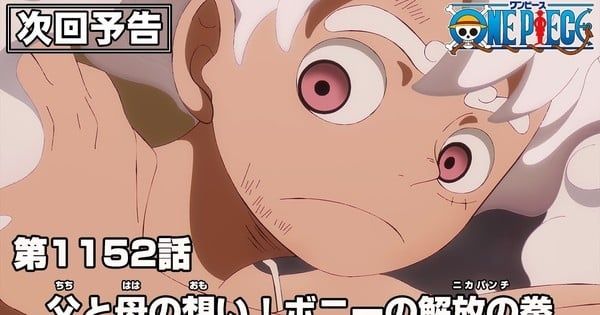
Voice of the First Straw Hat: Urara Takano Returns to One Piece After 27 Years

📷 Image source: animenewsnetwork.com
A Voice from the Archives Returns
The Original Luffy Reclaims a Role
In a casting decision that bridges nearly three decades of anime history, voice actress Urara Takano has rejoined the cast of the One Piece anime. According to animenewsnetwork.com, Takano will voice a character in an upcoming episode, marking her return to the franchise where she originated the role of Monkey D. Luffy. This news, reported on 2025-12-01T17:11:29+00:00, connects the current sprawling anime directly to its experimental beginnings.
Takano was the voice of Luffy in a 1998 special presentation, a pilot project created before the long-running weekly television series began in 1999. That special, which adapted the Romance Dawn one-shot manga, served as the first animated test for Eiichiro Oda's world. The role was subsequently recast with Mayumi Tanaka for the official TV series, where she has voiced the iconic pirate captain for over 1,000 episodes.
The 1998 Prototype: One Piece's First Animated Test
Before the Thousand-Episode Voyage
The 1998 special holds a unique place in One Piece lore as a proof-of-concept. Produced by Production I.G, this roughly 30-minute film was not a broadcast television episode but a special presentation. Its purpose was to gauge interest and demonstrate the viability of animating Oda's distinctive art style and adventurous narrative for a wider audience. The success of this pilot undoubtedly contributed to the greenlighting of the full series.
This early version featured character designs and a tone slightly different from what fans know today. For instance, Luffy's iconic straw hat had a wider brim. The special condensed the initial meeting between Luffy and Coby, as well as their confrontation with the pirate Alvida. For Urara Takano, this project was her sole connection to the franchise for 27 years, a brief but foundational contribution to what would become a global phenomenon.
The Significance of Legacy Casting
Honoring Anime History
The decision to cast Takano in a new role is a meaningful nod to the franchise's history. In the world of long-running anime, original voice actors from pilot films or early OVAs (Original Video Animations) rarely return to the main production decades later, especially when their character was famously recast. This move by the One Piece production committee demonstrates a conscious effort to acknowledge and integrate its own historical roots into the current narrative.
Such casting is more than a mere Easter egg for dedicated fans. It serves as a living bridge between generations of the production. It acknowledges that the monumental success of the weekly series, which began in 1999, was built upon the creative risks and work of earlier experiments. For the staff and cast working on the anime today, it is a reminder of the long journey that started with that initial, uncertain test.
Who is Urara Takano?
A Career Beyond the Straw Hat
While known to hardcore One Piece historians as the first Luffy, Urara Takano has maintained a career in voice acting and narration. Her portfolio includes roles in various anime and video games over the years. However, the scale and longevity of the One Piece franchise are unparalleled, making her brief early involvement a unique footnote in her professional history. The news of her return has likely introduced her pioneering role to a new segment of the massive global fanbase.
The specific character Takano will voice in the upcoming episode has not been disclosed by the source material from animenewsnetwork.com. This secrecy is common in anime production to preserve narrative surprises. What is clear is that her participation is a deliberate callback, creating a special moment for long-time followers who are aware of the 1998 special's existence and its place in the franchise's evolution.
The Mechanics of a Long-Running Production
How a Series Maintains Continuity Over Decades
Sustaining a weekly anime adaptation for over 25 years is a colossal logistical and creative endeavor. The production of One Piece involves multiple studios, hundreds of staff members across key animation, in-between animation, and background art, and a core cast of voice actors who have aged alongside their characters. Integrating a legacy actor like Takano requires coordination with the current sound director, script writers, and series director to find a suitable role that fits both the story and her vocal qualities.
This process highlights how modern anime productions can manage their extensive histories. Digital archives preserve past episodes and specials, allowing current creators to study earlier iterations. Furthermore, production notes and veteran staff members often carry institutional knowledge. Casting a voice actor from a pilot project is a tangible application of this historical awareness, weaving the past directly into the present fabric of the show's production narrative.
Fan Reaction and Historical Awareness
A Niche Piece of Trivia Becomes Mainstream News
For a significant portion of the international One Piece audience, the 1998 special and Urara Takano's role are obscure pieces of trivia. The anime's fandom is vast and layered, with many viewers who began their journey hundreds or even thousands of episodes in. The announcement serves as an educational moment, prompting fans to seek out the historical special and understand the franchise's development before it became a staple of Japanese television.
This news also sparks discussions about alternate histories. Fans may speculate on how the anime would have differed if Takano had continued as Luffy, though such speculation is purely hypothetical. The dominant reaction is one of appreciation and curiosity. It reinforces the community's value of deep lore, not just within the story of the Grand Line, but also in the real-world history of the anime's production, celebrating all contributors to the final product.
Comparative Context: Other Franchise Pilots and Returns
One Piece in a Broader Industry Pattern
The phenomenon of pilot films or early OVAs differing from their subsequent series is not unique to One Piece. Other major franchises like Naruto and Hunter x Hunter also had pilot animations that featured different voice casts, art styles, or condensed storylines before their definitive television adaptations launched. However, it is exceptionally rare for a voice actor from such a pilot to return to the main series after the recast role has become globally iconic.
This action by the One Piece committee sets a distinctive precedent. It shows a level of reverence for its own origins that goes beyond simple archival. While other series might include visual homages or name a background character after a staff member, directly re-hiring a pilot voice actor is a deeper, more personal form of acknowledgment. It treats the 1998 special not as a discarded prototype, but as a honored first step in a much longer journey.
The Role of Voice in Defining Character
Mayumi Tanaka's Enduring Legacy
Mayumi Tanaka's performance as Luffy for over 1,000 episodes has defined the character for millions. Her distinctive, energetic, and heartfelt delivery is inseparable from the image of the future Pirate King. The return of Urara Takano does not challenge this legacy; instead, it highlights how foundational a voice actor's interpretation is to an animated character's identity. Tanaka built upon the initial interpretation, evolving it over decades of character growth.
This situation invites analysis of how a single character can be interpreted by different performers. Takano's 1998 performance, while brief, established a baseline—a certain youthful roughness and determination. Tanaka's long-term portrayal has allowed for immense nuance, capturing Luffy's simplicity, his explosive anger, his deep loyalty, and his gradual maturation. The coexistence of both actresses in the franchise's history enriches the understanding of Luffy as a cultural icon, showing that even the most definitive performances have an origin point that can be revisited.
Impact on the Current Narrative Arc
A Historical Cameo in a Modern Story
The practical narrative impact of Takano's casting depends entirely on the nature of the character she will portray. It could be a cameo role for a minor character in a standalone episode, or it could be a more significant part within a major arc. Without specific details from the source, it is uncertain. However, the symbolic impact is immediate and separate from plot importance. Her voice will now exist within the official, continuous timeline of the anime, creating a direct audio link to 1998.
This move can also be seen as part of a broader trend in the final saga of the One Piece anime. As the story approaches its climax, callbacks to earlier themes, characters, and even production history become more poignant. Incorporating the franchise's first Luffy voice actress is a meta-textual callback that aligns with the narrative's own focus on legacy, history, and the passing of dreams from one generation to the next. It blurs the line between the story's world and the real-world history of its telling.
Preservation and Access to Anime History
The Challenge of Archiving Early Works
The announcement underscores the importance of preserving anime's production history. The 1998 One Piece special is a historical document, but its accessibility for fans has varied over time. It has been included in some DVD and Blu-ray box sets as a special feature, but it is not part of the standard episode streaming catalogs on most platforms. News like Takano's casting renews interest in these artifacts and raises questions about how studios archive and provide access to their preliminary works.
For researchers and dedicated fans, such materials are invaluable for understanding the evolution of character design, pacing, and directorial choices. The special shows what the anime almost was, before the demands of weekly television shaped its final form. The industry's approach to these pilots varies; some are widely released, while others remain rare. One Piece's gesture of reintegrating Takano suggests a production that values its complete history, not just the publicly celebrated mainstream success.
Reader Perspective
The return of Urara Takano is a unique event that connects different eras of fandom. For some, it's a fascinating deep-cut detail. For others, it's their first time learning about the anime's very first test flight. This moment highlights how long-running stories accumulate layers of real-world history around themselves.
How do you value the behind-the-scenes history of a franchise you love? Does knowing about early prototypes, recast roles, or production changes deepen your appreciation for the final product, or do you prefer to focus solely on the canonical story as presented? Share your perspective on the importance of a series' production legacy versus its in-universe narrative.
#OnePiece #UraraTakano #VoiceActing #AnimeNews #Luffy


