

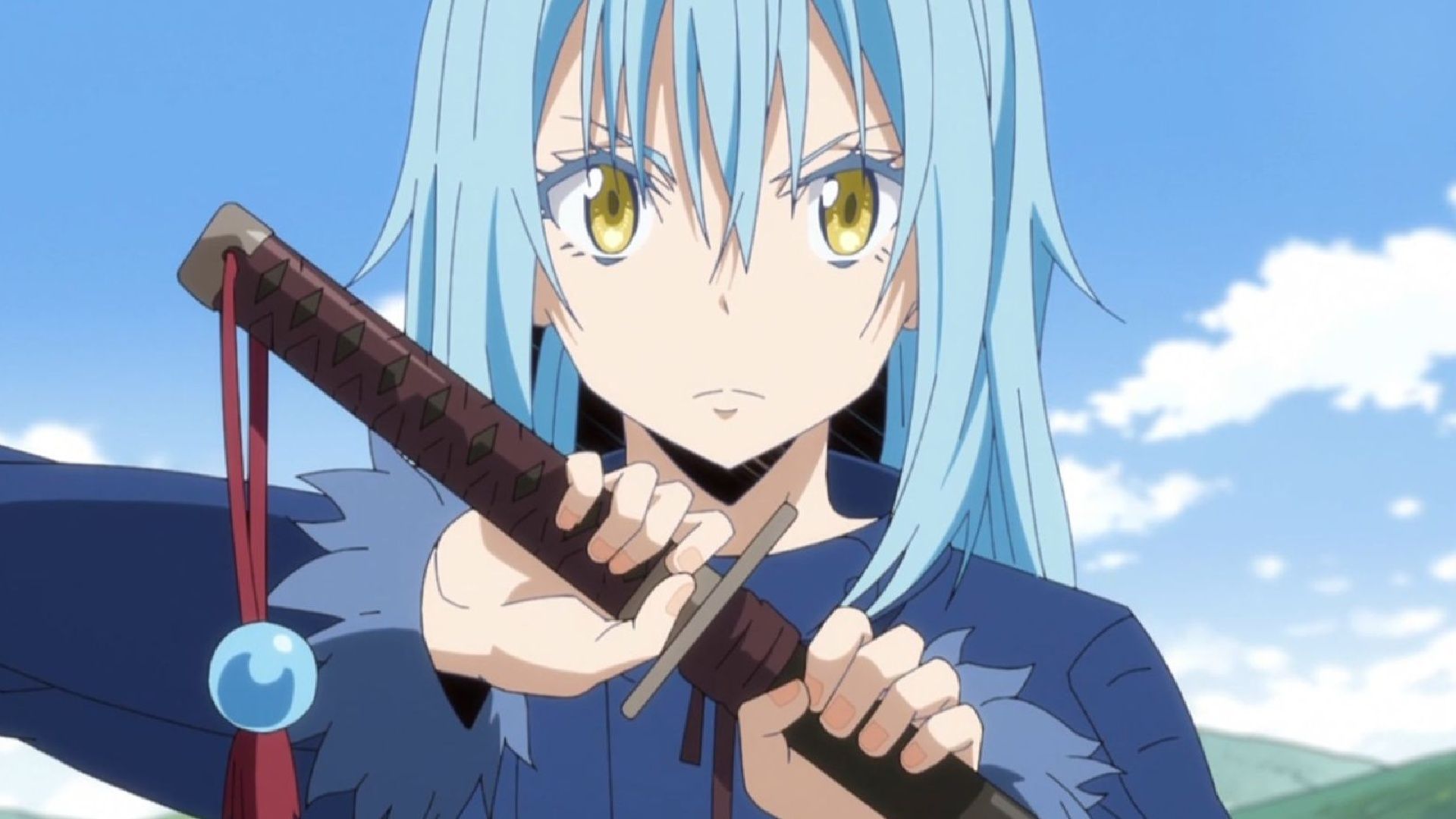
Tensei Shitara Slime Datta Ken Returns: Season 4 Premieres April 3, 2026, Continuing Rimuru's Nation-Building Saga

📷 Image source: static.animecorner.me
A Long-Awaited Return to Tempest
The Slime King's Saga Continues with a Concrete Date
Fans of the sprawling isekai fantasy series 'That Time I Got Reincarnated as a Slime' can finally mark their calendars. According to animecorner.me, the fourth season of the popular anime adaptation will premiere on April 3, 2026. The announcement, made on January 15, 2026, ends months of speculation and confirms the continuation of Rimuru Tempest's journey from a humble slime to a demon lord and nation-builder.
This premiere date follows the conclusion of the anime's third season, which aired in 2025, and the subsequent film 'That Time I Got Reincarnated as a Slime: Scarlet Bond.' The series, based on Fuse's light novel series and illustrated by Mitz Vah, has become a cornerstone of the modern isekai genre, blending fantasy politics, action, and world-building with a uniquely charismatic protagonist.
The Core Narrative: What Season 4 Promises
Beyond the Slime - A Story of Diplomacy and Power
While specific plot details for the upcoming season remain under wraps, the source material provides a clear trajectory. The story is expected to delve deeper into the political and military tensions surrounding the Jura Tempest Federation, the monster nation founded by Rimuru. Having achieved the rank of a True Demon Lord, Rimuru's responsibilities and the threats he faces have scaled dramatically from his early days in a cave.
The narrative will likely continue adapting the light novels' 'Rimuru's Busy Life' and 'The Octagram' arcs. These storylines focus on complex international relations, the machinations of other demon lords in the 'Octagram' council, and the looming threat of the Eastern Empire. The tone shifts further from individual adventure to large-scale nation management and strategic conflict, a progression that has defined the series' later chapters.
The Production Engine Behind the Magic
Consistency in Vision and Execution
The production committee has maintained key creative staff to ensure continuity. The series continues to be animated by the studio 8bit, known for its work on previous seasons and series like 'Blue Lock.' Atsushi Nakayama remains the chief director, with Yasuhito Kikuchi returning to direct. The series composition is again handled by Kazuyuki Fudeyasu. This consistency is crucial for a long-running series with a vast, established world and a large, beloved cast of characters.
Character designs will continue to be supervised by Ryouma Ebata, ensuring that Rimuru, Benimaru, Shion, Shuna, and the dozens of other citizens of Tempest retain their familiar appearances. The music will once again be composed by Elements Garden, whose scores have given the series its epic and emotional soundscape. This stable foundation suggests Season 4 will deliver the same production quality fans have come to expect.
Character Evolution: From Solitude to Sovereignty
Rimuru's Journey and the Expanding Cast
At its heart, the series is the story of Satoru Mikami's transformation into Rimuru Tempest. Season 4 will showcase the furthest point yet in that evolution. He is no longer just a powerful monster or a local protector; he is a head of state whose every decision impacts an entire civilization and its place on the global stage. His unique abilities, like 'Predator' and 'Great Sage' (later Raphael), will continue to evolve in response to these geopolitical challenges.
The supporting cast, arguably one of the series' greatest strengths, will also see significant development. Key figures like the loyal ogre-turned-general Benimaru, the secretary and powerhouse Shion, the diplomatic Shuna, and the strategic demon lord Diablo are all poised for deeper exploration. Their loyalty to Rimuru and their roles in administering Tempest will be tested as external pressures mount.
The Isekai Genre Within a Global Context
How 'Slime' Stands Out in a Crowded Field
'That Time I Got Reincarnated as a Slime' arrived during a peak in isekai (another world) anime production. However, it distinguished itself through its focus on creation rather than mere conquest. While many protagonists aim to defeat a demon king, Rimuru becomes one and uses his power to build a society. This nation-building focus, combined with a generally optimistic and diplomatic protagonist, carved a unique niche that resonated globally.
Internationally, the series has achieved remarkable success, with strong viewership and merchandise sales across North America, Europe, and Southeast Asia. Its blend of RPG-like power progression, political intrigue, and a largely peaceful ethos offers a different flavor from more combat-centric isekai. This global appeal is a key driver behind the continuous investment in the anime adaptation, leading to this fourth season and related film projects.
The Business of a Blockbuster Franchise
More Than Just an Anime
The announcement of a fourth season is a significant business event. The 'Slime' franchise is a multimedia powerhouse. Its success fuels sales of the original light novels published by Micro Magazine, the manga adaptation by Taiki Kawakami, video games, and vast lines of figures and merchandise. A new anime season acts as a massive promotional engine for all these ancillary products, revitalizing fan engagement and attracting new audiences.
This model is common for successful Japanese media franchises but is executed here with particular effectiveness. The anime's pacing, which adapts large swaths of the light novels, ensures that the core narrative continues to move forward, keeping the source material relevant and driving readers to see how the story progresses beyond the anime. The premiere date of April 3, 2026, will trigger coordinated marketing campaigns across all these platforms.
Technical and Narrative Mechanisms
How the World of 'Slime' Functions
A key technical charm of the series is its systematic approach to power. Rimuru's abilities are often quantified and analyzed through skill names and levels, a direct nod to the RPG mechanics that inspire much of the isekai genre. However, the narrative cleverly uses this system for political ends. Rimuru's unique skill to name monsters and grant them power, for instance, is not just a combat mechanic but the very foundation of his nation's social structure and the loyalty of his subordinates.
Furthermore, the world-building operates on a complex set of rules involving magicules (magical energy), spirits, and hierarchies among monsters, humans, and demons. Season 4 will delve deeper into these mechanics as they apply to large-scale warfare and international treaties. The political exchanges are often framed through these technical understandings of power, making diplomacy feel like an extension of the series' core RPG logic.
Potential Risks and Narrative Challenges
Scaling Up Without Losing the Core
As the story escalates to involve empires and alliances of demon lords, it faces the classic challenge of any long-running series: scope creep. The risk is that the narrative could become bogged down in political maneuvering at the expense of the character-driven moments and humor that initially defined the series. Balancing the epic scale with the intimate, community-focused scenes of life in Tempest will be a crucial task for the adaptation team.
Another challenge is power escalation. With Rimuru now a True Demon Lord possessing god-like abilities, creating credible threats requires introducing adversaries of comparable scale, which can sometimes feel repetitive or diminish the stakes for lower-powered but beloved supporting characters. The anime must ensure that conflicts remain intellectually and strategically engaging beyond mere displays of overwhelming force.
Comparative Analysis: Nation-Building in Fantasy
'Slime' in the Tradition of Foundational Stories
Rimuru's project in Tempest places 'That Time I Got Reincarnated as a Slime' within a broader narrative tradition of nation-building fantasy. It shares thematic DNA with series like 'Log Horizon,' which focuses on building a society within a game world, and 'How a Realist Hero Rebuilt the Kingdom,' which emphasizes economic and administrative reform. However, 'Slime' is distinct in its protagonist's non-human origin and its seamless blending of this administrative focus with classic shonen action and progression.
Globally, one can draw parallels to Western fantasy narratives about founding kingdoms or cities, though often from a human perspective. Rimuru's approach—founded on principles of racial equality, mutual benefit, and defensive strength—presents a unique ideological framework. His nation is a deliberate utopian project, and the conflicts often arise from external forces threatened by this new, inclusive model of power.
The Road to April 2026
What Fans Can Expect Before the Premiere
In the months leading to the April 3, 2026 premiere, fans can anticipate a steady stream of promotional material. This will likely include a series of key visual art releases showcasing new and returning characters, a full trailer revealing the season's central conflict and animation highlights, and cast comments from the extensive Japanese voice actor ensemble. Events at major anime conventions may also feature special announcements or previews.
Given the pattern from previous seasons, the broadcast will likely run for two consecutive cours (roughly 24-25 episodes), allowing for a substantial adaptation of the source material. The series will premiere on Japanese television networks like Nippon TV and stream simultaneously or shortly after on global platforms such as Crunchyroll, which has historically licensed the series for audiences outside Asia, ensuring worldwide access from day one.
Perspektif Pembaca
The evolution of 'That Time I Got Reincarnated as a Slime' from a story about a lone slime to a geopolitical saga raises interesting questions about audience engagement. As the scale of the narrative expands, what elements do you find most compelling?
Do you prefer the large-scale nation-building and political strategy that defines the later arcs, or do you have a stronger attachment to the earlier, more adventure-focused phases of Rimuru's journey in building his initial community? How do you feel the series balances its wide cast of characters against its increasingly complex central plot?
#TenseiShitaraSlimeDattaKen #ThatTimeIGotReincarnatedAsASlime #Season4 #RimuruTempest #AnimeNews2026


