

Horror Fiction Serial
The Hollow Gramophone
Every recording holds a secret. Hers holds a voice that should be silent.
A sound archivist discovers a mysterious wax cylinder in a closed museum wing. The recording plays a message meant only for her—from a man who died before she was born.
This is a fictional story. All characters are adults. Any resemblance to real persons, places, or events is coincidental.
Part 1: The Key to Room 14
Every sealed door is a question. Some have answers that should never be heard.
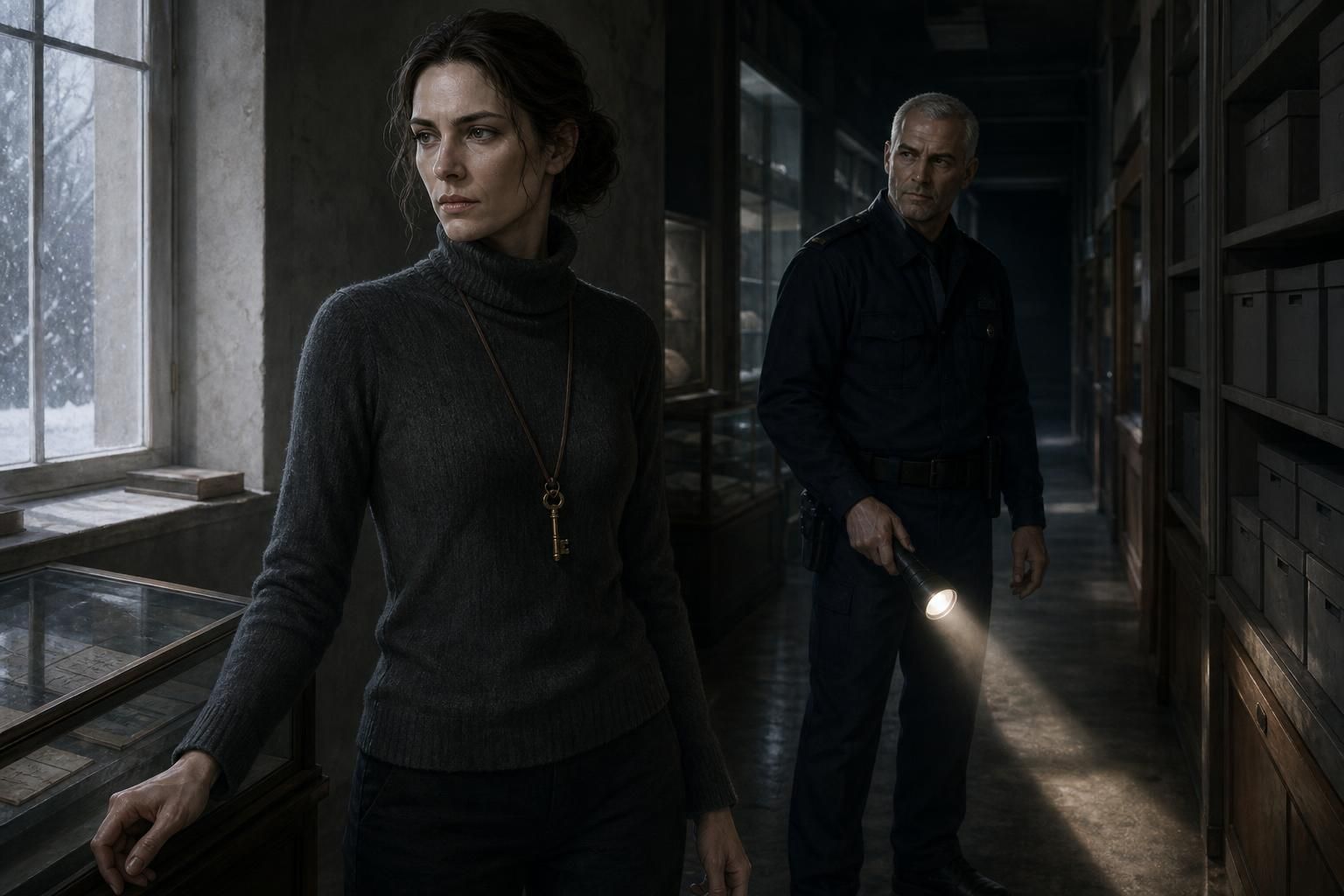
The Ethnographic Museum of the North had been closed for eighteen years. Its grand wooden doors were bolted, its exhibition halls dark, and its name had become a footnote in Innsbruck's cultural guidebooks. But in a narrow office on the third floor, a single green desk lamp burned.
Lea Vasko sat beneath its glow, a folder of old inventory lists spread across her knees. The wool of her charcoal grey turtleneck was soft against her chin as she leaned forward, reading the faded type. She had been hired by the city to assess the museum's sound archive for potential restoration—a job no one else had wanted. The sealed wing, they said, had a history of losing people.
Not dying. Just… leaving.
Lukas Hofer stood in the doorway, his heavy flashlight casting a long shadow across the linoleum floor. His navy uniform was crisp, his close-cropped silver hair neat, but there was a tightness in his jaw he couldn't hide. "The previous archivist," he said, "she didn't finish her inventory. Left her coat, her notebook, everything. Security found her keys on the desk three days later. No note."
Lea looked up, her grey eyes steady. "And no one followed up?"
"City said budget cuts. I say some rooms are better left locked."
He led her down a corridor where the radiators had stopped working years ago. The air was cold and still, carrying the smell of old paper, dust, and something else—a faint metallic tang, like the air before a storm. The sealed wing began at a heavy fire door marked with a faded sign: ROOM 14 — RESTRICTED.
Lukas unlocked it with a master key, but the door swung inward as if it had been waiting.
Inside, the archive was a cathedral of silence. Rows of grey cardboard boxes lined steel shelves, each labelled with dates and accession numbers. Cobwebs hung like gauze between the stacks, and a single frosted window showed snow falling against the glass. In the centre of the room stood a wooden cabinet, its brass lock tarnished but intact.
Lea approached it slowly, her breath fogging in the chill. The key around her neck—the small brass key on a leather cord—seemed to hum against her collarbone. She had been told it was the key to the archive room, a relic from the museum's founder. She had not been told why it was given to her.
She knelt before the cabinet. The lock was old, but the key slid in without resistance. It turned with a click so loud it felt like a word spoken into the silence.
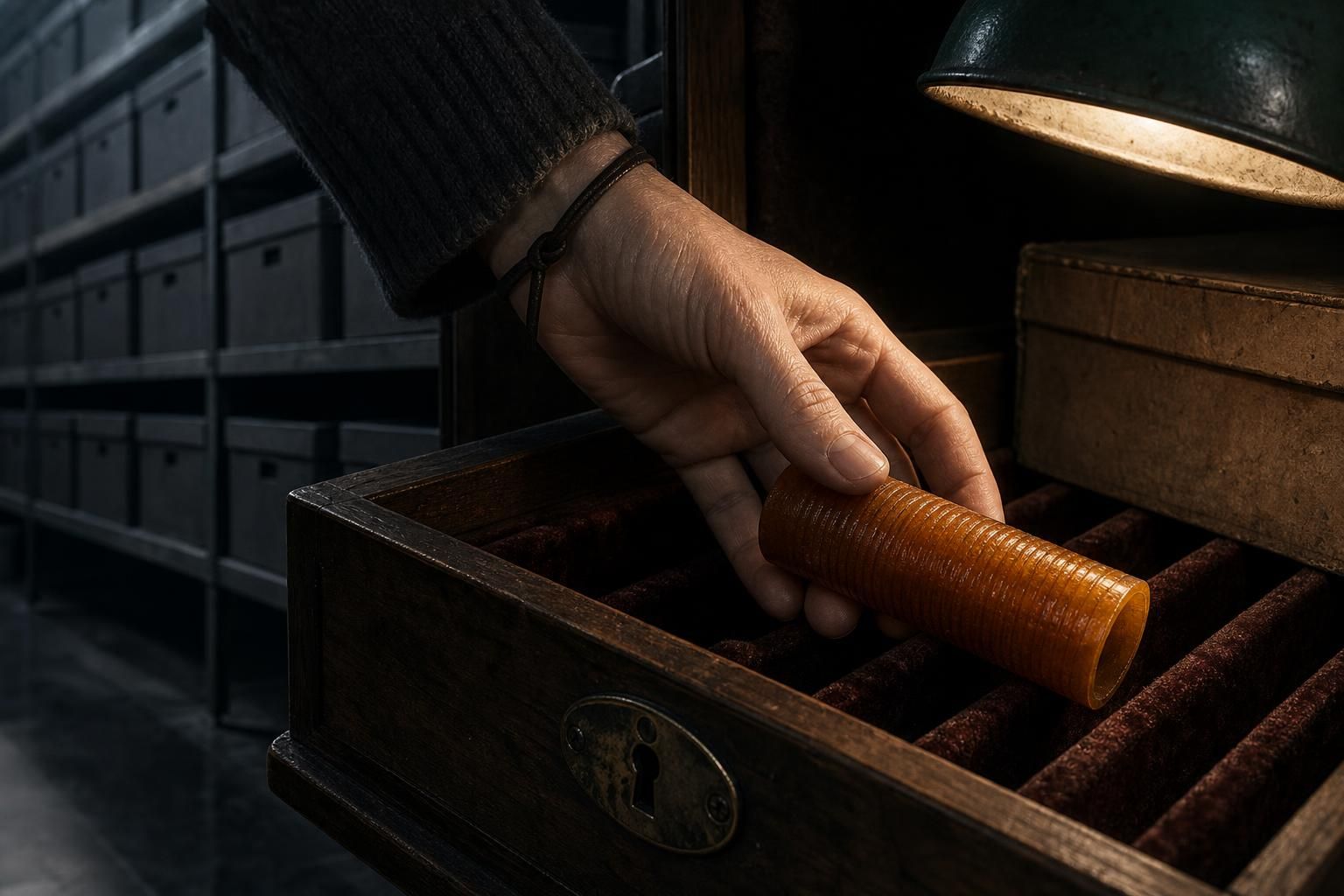
Inside, nestled on a velvet cushion, was a single wax cylinder. Its amber surface caught the desk lamp's glow, the grooves catching light like fingerprints. Beside it lay a small cardboard box, its edges soft with age. Someone had written on it in careful, elegant script: 'Vasko, final entry.'
Lea's hand hovered. The name was hers. Her surname. But she had no relative who had worked here. The museum's founder was Dr. Emil Vasko, who died in 1948, childless.
She lifted the cylinder anyway. It was warm to the touch, as if the wax held a lingering heat.
Lukas shifted behind her. "That's not standard issue."
"No," she said, her voice barely a whisper. "It's not."
She carried the cylinder to the gramophone in the corner—a black horn machine, dust-covered but intact. She placed it on the spindle, her fingers trembling. The dust on the box was undisturbed, but the cabinet key had already been in the lock when she arrived. As if someone had opened it for her.
As if someone had been waiting.
Her hand hovered over the crank. She did not turn it yet. Instead, she looked at the box again. The lettering was precise, the ink faded to a pale brown. 'Vasko, final entry.' The date was 1913.
The year Dr. Vasko had begun his recordings. The year before the museum first closed its doors.
Lea's grey eyes met Lukas's brown ones in the dim light. He gave a small, reluctant nod.
She turned the crank.
Lea places the cylinder on the gramophone. Before the needle drops, she notices the dust on the box is undisturbed—but the cabinet key was already in the lock, as if someone had been waiting for her.
Part 2: The Voice in the Wax
The needle finds the groove. The past finds a voice. And Lea hears something that should not exist.
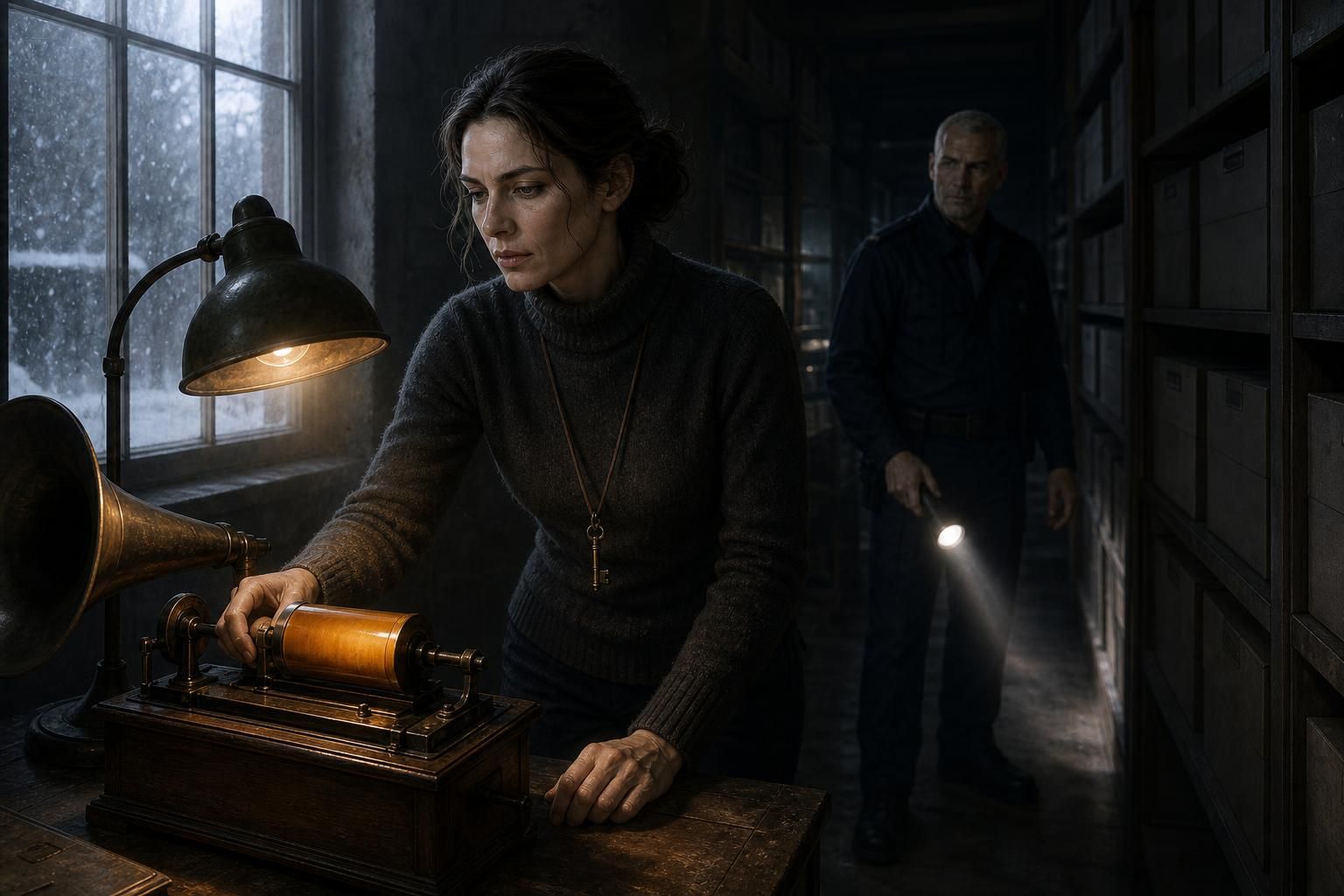
Lea's hand trembled as she lowered the needle. The gramophone crackled to life with a sound like dry leaves shifting in a forgotten corner. Then, from the amber spiral of the wax cylinder, a man's voice emerged—clear, measured, impossibly present for someone who had died over seventy years ago.
"If you are hearing this, you are the one who will understand."
Lea's breath caught. The voice was not merely recorded. It was addressed to her. The intonation was urgent, intimate, as if Dr. Emil Vasko had known exactly who would sit in this chair, on this December evening, in this sealed room.
"The fire of 1927 was not an accident," the voice continued. "The journal was hidden—not destroyed. You must find it before the snow melts again. The final truth is not in the past. It is waiting for you in the sound that has not yet been made."
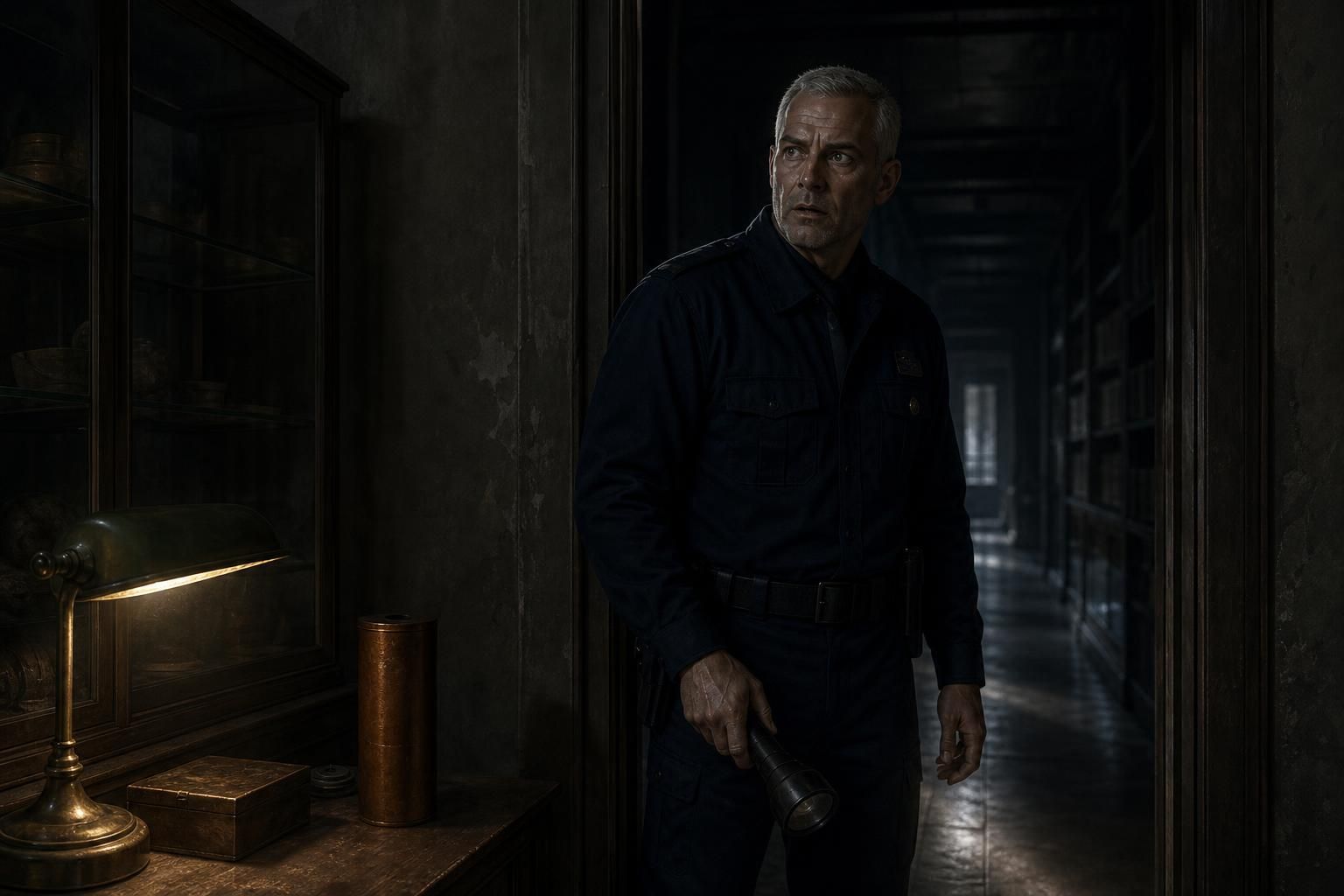
Lukas stood in the doorway, his flashlight off, his face drained of colour. "I heard rumours," he said, his voice barely above a whisper. "The old director used to say that Vasko predicted the museum's closure. Said it would be sealed for a century. That was in 1943. The museum closed in 1945."
Lea stared at the cylinder as it spun. The date on the box was 1913—three years before Vasko's death. But the voice spoke of events that happened after: the fire, the journal, the closure. It was as if the wax had captured not a moment, but a prophecy.
She lifted the needle, silence flooding the room. "I need to check the records," she said, her voice steady despite her racing heart. "I need to know who he was."
The museum's database was stored on a terminal in the main office. Lea scrolled through digitized archives while Lukas stood guard at the door, his hand resting on his flashlight as if it were a weapon.
Emil Vasko, born 1881, died 1948. Childless. No living descendants. The name 'Vasko' on the box was a coincidence—or a deliberate message meant for someone who shared only a surname and a purpose.
"I'm not his family," Lea said, more to herself than to Lukas. "I'm no one to him."
"Then why did he call you by name?" Lukas asked.
She didn't have an answer. She returned to the archive room and lowered the needle again, determined to catch the phrase she had missed—the part about the sound that has not yet been made.
The crackle returned. But the man's voice was gone.
In its place, a woman's whisper, low and intimate, filled the room. It was Lea's own voice, speaking words she had never uttered aloud, but had just thought: "This is not a recording."
The needle skipped. The cylinder spun on, silent.
Lea pulled her hand back from the gramophone as if burned. The sound was still in the air, vibrating in her ears—her own voice, from no known source, echoing words she had only formed in the privacy of her mind.
Lukas took a step into the room. "Lea. What did you hear?"
But she could only shake her head, her grey eyes fixed on the spinning wax, which now seemed to hold not just a voice, but a mirror.
Lea plays the cylinder again to catch a missed phrase, but this time, the man's voice is gone. In its place is a woman's whisper—her own voice, repeating the same phrase she just thought: 'This is not a recording.'
Part 3: The Future Heard First
The archive does not preserve memory. It predicts it.
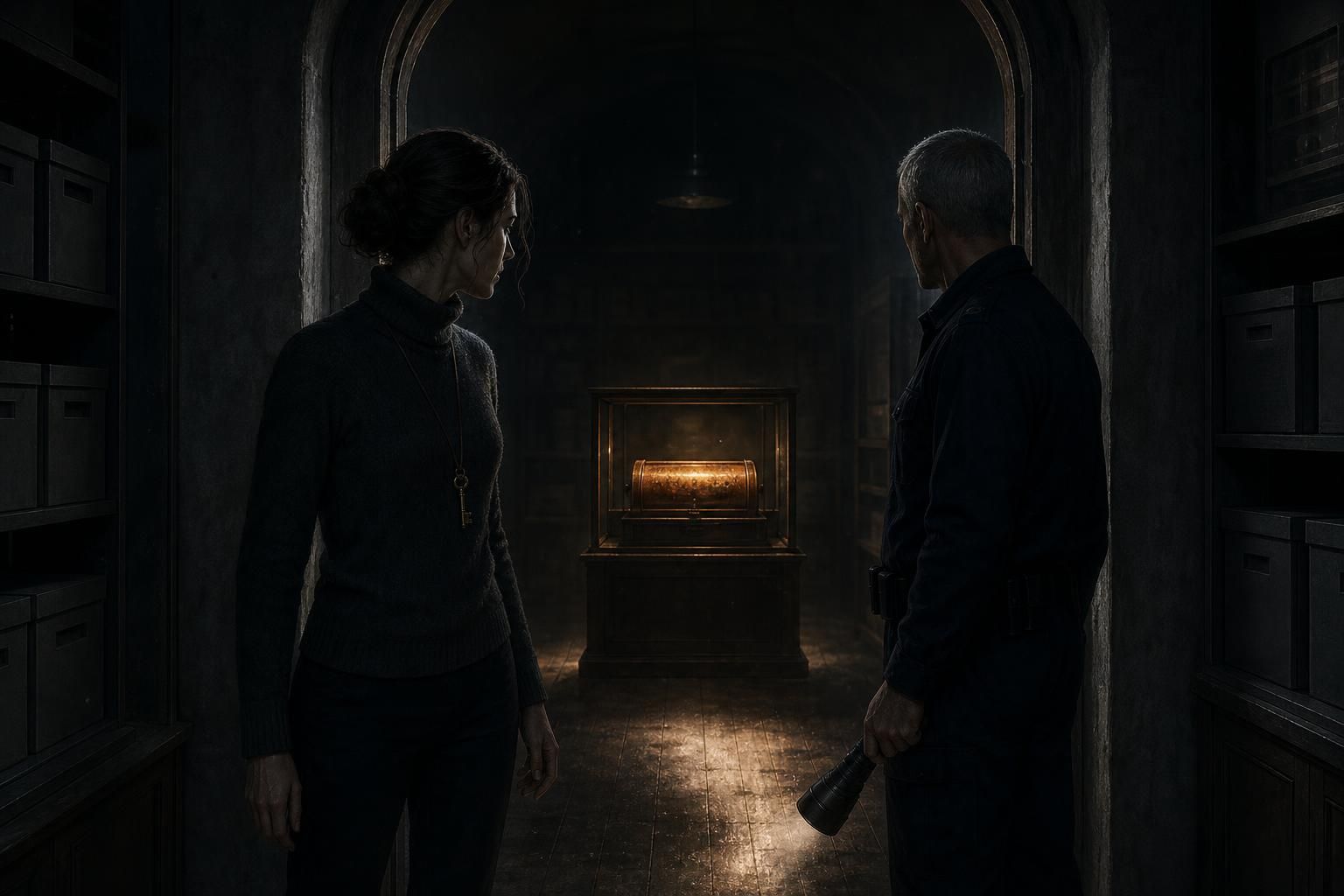
Lea’s hand trembled as she set the cylinder down on the felt mat. The whisper still hung in the air—her own voice, speaking her own thought. She backed away from the gramophone, knocking over a stack of grey cardboard boxes. Dust rose, catching the green desk lamp’s light like tiny spirits.
Something hard pressed against her heel. She looked down. A slim black notebook, wedged beneath the cabinet where the cylinder had been stored. She picked it up. The cover was stamped: ARCHIVAL LOG — DO NOT REMOVE. But the handwriting inside was hurried, frantic.
She flipped to the last entry. The date was from six years ago—the month the previous archivist had vanished.
"I heard my own voice. It spoke of a day that has not yet come. I must leave before I speak. The cylinder remembers what I have not said. If you find this, do not play the Vasko cylinder again. Do not listen. Do not speak. Just leave. — E. Maurer"
Lea’s breath caught. She looked at the cylinder on the gramophone. The amber wax gleamed under the lamp, innocent and still.
"We have to destroy it," she said, her voice raw. She reached for the cylinder, but Lukas’s hand closed around her wrist.
"No." His voice was low, strained. "I’ve heard whispers from this wing for years. Every night, the same voice, pleading. I thought it was the old pipes. But it was her. Maurer. Begging someone to finish what she started."
Lea stared at him. "Finish what?"
"Listen. One last time. Then we seal it all."
She didn’t want to. Every instinct screamed to smash the wax, to burn the notebook, to run. But the terror had a shape now—a familiar shape. It was her own voice, waiting for her.
She lowered the needle.
Static. Then silence. Then a woman’s voice, clear as winter air. Lea’s own voice.
"Lea. It is December 8th. Tomorrow, at 4:17 PM, you will walk to the bridge over the Inn River. You will meet a man in a grey coat. He will tell you something you have always known. You will not remember this recording. But I am you, and I know what comes. Do not be afraid. You chose this."
The voice stopped. The needle lifted automatically, as if the cylinder had finished its message precisely.
Lea stood frozen. December 8th. Tomorrow. The bridge. A man in a grey coat. She had never walked to that bridge. She had no reason to.
But even as she thought that, a strange calm settled over her. The terror drained away, replaced by a quiet certainty. She knew, somehow, that tomorrow she would go to the bridge. Not because the recording told her to. Because she had always been going to go.
She closed the gramophone case. The amber glow from within faded, and the room went dark.
"We seal the room," she said softly. "We never speak of this."
Lukas nodded. He turned the key in the lock. The metal clicked, final and heavy.
As they walked down the empty hall, snow falling against the frosted windows, Lea paused at the exit. She turned to Lukas, her grey eyes distant.
"Tomorrow," she said slowly, "I will need to come back. I don’t know why. But I will."
Lukas met her gaze. He did not ask questions. He only nodded, the way you nod when you already know the answer.
Behind them, in the sealed room, the wax cylinder began to melt inside its closed case. The grooves softened, blurred, smoothed into a dark mirror—reflecting nothing, remembering nothing, waiting for the next voice that had not yet spoken.
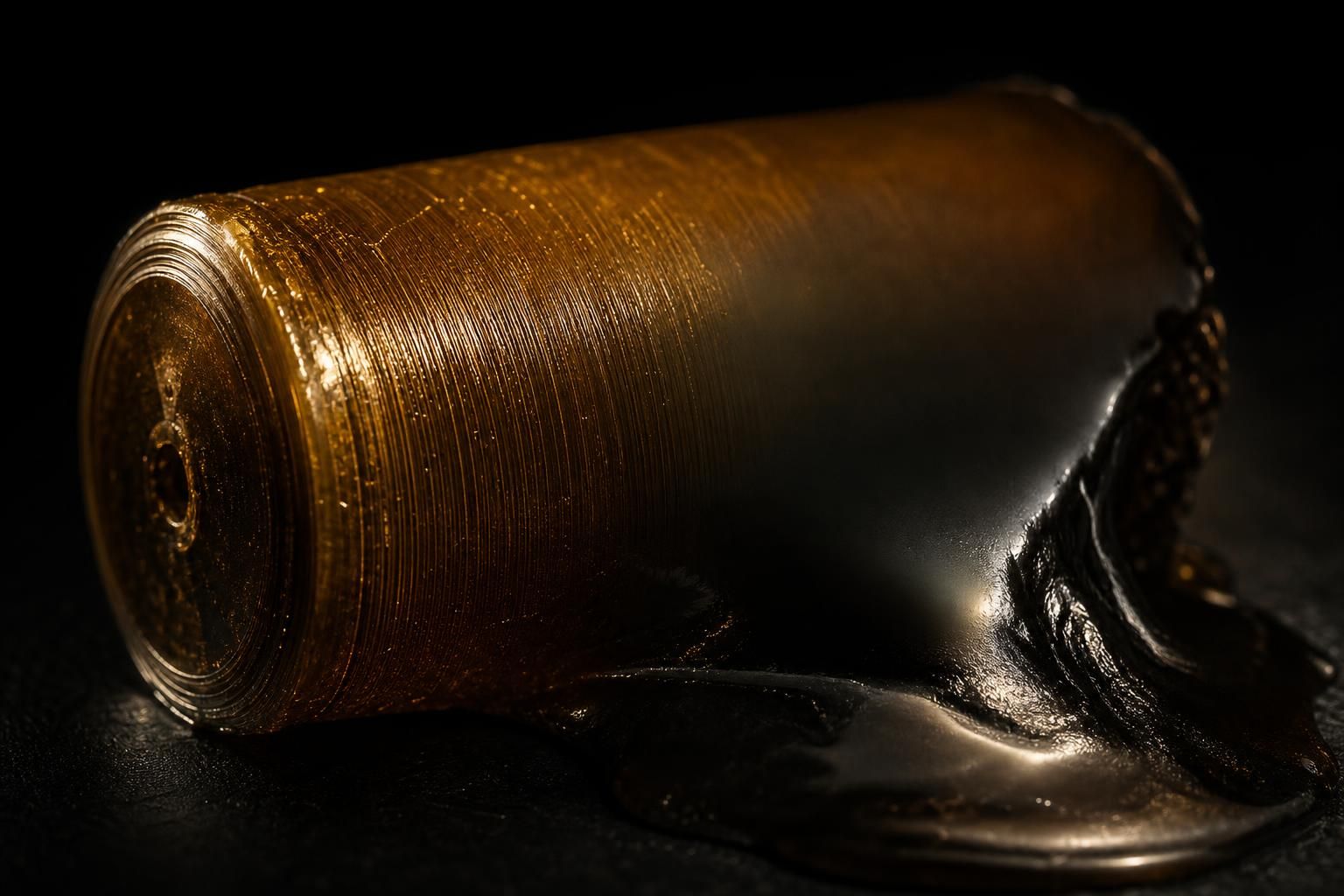
As Lea leaves the museum, she pauses at the door and turns to Lukas. She says slowly, 'Tomorrow, I will need to come back. I don't know why. But I will.' Lukas nods, knowing exactly what she means.

