

Illustrated Fiction Serial
The Wardrobe of Forgotten Letters
A wooden wardrobe in a dead uncle's attic holds every letter you ever wrote but never sent. It also holds the replies.
When Nora inherits her reclusive uncle's cottage, she finds a wardrobe full of every unsent letter she ever wrote. The replies inside are not from him.
This is a fictional story. All characters are adults. Any resemblance to real persons, places, or events is coincidental.
Part 1: The Blue Envelope
A single letter, written in her own hand, that she never sent.
Nora parked the rental car at the bottom of the gravel track and walked the rest of the way. The cottage looked smaller than she remembered. The white paint was peeling above the windows, and the front door sagged on its hinges. She had last been here fifteen years ago, a teenager sent to stay with her uncle for a summer. Now, six weeks after his death, she had come to clear his belongings.
Inside, the air was stale and cold. Dust motes floated in the thin light from the kitchen window. She climbed the narrow stairs to the attic, her boots heavy on the wooden steps. The attic was low-ceilinged and cramped, with a single dormer window that let in a pale grey light. In the corner stood the wardrobe. It was tall, made of dark pine, with a single brass handle. She remembered it from childhood games, how she used to imagine it was a door to another world.
She pulled the handle. The brass was cold, almost icy, against her palm. The door swung open easily. Inside, the wardrobe was empty. The interior smelled of cedar and old paper, but there were no clothes, no boxes, nothing. She ran her hand along the smooth wood of the back panel, then closed the door. It was just furniture. Nothing more.
That evening, she ate a simple meal of bread and cheese by the kitchen stove, then went to bed in her uncle's room. She slept poorly, dreaming of her mother's voice, soft and distant, calling her name across a field of snow.
When she woke, the light through the window was thin and grey. She pulled on her charcoal sweater and went to the kitchen to boil water. But before she could light the stove, she stopped. Something was wrong. The attic door, which she had left closed, was now open a crack.
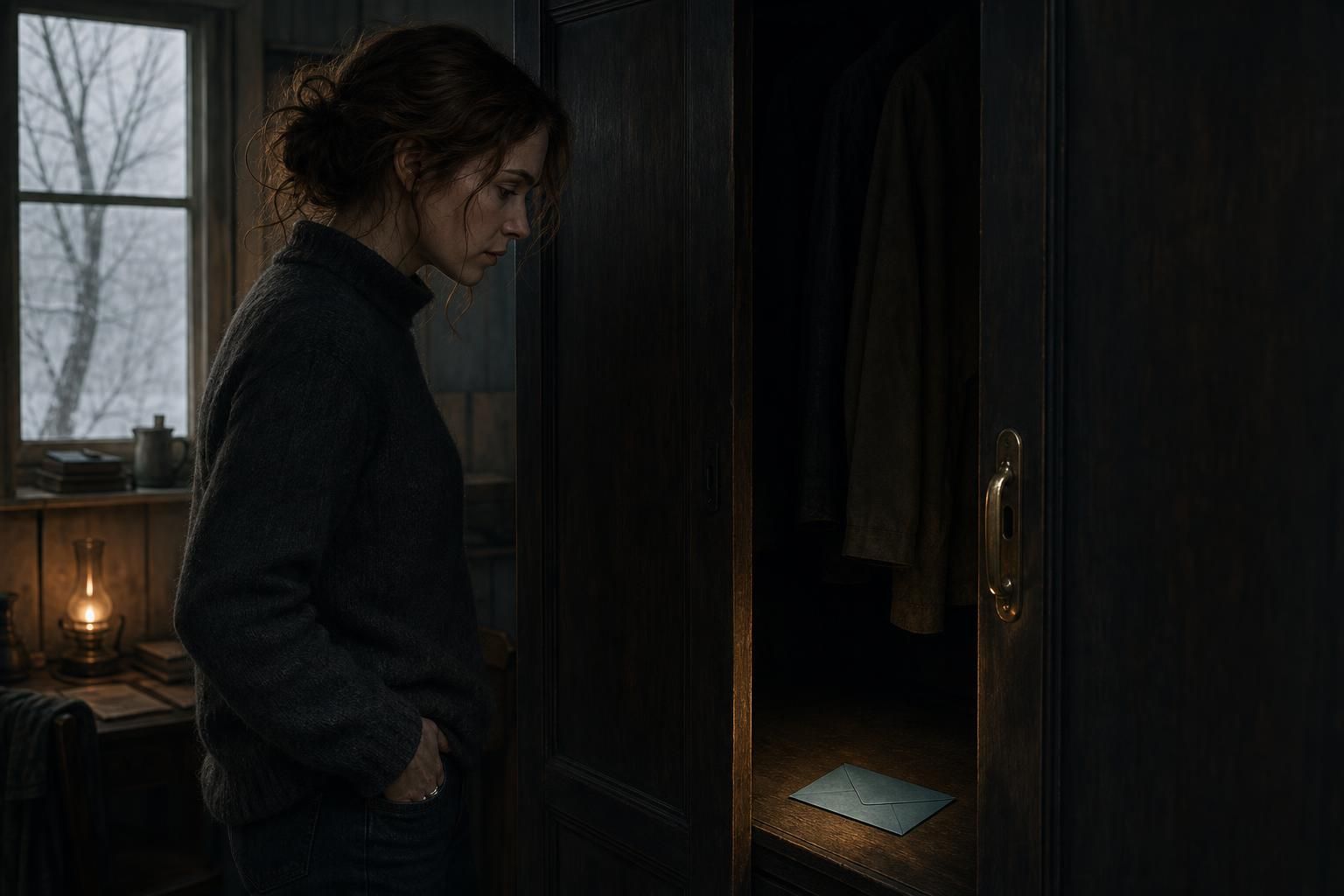
She climbed the stairs slowly, her heart beating hard. The wardrobe door was slightly ajar. Through the gap, she saw a faint rectangle of blue against the dark wood of the floor. She pushed the door open. Inside, on the floor of the wardrobe, lay a single envelope. It was pale blue, with no sender address. The paper was thick and textured. She picked it up. The brass handle was still cold, but the envelope was warm.
On the front, in blue ink, was her name: Nora. The handwriting was her own. She knew it instantly. The slope of the 'N', the loop of the 'o'. She had not written this recently. It was the handwriting of a child.
She carried the envelope to the kitchen and sat at the table. With trembling fingers, she broke the wax seal—a simple red circle—and pulled out the letter inside. The paper was yellowed, creased, familiar. She unfolded it.
"Dear Mum, I had a dream last night. You were standing on the shore, and the water was very still. You were holding something silver in your hand, and you were looking at me. I tried to call out, but no sound came. Then you smiled, and the water rose up, and you were gone. I woke up crying. Dad said it was just a dream, but I know you were there. I know you saw me. Love, Nora."
She remembered writing it. She had been twelve years old, a year after her mother's death. She had written it in her room at night, then folded it and hidden it under her mattress, too afraid to show anyone. She had never sent it. She had never told anyone about the dream.
Inside the envelope, there was a second slip of paper, smaller, folded precisely. She opened it. The handwriting was the same. Her own. But the words were different.
"I remember. I was there. -M"
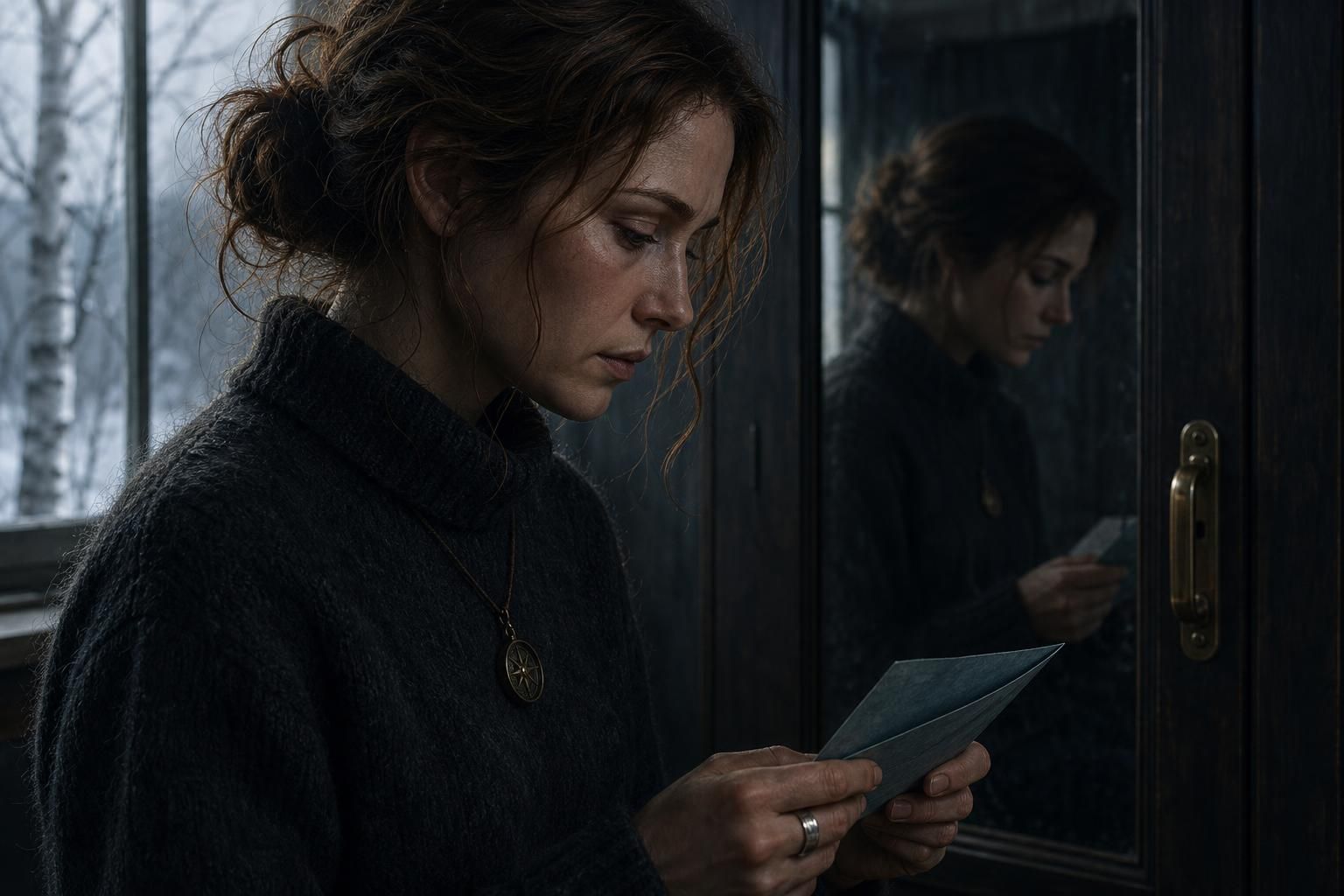
Nora held the letter, her hands trembling. The handwriting was hers, but the message was not. She looked up. The attic door was still open. Through it, she saw the wardrobe, its door now wide open, as if waiting.
Part 2: The Replies Begin
The wardrobe answers in her own hand, and a neighbor remembers more than he says.
Nora did not sleep that night. The blue envelope lay open on the kitchen table, the letter and the reply note side by side. She had read them both so many times that the creases were soft, the paper warm from her hands.
'I remember. I was there. -M.'
Her mother's name was Margit. The M could mean nothing else. But her mother had died when Nora was eight. The letter was written when she was twelve. The reply could not exist.
Nora sat at the table until the grey light of dawn crept through the kitchen window. Then she stood, walked to the narrow attic stairs, and climbed them. The wardrobe stood in its corner, its door still wide open from yesterday. The brass handle glinted coldly.
She approached slowly, her boots loud on the wooden floorboards. Inside the wardrobe, on the dark pine floor, lay three more blue envelopes. She had not heard anyone come in. The cottage door was still locked.
Her hands trembled as she picked them up. Each envelope bore her own handwriting, addressed to herself. She sat on the attic floor and opened the first one. It was a letter she had written at age nine, the year after her mother died, folded and never sent. She had written about a blue scarf her mother used to wear, how it smelled of lavender, how she had hidden it in the back of her closet and cried into it at night. She had never told anyone about the scarf.
The reply note inside was small, folded neatly, in her own handwriting: 'I remember the scarf. I hid it there for you to find. -M.'
Nora's breath caught. She opened the second envelope. This one was written at age fifteen, a letter she had never mailed to her father, complaining about his new girlfriend. The reply said: 'I should have listened. I am sorry. -M.'
Her hands were shaking now. She opened the third envelope. It was dated three years ago, written after her father's funeral, a letter she had written to him but never sent. She had described the exact moment he died in the hospital room, the beeping of the machines, the rain against the window, the way the nurse had squeezed her hand. She had never shown that letter to anyone.
The reply note was longer this time. In her own handwriting, it said: 'I was there. I saw the rain on the window. I saw the nurse hold your hand. I could not hold it myself, but I was there. -M.'
Nora dropped the letter. The words blurred. She pressed her palms against the floorboards, trying to steady herself. The wardrobe stood silent, its dark wood reflecting the cold light from the dormer window.
A knock came from downstairs. Nora shoved the letters into her coat pocket, wiped her face, and went down to open the door.
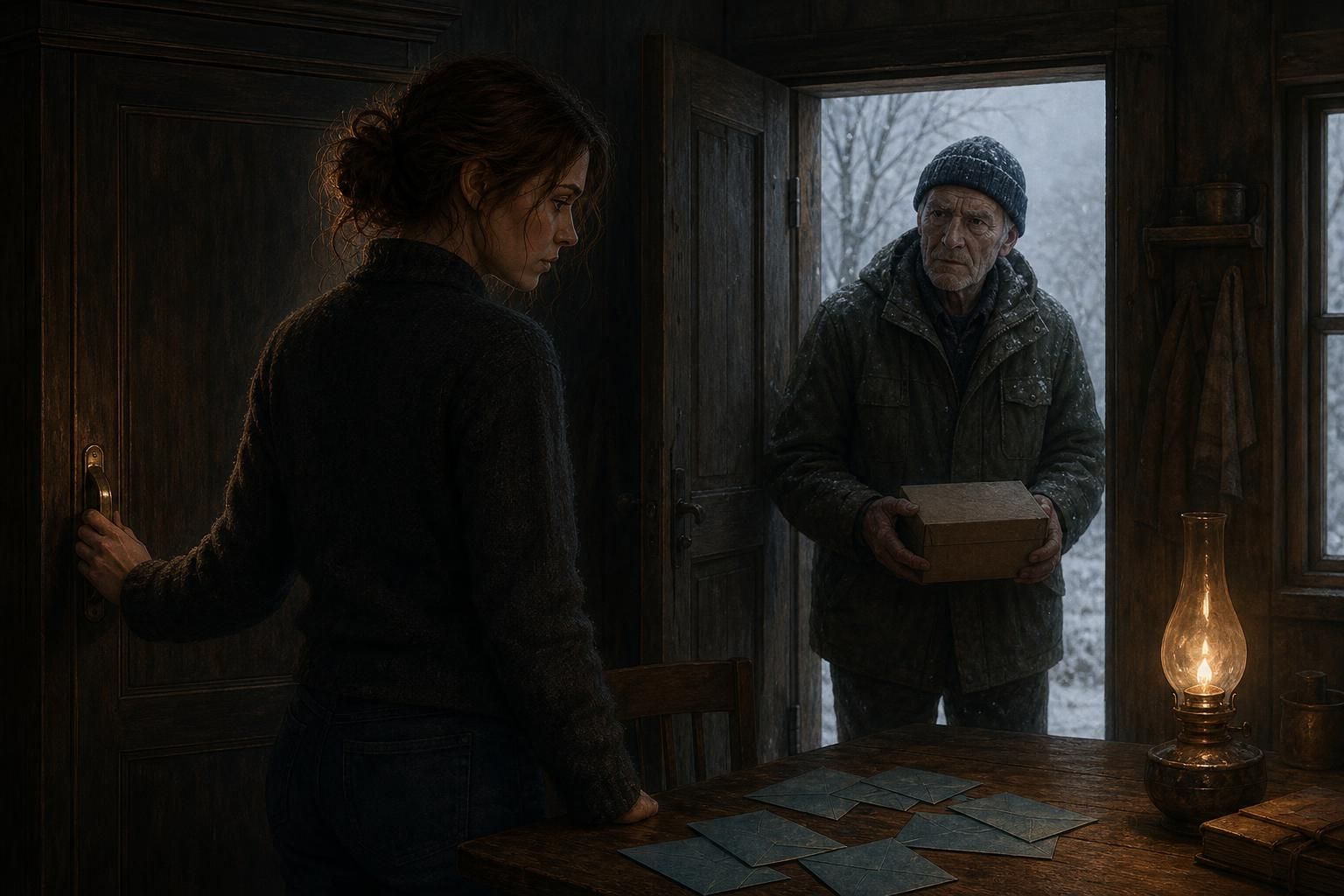
Arne stood on the threshold, a blue wool cap pulled low over his white hair, a patched green rain jacket dusted with snow. He carried a small cardboard box.
"Good morning," he said, his voice rough with age. "I brought some things from Lars's workshop. Tools, a few books. I thought you might want them."
Nora stepped aside to let him in. He set the box on the kitchen table, then noticed the blue envelope lying there. He stopped. His pale blue eyes fixed on it.
"You found some letters," he said. It was not a question.
"You know about them?"
Arne took off his cap slowly. "Lars used to get letters that had no postmark. I was the postman for forty years. I noticed. He never said where they came from. But I saw him once, talking to that wardrobe in the attic. He called it 'her.' He said she was waiting for the right person."
Nora stared at him. "Waiting for who?"
"I think he meant you."
After Arne left, Nora went back to the attic. She took a clean sheet of paper and an old pen from Uncle Lars's desk. Standing before the open wardrobe, she wrote: 'Who are you?'
She folded the paper, placed it inside the wardrobe on the pine floor, and closed the door. The brass handle was cold beneath her fingers.
She waited downstairs all evening. At midnight, she climbed back up. She opened the wardrobe.
The paper was gone. In its place was a single blue envelope. She tore it open.
Inside, in her own handwriting, was a single line: 'I am what the wood remembers.'
Nora pressed her hand against the inner wall of the wardrobe. The wood was warm, as if it had been sitting in sunlight. She leaned closer and pressed her ear to the dark pine.
From somewhere deep inside, she heard a faint, rhythmic sound. Steady. Slow. The beating of a heart.
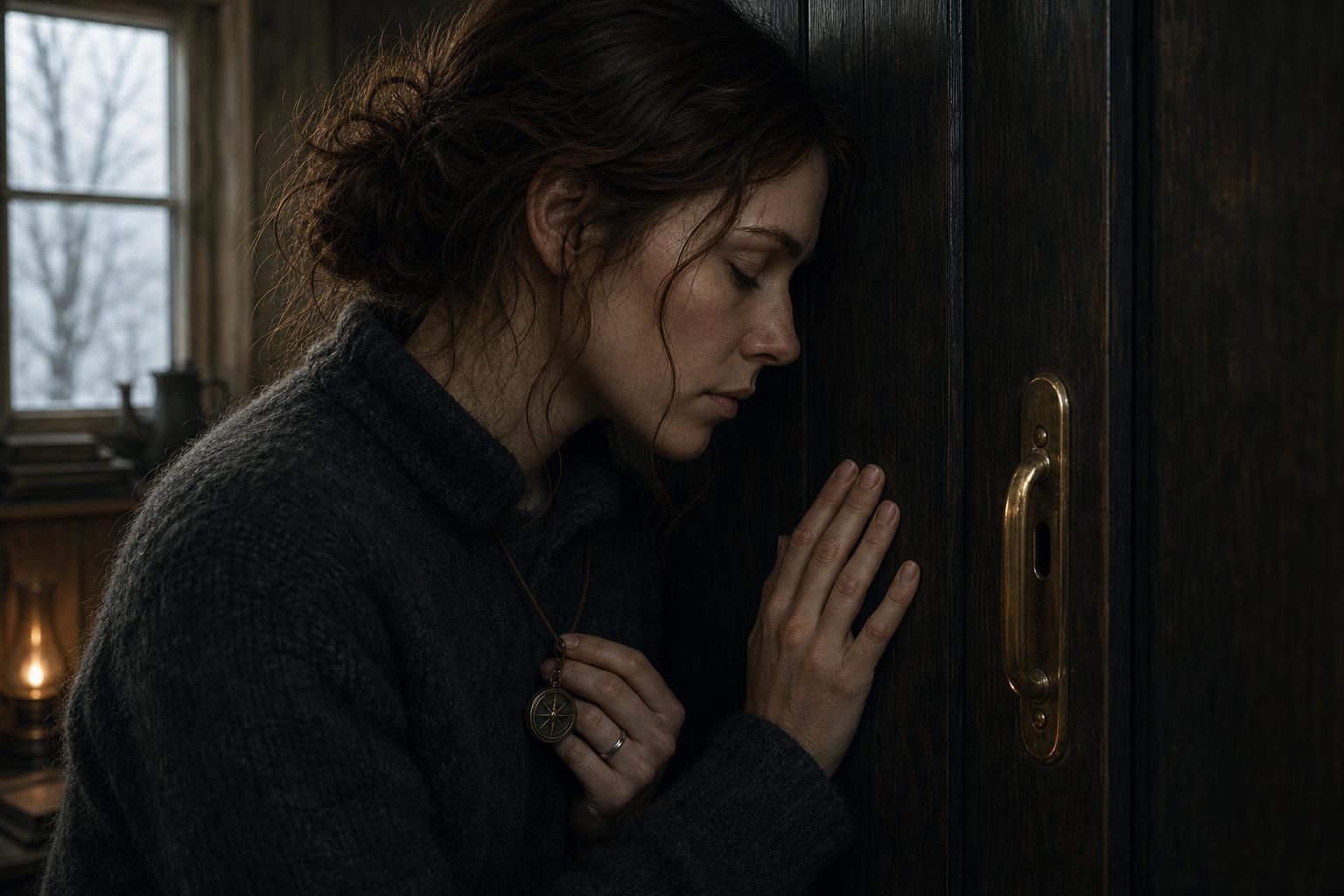
Nora pressed her ear against the dark wood of the wardrobe and heard a faint, rhythmic sound: the beating of a heart.
Part 3: What the Wood Remembers
The final letter leads Nora to a truth hidden for twenty-six years.
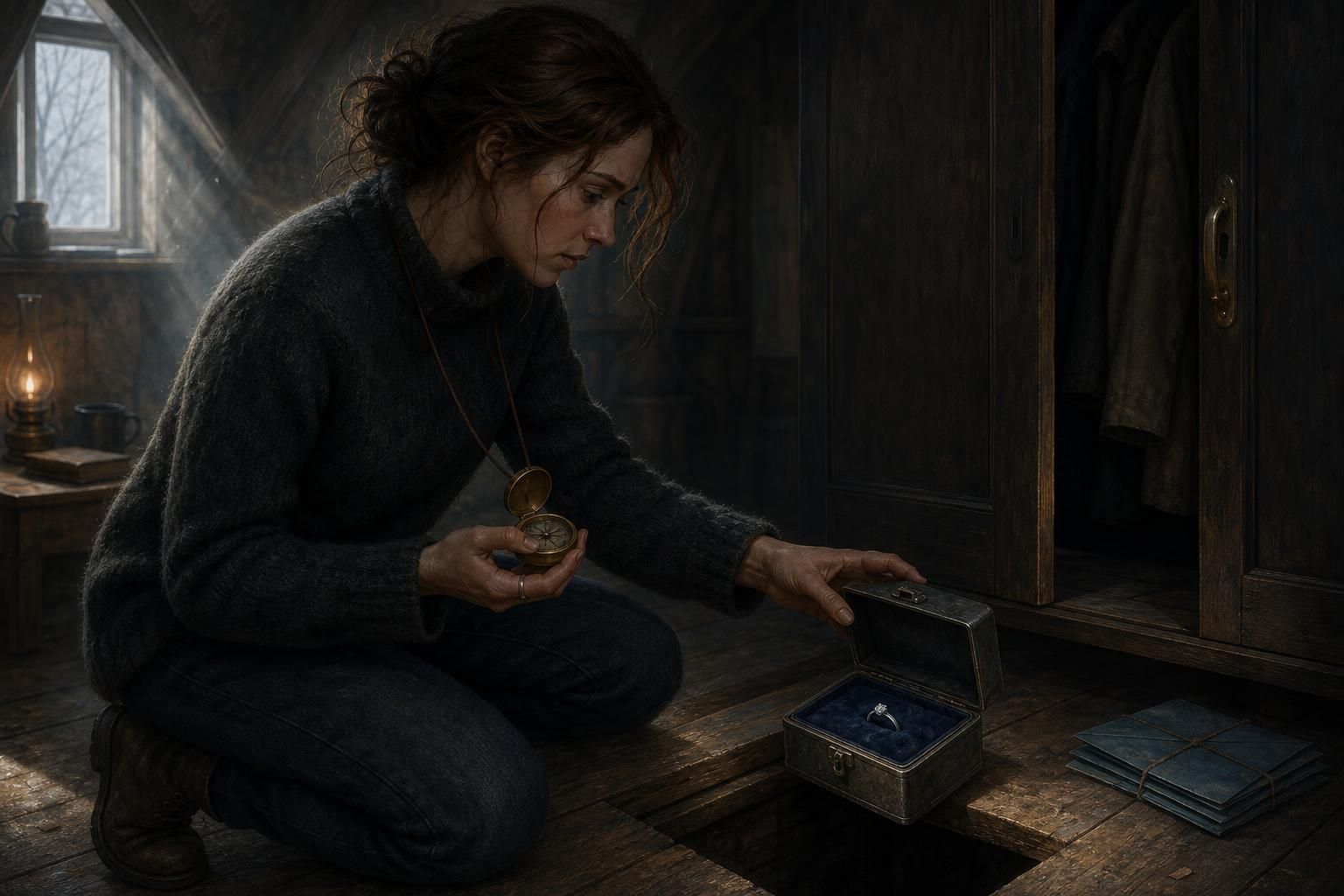
Nora stood in the attic with her ear pressed to the wardrobe's wood. The heartbeat was faint but steady. She pulled back and looked at the dark pine surface. The warmth she had felt the night before was still there, radiating from the wood like a living thing.
She remembered, then, a game of hide-and-seek she had played with her mother. They had visited the cottage when Nora was five. Her mother had hidden behind the wardrobe, and Nora had found her by following the sound of her breathing. But her mother had not been breathing loudly. She had been tapping her ring against the wood. A silver ring with a small diamond. The ring Nora was told had been lost at sea.
Nora knelt and ran her hand along the floorboards at the base of the wardrobe. The attic rug was old and frayed. She rolled it back and saw a board that was slightly raised, its nails loose. She pried it up with her fingers. Beneath it was nothing but dust and cobwebs.
She stood again and looked at the wardrobe. The false back panel was not visible from the front, but from the side, she saw a thin seam where the wood did not quite meet. She pressed on it. The panel gave way with a soft click, swinging inward on hidden hinges.
Inside the hidden compartment, a single blue envelope lay on a wooden shelf. It was sealed with red wax, the same circle as the others. But this one was addressed in her own child's handwriting: "Nora, when you are brave."
She broke the seal with shaking hands. Inside was a folded piece of paper, yellowed and soft. It was a map, drawn in crayon and pencil, of the cottage attic. A small X marked a spot near the chimney. She recognized the drawing. She had made it at age twelve, the same summer she had written the letter about the dream.
Nora followed the map to the corner of the attic where the chimney breast met the wall. She knelt and pressed on the floorboard marked by a small scratch she had made with a nail. The board lifted easily. Beneath it was a metal box, about the size of a shoebox, with a small brass lock.
She pulled the compass pendant from under her sweater. The thin leather cord was worn, but the brass compass was still solid. She had worn it since she was twelve, when her father had given it to her. She had never tried to open it. Now she pressed the edge of the compass, and the glass face popped open. Inside, where the needle should have been, was a small brass key.
She fit the key into the lock on the box. It turned with a click.
The lid opened. Inside, on a bed of faded blue velvet, lay her mother's wedding ring. The silver band, the small diamond, the same ring she had seen in her memory. Beneath it was a note in her uncle's careful handwriting:
"Nora,
Your mother asked me to keep this safe until you were ready to find it. She knew you would come back here someday. I think you are ready now.
She loved you more than you will ever know.
- Lars"
Nora picked up the ring. It was cold, but it warmed quickly in her palm. She slid it onto her right ring finger. It fit perfectly.
She looked at the wardrobe. The back panel was still open, the hidden compartment empty now. The blue envelope lay on the shelf. She understood, finally. The wardrobe had not written the replies. The wood had remembered the letters she had placed inside as a child, and it had held them, waiting for her to come back. The replies were not from the wardrobe. They were from her mother, who had asked Lars to hide the ring, who had known Nora would need to find it herself.
Nora closed the wardrobe door. She picked up the blue envelopes from the kitchen table and carried them back to the attic. She placed them all inside the wardrobe, on the floor where she had first found them. She closed the door and turned the brass handle until it clicked.
She walked down the attic stairs, through the kitchen, and out the front door. The snow was falling harder now, covering the gravel track. She did not look back.
Inside the attic, the wardrobe stood silent. Through the dormer window, the pale morning light fell across the brass handle, making it glow softly. The wood was still.
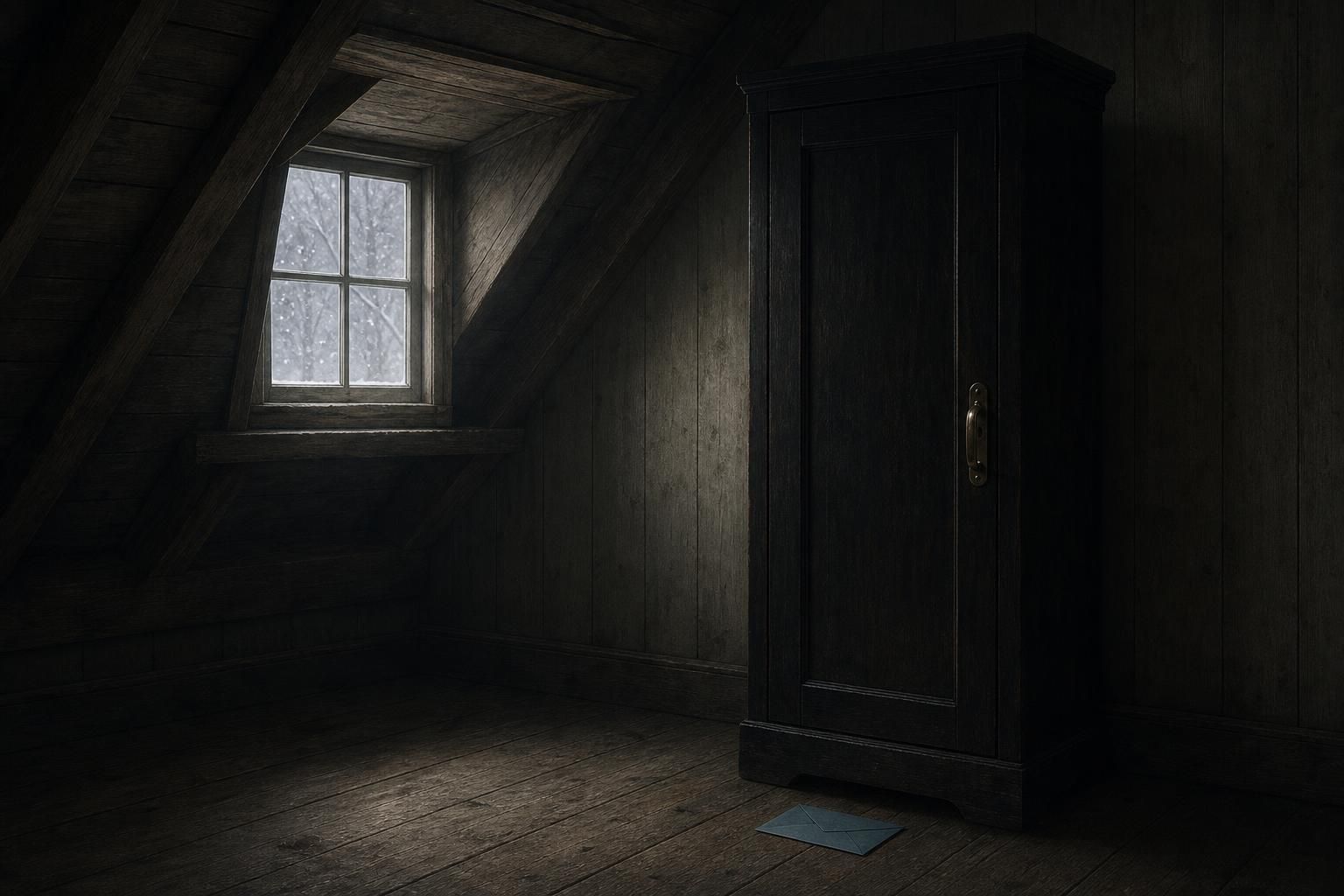
Nora puts the ring on her own finger. She closes the wardrobe door, leaves the blue envelopes inside, and walks out into the snow. The final image shows the wardrobe, still and silent, the brass handle glinting in the pale morning light.

