

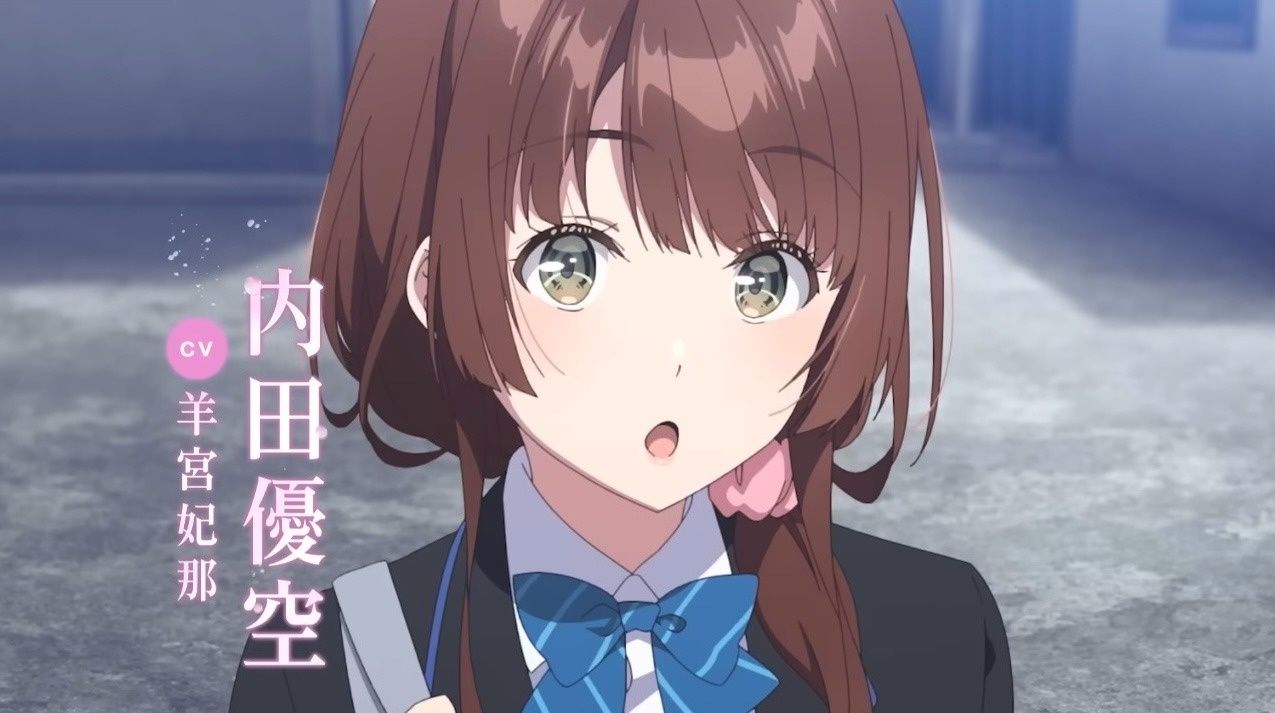
Chitose Is in the Ramune Bottle: A New Teaser Trailer Drops for the Highly Anticipated Anime Adaptation

📷 Image source: otakuusamagazine.com
A Glimpse into the Bottle
The New Teaser Trailer Arrives
The world of light novel adaptations just got a little brighter, or perhaps a little more effervescent. A new teaser trailer has been released for the upcoming anime series, Chitose Is in the Ramune Bottle, giving fans their first real look at the characters and the vibrant, slightly melancholic world they inhabit. This isn't just another clip show; it’s a carefully crafted piece of marketing designed to set the tone and build palpable hype for a story that has already captured a dedicated readership.
The trailer, according to otakuusamagazine.com, offers a preview of the central cast, voiced by their newly announced seiyuu. We get quick cuts of high school life, moments of quiet reflection, and the kind of visually striking animation that suggests the production studio is investing serious effort into this project. The title itself—Chitose Is in the Ramune Bottle—is intriguing. It evokes a sense of something precious and perhaps a little trapped, a sentiment that the teaser visually echoes with its careful composition and color palette.
For the uninitiated, a teaser like this is the first handshake, the first introduction to a story's atmosphere. It answers the 'what does it look like?' question, which is paramount for converting book fans into anime viewers and for hooking newcomers who judge an anime by its aesthetic appeal. The pressure is on; a bad adaptation can sink a property, but a great one, previewed by a compelling trailer, can launch it into the stratosphere.
The Source Material: A Modern Light Novel Phenomenon
From Page to Screen
To understand why this teaser is a notable event, you have to look at the source. Chitose Is in the Ramune Bottle began its life not as a manga, but as a light novel series written by Hiromu and illustrated by raemz. It kicked off in 2020 under the GA Bunko label, an imprint of SB Creative known for publishing hits like The Angel Next Door Spoils Me Rotten and The Irregular at Magic High School. In the crowded light novel market, standing out is a Herculean task, but this series managed to do just that.
The premise centers on a high school boy named Saku Chitose, who is the undisputed king of his school's social scene. He’s handsome, charismatic, and effortlessly popular—the archetypal 'normie' who seems to have life figured out. But as the title hints, there's more beneath the surface. The 'ramune bottle' is a metaphor for his inner self; something sealed away, carbonated with unexpressed emotions and complexities that his perfect exterior belies. The story delves into the intricate and often painful social hierarchies of Japanese high schools, exploring themes of identity, authenticity, and the masks people wear to navigate their world.
Its success was almost immediate. The series quickly garnered a passionate fanbase, impressed by its sharp dialogue, relatable emotional core, and deconstruction of common romantic comedy tropes. This popularity was cemented when it won the prestigious Grand Prize in the 13th GA Bunko Award, a huge endorsement that essentially greenlit its path to further media expansion. The manga adaptation, illustrated by You Mizuki, began serialization in 2021, further broadening its audience and solidifying the characters' designs in the public consciousness, which now serves as a direct reference point for the anime's character designers.
The Creative Engine Room
The Studio and Staff Behind the Animation
An anime is only as good as the team behind it, and the pedigree here is strong. The production is being handled by Project No.9, a studio with a solid track record in adapting light novels and producing character-driven stories. They’re the minds behind series like The Ryuo's Work is Never Done!, If Her Flag Breaks, and the more recent The Demon Sword Master of Excalibur Academy. While not always in the conversation with animation powerhouses like Kyoto Animation or Ufotable, Project No.9 has consistently demonstrated competence in delivering enjoyable, visually consistent adaptations that please core fanbases.
Directing the series is Satoshi Kuwabara, a veteran with decades of experience in the industry. His resume is diverse, spanning from key animation on classics like Rurouni Kenshin to directing duties on series like The World God Only Knows and A Destructive God Sits Next to Me. This range suggests a director capable of handling both the comedic, fast-paced banter and the quieter, more introspective dramatic moments that Chitose’s story will demand. A director’s touch is everything; they are the conductor for the entire orchestra of animators, writers, and sound designers.
The series composition is being handled by Yoriko Tomita, a seasoned scriptwriter known for her work on Fruits Basket, My Teen Romantic Comedy SNAFU, and Bottom-tier Character Tomozaki. Her involvement is arguably one of the most promising signs for the adaptation's quality. Tomita has a proven knack for adapting dense, dialogue-heavy light novels into tight, emotionally resonant anime scripts. She understands how to condense internal monologues—a staple of the light novel format—into visual storytelling and meaningful character interactions without losing the source material's soul. This team combination suggests a production that understands its material and has the right skills to bring it to life faithfully and compellingly.
Meeting the Cast
The Voices Bringing the Characters to Life
A teaser trailer's primary job is to introduce the look and sound of a show, and the voice cast is a huge part of that latter component. While the otakuusamagazine.com article previewing the teaser may not list the full cast, the announcement of the lead seiyuu is always a major event. The role of Saku Chitose is a coveted one, requiring an actor who can seamlessly shift between the character's effortless, popular persona and his more vulnerable, internalized moments.
In general, casting for these 'perfect protagonist' roles often goes to actors who have a history of playing charming, slightly aloof characters, but with a demonstrated ability to inject depth and warmth. Think of voices like Yoshitsugu Matsuoka (Kirito in Sword Art Online) or Natsuki Hanae (Ken Kaneki in Tokyo Ghoul). The right voice can make or break a character's relatability.
The supporting cast is just as critical. The story likely revolves around Chitose's interactions with a group of girls, each representing a different archetype or challenge to his worldview. The 'gal' character, the quiet bookworm, the athletic type—each requires a distinct vocal performance that highlights their personality. A strong seiyuu cast can elevate good material to greatness, creating chemistry that feels genuine and banter that crackles. The teaser gives us our first auditory taste of these performances, a crucial step in making these illustrated characters feel like real, breathing people before the first episode even airs.
The Light Novel Landscape
How Chitose Fits Into a Crowded Genre
To call the market for high school romantic comedy light novels 'saturated' would be an understatement. It's a genre propped up by pillars like Toradora! and Oregairu, with dozens of new entrants every year hoping to capture a slice of the audience. So what does Chitose Is in the Ramune Bottle do differently? Its key differentiator appears to be its focus on the male protagonist's psychology from a position of perceived social strength, rather than weakness.
For years, the trend was the outsider protagonist: the loner, the otaku, the transfer student. We saw the world through the eyes of someone trying to break into a social circle. Chitose flips this script. Our protagonist is already at the center of that circle. The conflict isn't about getting in; it's about whether the center can hold, and what it costs to maintain that position. It explores the loneliness of popularity and the performance of identity, themes that resonate in an age of social media where everyone is curating a personal brand.
This positions it interestingly against its competitors. It has the romantic elements of a series like The Angel Next Door Spoils Me Rotten but with a more cynical, introspective edge reminiscent of My Teen Romantic Comedy SNAFU's Hachiman Hikigaya, though from the opposite social starting point. Its trade-off is that it risks alienating viewers who prefer a more straightforward, wish-fulfillment power fantasy. It’s a more challenging, psychologically nuanced take on the genre, which is likely why it found such critical acclaim in its original form. It’s not just asking 'will he get the girl?'; it’s asking 'does he even know who he is?'
The Business of Adaptation
Why This Anime Exists
Anime adaptations, especially of ongoing light novel series, are rarely just passion projects; they are calculated business decisions with very specific goals. The primary function of the Chitose Is in the Ramune Bottle anime is to serve as a massive, multi-million yen advertisement for the original light novels and manga. The GA Bunko label and SB Creative are betting that the increased visibility from a well-produced anime will drive a significant spike in manga volume and light novel sales.
This is a proven model. A successful anime can boost source material sales by 300% to 1000% or more. For a series that already has five or more light novel volumes on shelves, that represents a huge revenue opportunity. Furthermore, an anime opens the door to a vast array of lucrative secondary merchandise: figures, keychains, apparel, video games, and official soundtrack albums. The character of Chitose, with his designed-to-be-appealing look, is practically begging to be turned into a scale figure for collectors' shelves.
The anime also expands the franchise's reach globally. While light novels have a growing international audience thanks to official translations from publishers like Yen Press, anime is still the primary gateway for most Western fans into any Japanese property. A hit anime on streaming platforms like Crunchyroll or Funimation can introduce Chitose to millions of new fans worldwide, creating a sustainable international fanbase that will support the franchise for years to come. The teaser trailer is the first shot in this global campaign, designed to trend on social media and get people talking.
Potential and Pitfalls
What Could Make or Break the Adaptation
Every adaptation walks a tightrope, and Chitose Is in the Ramune Bottle has its own unique set of challenges. The biggest risk lies in its tone. The story’s strength is its balance of witty, fast-paced comedy and genuine, sometimes painful, drama. An adaptation that leans too far into the comedy could come off as shallow and fail to capture the protagonist's inner turmoil. Conversely, a version that gets too bogged down in angst could become a slog, alienating viewers who were drawn in by the promise of a fun romantic comedy.
The narrative is also likely heavily reliant on Saku Chitose's internal monologue. A lazy adaptation would simply have the character narrate everything he’s thinking, which is a surefire way to create a boring anime. The true test for director Satoshi Kuwabara and writer Yoriko Tomita will be their ability to 'show, not tell.' They must find visual ways to express his isolation and performative happiness—a glance in a mirror, a forced smile that drops when he’s alone, a thoughtful look at a ramune bottle. The teaser suggests an awareness of this, using visual metaphors, but maintaining it over a full season is a difficult task.
There’s also the pacing challenge. Light novels are dense with detail and inner thought. Condensing multiple volumes into a likely 12 or 13-episode season means making tough choices about what to cut and what to keep. Cutting the wrong subplot or secondary character development could undermine the entire emotional arc of the story. The production committee will be hoping the team can distill the essence of the story without losing its heart, creating an adaptation that satisfies existing fans while being perfectly comprehensible and engaging for newcomers who just saw a cool trailer.
The Cultural Bottle
Themes and Their Resonance
At its core, Chitose Is in the Ramune Bottle is about a very modern form of alienation—the feeling of being trapped by the version of yourself that everyone else sees and expects. The ramune bottle is a perfect symbol for this. A ramune bottle is sealed with a marble; to drink it, you have to push the marble down inside, where it rattles around forever. It’s a beautiful, fizzy drink contained by a beautiful, frustrating mechanism. Chitose is the drink, and his popularity and charm are the bottle and the marble.
This theme has universal appeal, but it hits particularly hard in the context of Japanese society and its emphasis on group harmony (wa) and public-facing conformity (honne and tatemae). The pressure to maintain a public face (tatemae) that differs from one's true feelings (honne) is a central part of social interaction. Chitose’s struggle is an extreme amplification of a pressure every teenager, and indeed many adults, feels to some degree. How much of my online personality is real? How much of my success is based on being likable rather than being genuine?
In an international context, especially in Western countries grappling with the effects of Instagram and TikTok culture, this story about the anxiety of performance and the search for an authentic self is incredibly timely. It’s not just a Japanese story; it’s a story for the social media age. The anime has the potential to tap into this global zeitgeist, making Saku Chitose a relatable figure for anyone who has ever felt the need to curate their personality for public consumption. The success of the teaser and the eventual series will depend on its ability to communicate this deep, resonant theme through its animation and character writing, proving it's more than just another pretty face in a crowded season.
Looking Forward
The Road to the Premier and Beyond
The release of this teaser trailer is the beginning of the final marketing push. The next steps are predictable but crucial: a full, longer trailer that gives a more comprehensive look at the plot and introduces more of the supporting cast, a full announcement of the main voice cast, and a firm release date—likely for the Spring or Summer 2025 anime season, given the timing of this preview from otakuusamagazine.com on 2025-08-19T19:12:56+00:00.
Once the anime airs, its performance will be judged on several metrics: TV ratings in Japan (though these are becoming less important), disc sales (Blu-ray/DVD), and most significantly, its performance on streaming platforms and the subsequent boost in light novel sales. The ultimate goal is for the anime to be successful enough to warrant a second season, allowing the adaptation to tell a complete story rather than just serving as a promotional opener.
The arrival of Chitose Is in the Ramune Bottle is a noteworthy event in the anime calendar. It represents the adaptation of a critically acclaimed and popular property with a strong creative team behind it. It’s a story with a compelling hook, relatable themes, and the potential to be both a commercial success and a critical darling. The new teaser trailer is our first real proof that the pieces are coming together, a promise of fizz and flavor waiting to be uncorked. For fans of the source material and curious onlookers alike, the countdown to the premier has officially begun.
#ChitoseIsInTheRamuneBottle #AnimeTrailer #LightNovelAdaptation #GABunko #HighSchoolAnime


