

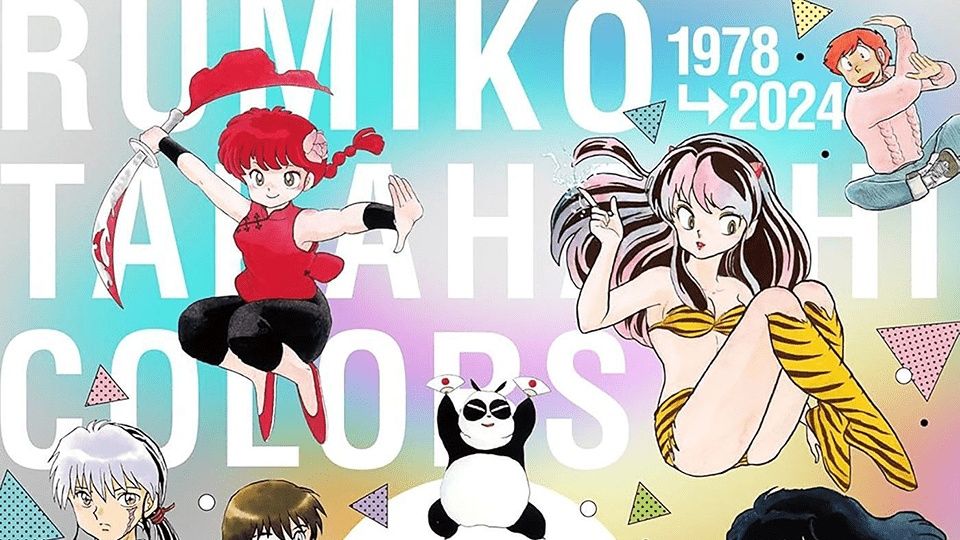
Rumiko Takahashi's 'Colors' Is a Vibrant Testament to a Manga Legend's Enduring Genius

📷 Image source: otakuusamagazine.com
A Lifetime in Color
Takahashi's Artbook Captures Four Decades of Evolution
Rumiko Takahashi’s name is synonymous with manga royalty. For over 40 years, she’s been the creative force behind classics like 'Urusei Yatsura,' 'Maison Ikkoku,' 'Ranma ½,' and 'Inuyasha'—stories that defined generations of fans worldwide. 'The Art of Rumiko Takahashi: Colors 1978-2024' isn’t just another art book; it’s a time capsule of her career, a 300-page explosion of vibrancy that tracks how her style shifted, refined, and occasionally exploded into new directions.
From the earliest sketches of Lum in her tiger-striped bikini to the lush, cinematic spreads of 'Inuyasha,' Takahashi’s work has always had a kinetic energy. But seeing it collected like this, in chronological order, reveals something deeper: her relentless experimentation. The ’80s pages are all bold lines and exaggerated expressions, while the ’90s work shows a subtler hand, with shadows that feel almost painterly. By the 2000s, she’s playing with digital tools, but never losing that unmistakable Takahashi flair.
More Than Just Pretty Pictures
Why This Collection Matters
Artbooks like this often cater to die-hard fans, but 'Colors' does something rare—it makes a case for Takahashi as one of manga’s most underrated visual storytellers. Sure, her comedic timing is legendary (that two-page spread of Ataru’s face after getting zapped by Lum still lands perfectly), but her use of color is where she truly innovates.
Take the 'Maison Ikkoku' section: those soft watercolor tones aren’t just pretty; they mirror the story’s bittersweet romance. Compare that to the fiery reds and blacks of 'Inuyasha,' where every hue feels like it’s bleeding with emotion. Takahashi doesn’t just draw; she paints moods. And for Western readers who mostly know her work through grayscale tankōbon, this book is a revelation.
The Legacy of a Workhorse
Takahashi’s Relentless Output and Influence
What’s staggering about 'Colors' isn’t just the quality—it’s the sheer volume. Flipping through, you’re reminded that Takahashi has been producing hit after hit since the late ’70s without ever burning out. While other mangaka took breaks or pivoted to lighter workloads, she kept serializing, week after week, for decades.
And her influence is everywhere. You can see her fingerprints on Eiichiro Oda’s expressive faces ('One Piece') and even in the romantic tension of modern shoujo. But here’s the thing: Takahashi never chased trends. She just told stories her way, whether it was screwball comedy or feudal fantasy. This book captures that stubborn, brilliant consistency.
Why Now?
A New Generation Discovers Takahashi
With the 'Urusei Yatsura' reboot and rumors of a new anime project swirling, 'Colors' arrives at the perfect moment. Younger fans who missed Takahashi’s heyday are getting a crash course in why she’s a legend. And for older readers? It’s a nostalgia trip, sure, but also a reminder of how much her work holds up.
That’s the magic of this collection. It’s not just a celebration of the past; it’s proof that Takahashi’s art—like her stories—transcends eras. Whether you’re a longtime fan or a curious newcomer, 'Colors' makes one thing undeniable: Rumiko Takahashi’s brilliance hasn’t faded a bit.
#RumikoTakahashi #MangaArt #Inuyasha #UruseiYatsura #MangaLegend


