

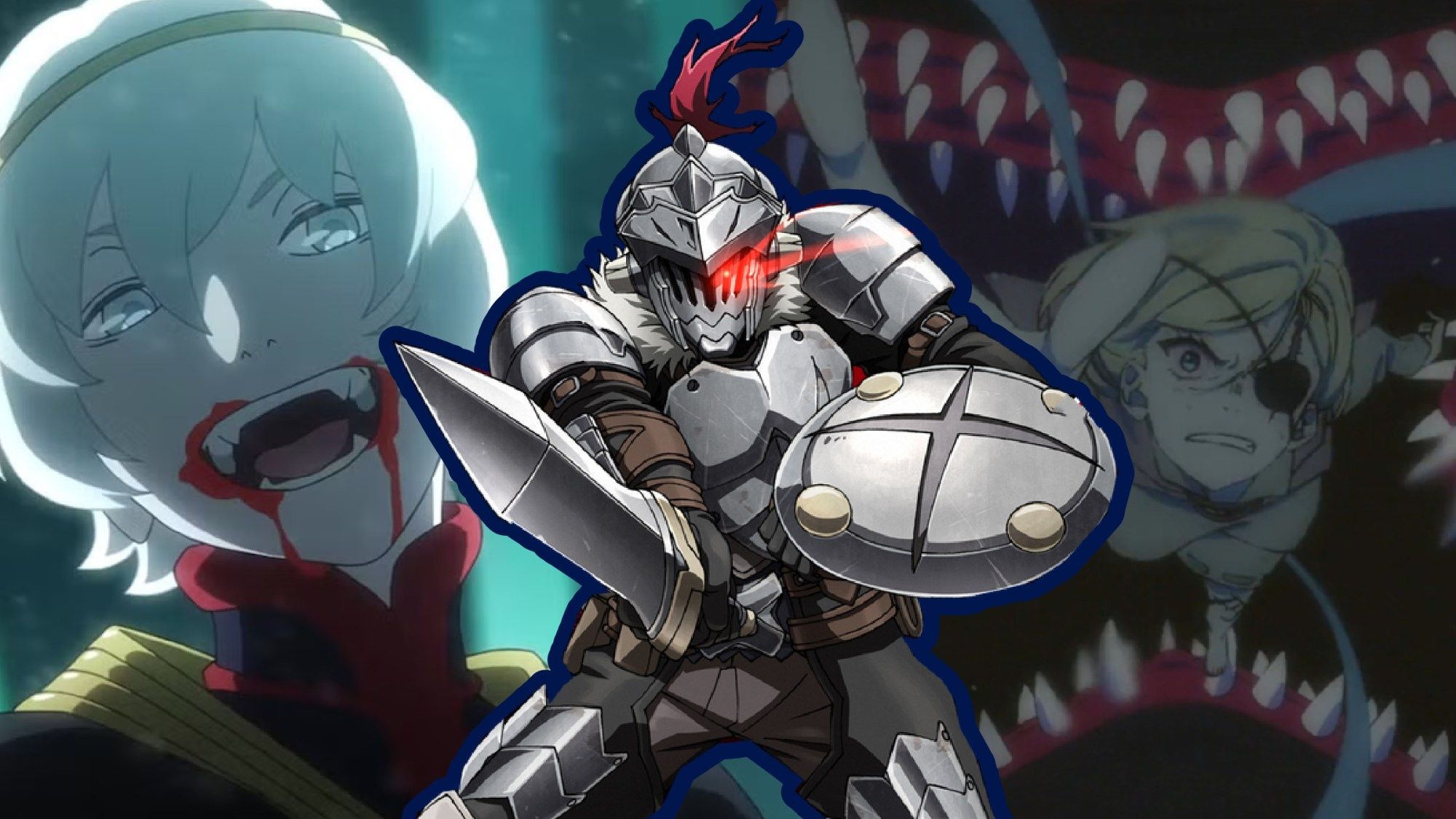
When Magic Bleeds: The Unflinching Allure of Dark Fantasy Anime

📷 Image source: comicbook.com
A Descent into Shadows
Why the genre's grim tales resonate so deeply
Forget the sparkling wizards and noble quests of traditional fantasy. There's another, far more visceral corner of the animated world where magic is a curse, heroes are broken, and happy endings are a luxury few can afford. This is the realm of dark fantasy anime, a genre that has clawed its way from niche obscurity to become a powerhouse of modern storytelling. It’s a space where the fantastical isn’t an escape from reality but a distorted mirror held up to its darkest facets—corruption, trauma, and the brutal cost of survival.
According to a list published by comicbook.com on August 20, 2025, series like 'Berserk,' 'Attack on Titan,' and 'Chainsaw Man' define this brutal and captivating genre. But what is it about these harrowing narratives that commands such a devoted, global audience? It’s more than just shock value. It’s the raw, emotional honesty of watching characters pushed to their absolute limits in worlds that offer no easy answers, a stark contrast to the often sanitized conflicts of mainstream fantasy.
Defining the Darkness
More than just gore and gloom
So, what exactly separates a dark fantasy from its lighter counterparts? It’s a specific alchemy of elements. The setting is typically a low-magic or decaying world, often post-apocalyptic or gripped by a relentless, existential threat. The supernatural elements are less about wonder and more about horror—demons, curses, and monstrous transformations are common. The tone is overwhelmingly bleak, cynical, or tragic, rejecting the idealistic 'power of friendship' tropes for a more nihilistic or pragmatically grim outlook.
The protagonists are rarely chosen ones in the traditional sense. They are more often victims, anti-heroes, or deeply traumatized individuals reacting to a world that has already broken them. Their journeys are not about saving the world so much as surviving it, or perhaps extracting a meager measure of revenge before the end. Moral ambiguity is the rule, not the exception; the line between hero and villain is often smudged beyond recognition with blood and desperation.
The Titans of the Genre
Foundational works that forged the template
The genre didn't emerge from a vacuum. Its foundations were laid by seminal works that proved audiences had a stomach for complex, adult-oriented animation. Kentaro Miura's 'Berserk,' which began serialization in 1989, is arguably the godfather of them all. Its tale of the branded swordsman Guts, relentlessly pursued by demonic apostles in a grim medieval Europe-inspired world, set a new standard for mature themes and graphic content in manga and anime. Its influence is immeasurable, a shadow that falls across nearly every dark fantasy that followed.
Another cornerstone is 'Claymore,' a series that expertly blends dark fantasy with monster-hunting action. It presents a world where shape-shifting monsters called Yoma are hunted by half-human, half-monster female warriors known as Claymores. The series is a masterclass in body horror and the tragedy of its protagonists, who constantly battle the very monstrous nature they wield as a weapon. These series established the core tenets: a focus on trauma, a horrifyingly beautiful aesthetic, and stories where victory is always pyrrhic and survival comes at a profound personal cost.
The Modern Evolution
From niche manga to global streaming phenomena
The 2010s marked a seismic shift. The advent of global streaming platforms like Crunchyroll and later Netflix demolished geographical barriers, allowing these once-hard-to-find series to reach a massive international audience. This coincided with a new wave of creators who grew up on the classics and were ready to push the boundaries even further.
Hajime Isayama's 'Attack on Titan' became a global cultural tsunami. On the surface, it’s a simple premise: humanity hiding behind walls from giant, man-eating Titans. But it quickly unravels into a devastatingly complex narrative about the cycle of hatred, the poison of nationalism, and the horrifying truth of its own world. It demonstrated that dark fantasy could be both a gripping action spectacle and a profound philosophical treatise, appealing to a mainstream audience while never softening its brutal blows.
This era also saw the rise of series like 'Made in Abyss,' which juxtaposes a stunning, whimsical art style with some of the most disturbing body horror and psychological torment ever depicted. Its story of children exploring a beautiful but deadly abyss is a perfect example of the genre's power to wrong-foot the viewer, using aesthetic beauty to make the ensuing darkness all the more impactful.
A New Wave of Carnage
The raw, chaotic energy of recent hits
The current vanguard of dark fantasy is even more extreme, reflecting a different kind of cultural anxiety. Tatsuki Fujimoto's 'Chainsaw Man' is a delirious, punk-rock explosion of energy. Its protagonist, Denji, is a far cry from the brooding Guts; he’s a traumatized, impoverished teenager whose simple dreams of eating bread with jam and touching a girl’s breasts are the driving force behind his merger with a devil-dog and his transformation into the Chainsaw Man. The series is chaotic, hilarious, and deeply unsettling, blending ultra-violence with a poignant exploration of poverty and emotional deprivation.
'Jujutsu Kaisen,' meanwhile, has taken the shonen battle formula and injected it with a heavy dose of dark fantasy morbidity. Its system of 'cursed energy' powered by negative emotions, its grotesque and creative curse designs, and its willingness to maim and kill beloved characters give it a constant, palpable sense of danger. It operates within a popular framework but subverts the expected safety nets, keeping viewers on edge in a way few mainstream battle shonen dare to.
Beyond the Bloodshed
Psychological and philosophical depths
To dismiss these series as merely violent would be a profound mistake. The gore is a vehicle, not the destination. The real horror is often psychological. 'Berserk' is a centuries-spanning epic about coping with unimaginable betrayal and trauma. 'Attack on Titan' is a deep dive into the mechanics of propaganda and the impossibility of breaking cycles of violence. 'Made in Abyss' is a terrifyingly effective metaphor for the innocent, often self-destructive, thirst for knowledge and discovery.
These stories force viewers to confront uncomfortable questions. What does it mean to be human in a world that rewards monstrosity? Can hope exist in a fundamentally hopeless situation? Is revenge a valid path, or does it only perpetuate the pain? There are no easy answers provided, which is what makes them so compelling and rewatchable. They sit with you, their ambiguities and tragedies fermenting in your mind long after the credits roll.
The Engine of Dread
How animation and sound build the atmosphere
The power of these stories is magnified exponentially by the medium itself. Anime allows for a stylization that live-action often can’t achieve. The exaggerated expressions of terror, the surreal and grotesque designs of monsters, the way blood and shadow can be rendered artistically—all of it contributes to a unique and potent atmosphere. Studios like MAPPA ('Chainsaw Man,' 'Jujutsu Kaisen') and Wit Studio (early 'Attack on Titan') have become renowned for their ability to translate this disturbing beauty into fluid, breathtaking, and horrifying animation.
The sound design is equally crucial. The absence of sound can be as powerful as a screaming soundtrack. The creepy, music-box melodies of 'Made in Abyss,' the oppressive, grinding industrial score of 'Berserk,' the triumphant yet tragic orchestral pieces of 'Attack on Titan'—they are all carefully crafted to manipulate the viewer’s emotions, to build tension, and to underscore the moments of devastating loss. It’s a full-sensory immersion into despair.
Global Resonance and Local Nuance
Why dark fantasy translates across cultures
The global appeal of these Japanese creations is a fascinating phenomenon. While rooted in specific cultural touchstones and folklore (like the oni and yokai of 'Jujutsu Kaisen' or the Shinto-inspired concepts of curses), the core themes are universally human. Trauma, the struggle for survival, questioning authority, and the search for meaning in a cruel world are not confined by borders.
In practice, this has led to massive fan communities worldwide, dissecting every frame and plot twist. The genre has also influenced Western animation, paving the way for more adult-oriented shows to explore similar grim territory. However, a direct translation of the specific cultural and historical context can sometimes be lost, leading to interpretations that focus solely on the spectacle rather than the substance. The best fansubs and localizations work hard to preserve these nuances, adding translator notes to explain concepts that don't have a direct Western equivalent.
The Ethical Abyss
Confronting the genre's controversies and responsibilities
This genre doesn’t get to operate without scrutiny. Its intense and graphic nature inevitably sparks debate. The depiction of violence, particularly against women, in series like 'Berserk' and 'Goblin Slayer' has been a point of intense criticism, with debates raging over what constitutes necessary storytelling versus gratuitous exploitation. These are valid conversations about the responsibilities of creators and the potential impact on audiences.
Furthermore, the themes can be psychologically taxing. The relentless pessimism and graphic content are not for everyone, and the genre can be triggering for those with certain traumas. This creates an interesting dynamic for streaming services, which must balance content warnings with the desire to promote their most popular titles. It raises a question: does immersing oneself in such darkness provide a cathartic release for real-world anxieties, or does it risk normalizing despair? There’s no consensus, and the debate is as old as storytelling itself.
The Future is Bleak (And We Can't Look Away)
Where does the genre go from here?
The commercial and critical success of recent entries proves that the appetite for dark fantasy is only growing. The bar for animation quality and narrative ambition is higher than ever. We’re seeing more genre-blending, like the dark fantasy-sci-fi of 'Cyberpunk: Edgerunners' or the dark fantasy-comedy of 'Chainsaw Man.'
The next frontier seems to be an even deeper exploration of psychological horror and unconventional storytelling structures. As the medium continues to gain respect globally, creators are empowered to take bigger risks. We can expect more stories that challenge our perceptions of heroism, that sit in moral gray areas for longer, and that use the fantastical to explore very real, modern-day fears about climate change, societal collapse, and mental health. The shadows are getting deeper, and more viewers are willingly stepping into them, ready to be challenged, horrified, and ultimately, moved by the stark, beautiful truths found only in the dark.
#DarkFantasy #Berserk #AttackOnTitan #AnimeGenre #Grimdark


