

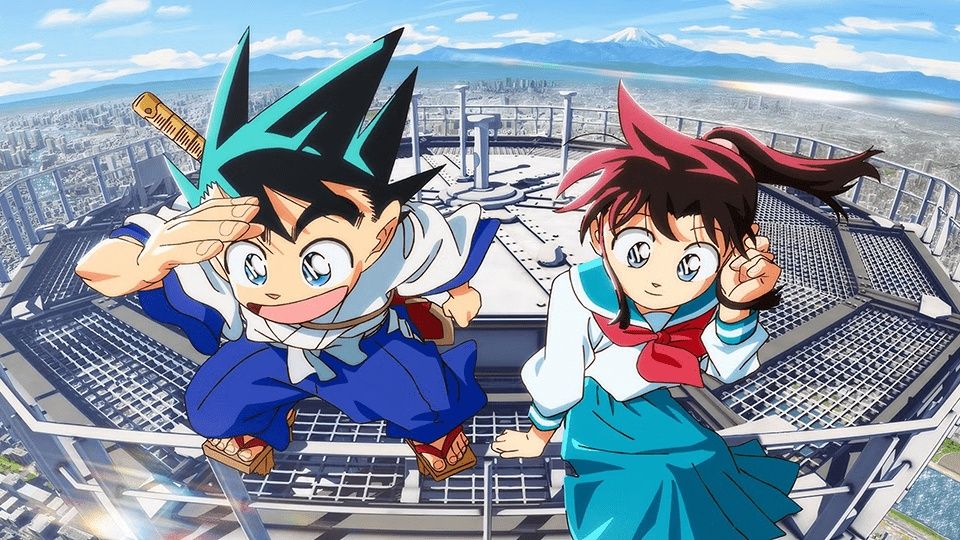
YAIBA: Samurai Legend — The Overlooked Gem That Redefined Shonen Anime

📷 Image source: otakuusamagazine.com
The Unassuming Masterpiece
How a 90s anime slipped under the radar while laying groundwork for modern hits
If you mention Gosho Aoyama to most anime fans, you'll get one immediate response: Detective Conan. The franchise about a teen detective trapped in a child's body has become a cultural institution, running for over 1,000 episodes and counting. But before Conan, there was YAIBA: Samurai Legend—Aoyama's first major hit that somehow never achieved the same global recognition despite being arguably more inventive, more chaotic, and more purely fun than its successor.
YAIBA follows the adventures of Yaiba Kurogane, a young samurai raised in the wilderness by his father and a talking tiger. When he moves to modern Tokyo, he discovers his destiny involves legendary swords, ancient spirits, and battles that blend historical martial arts with outright supernatural spectacle. The series originally ran from 1988 to 1993 in Weekly Shōnen Sunday, the same magazine that would later host Conan, and received a 52-episode anime adaptation that wrapped in 1994. According to otakuusamagazine.com, which highlighted the series in an August 2025 feature, it remains one of those shows veteran fans recommend with almost evangelical fervor—precisely because it never became overexposed or formulaic.
What makes YAIBA worth revisiting now, over thirty years after its debut? In an era where shonen anime often follows carefully calibrated story arcs and power-up progressions, YAIBA feels refreshingly unpredictable. It's goofy, heartfelt, and doesn't take itself too seriously—even when the fate of the world is literally at stake.
Gosho Aoyama’s Playground
The creative freedom of a creator before franchise expectations set in
Every great artist has a breakthrough work, but rarely does it also serve as their creative playground. YAIBA was exactly that for Aoyama—a space where he could experiment with genre, tone, and character dynamics without the pressure of maintaining a decades-long narrative. You can see the early DNA of Detective Conan here, not in mystery plotting, but in Aoyama's knack for balancing humor and tension, and his love of clever, resourceful young protagonists.
Yaiba himself is a classic shonen hero—driven, brave, hilariously naive about modern life—but surrounded by a supporting cast that subverts expectations. Take Sayaka, the wealthy and fiercely intelligent girl who becomes Yaiba's friend and occasional rival. She’s no damsel; she’s solving problems with her wits while Yaiba chops things with a sword. Or Kaguya, an alien princess with a connection to the moon and a mischievous streak that constantly keeps the heroes on their toes.
Aoyama wasn’t afraid to get weird. One arc might involve a deadly serious duel between master swordsmen; the next, a comedy-of-errors baseball game with magical stakes. This tonal flexibility is something many of today’s hit series struggle with, often siloing comedy into filler episodes. YAIBA made it all part of the main narrative texture.
The Blade and the Beast
At the heart of YAIBA is its approach to combat and power progression—a topic every shonen fan debates endlessly. Yaiba wields the legendary Raijingūrā (Thunder God Blade), a weapon that evolves throughout the series, gaining new abilities and forms. But unlike later series where power-ups are often telegraphed seasons in advance, Yaiba’s growth feels organic and sometimes delightfully absurd.
He doesn’t just learn new techniques; he absorbs the powers and spirits of defeated foes, including a thunder god, a dragon, and even a dinosaur. This leads to transformations that are both visually inventive and narratively unexpected. In one famous battle, he combines his sword skills with a triceratops’s energy—because why not?
The fights themselves are a mix of traditional samurai showdowns and full-blown supernatural spectacle. Swords clash, energy blasts fly, and the animation—while dated by today’s standards—has a raw, energetic charm that digital productions often lack. There’s an physicality to the action that reminds you this was made when hand-drawn cels were still the industry standard.
Why It Flies Under the Radar
So why isn’t YAIBA as famous as Dragon Ball Z, Rurouni Kenshin, or even Aoyama’s own Detective Conan? Timing played a huge role. It arrived at the tail end of the 80s anime boom, just before the globalization of anime really took off with shows like Sailor Moon and Pokémon. By the time anime became a mainstream interest in the West, YAIBA was already off the air, and its studio, Pastel, wasn’t as aggressive with international licensing as Toei or Sunrise.
There was also the matter of tone. YAIBA is hard to categorize. It’s a historical fantasy, a comedy, a battle shonen, and occasionally a sci-fi adventure. That genre-blending is a strength creatively, but it’s a marketing nightmare. Is it for kids? Teens? Adults who appreciate absurd humor? Streaming algorithms today would probably short-circuit trying to recommend it.
And let’s be honest—the production values, while charming, aren’t on the level of a Akira or a Ghost in the Shell. This was a TV series made on a tight schedule and budget. But that also gave it a rough-around-the-edges personality that polished modern productions often lack.
The Ripple Influence
Tracing YAIBA’s DNA in modern shonen hits
You might not know YAIBA by name, but if you’re a fan of modern shonen, you’ve felt its influence. The idea of a hero incorporating abilities from defeated enemies? That’s a staple in series like Naruto (with jutsu) and My Hero Academia (with Quirks). The blend of intense action with slapstick comedy? See One Piece. Even the concept of a ancient warrior adjusting to modern life shows up in everything from Samurai Jack to Miss Kobayashi’s Dragon Maid.
YAIBA was also ahead of the curve on gender dynamics. Female characters like Sayaka and Kaguya aren’t just love interests or cheerleaders; they’re active participants in the story, driving plots and holding their own in fights. That was less common in late-80s/early-90s shonen than you might think—many series relegated girls to supporting or victim roles.
Perhaps most importantly, YAIBA understood that stakes don’t always have to be apocalyptic to be compelling. Yes, there are world-ending threats, but some of the best episodes are about personal rivalries, school competitions, or just Yaiba trying to figure out how vending machines work. That balance of scale is something newer series like Demon Slayer and Jujutsu Kaisen have mastered—and YAIBA was there first.
Where to Watch and How to Approach It
Here’s the tricky part: YAIBA isn’t available on major streaming services like Crunchyroll or Funimation. According to otakuusamagazine.com, the series has never received an official English dub, and the subtitled version can be hard to track down legally. It’s one of those shows that survives through fan preservation efforts and DVD imports—which, ironically, adds to its cult status.
If you do find it, embrace the era it came from. The animation will feel dated. The pacing might seem uneven compared to today’s tightly structured seasons. But there’s a warmth and creativity here that transcends its technical limitations. This isn’t a series to binge for plot; it’s one to savor for character moments, unexpected jokes, and fights that feel like they could go any direction.
Start with the early episodes to get a feel for the world and the core cast. If you’re hooked by episode 10—which introduces the first major arc involving the demon Jubei—you’ll probably be in for the long haul.
Why It Matters Now
In a media landscape dominated by franchises, cinematic universes, and endlessly serialized stories, YAIBA is a reminder that not every great narrative needs to run for hundreds of episodes. It told its story, had its fun, and ended—leaving behind a complete, satisfying experience without spin-offs or reboots (though a modern remake would be fascinating).
It also represents a specific moment in anime history—the transition from the analog era to the digital, from niche otaku culture to global phenomenon. YAIBA wasn’t quite part of either; it was too mainstream to be underground, too weird to be mainstream. But that in-between space is where some of the most interesting art always lives.
For creators, it’s a lesson in creative risk-taking. Aoyama could have played it safe after YAIBA; instead, he pivoted to murder mysteries with Detective Conan. Both series thrive because they’re driven by a distinct voice, not market testing. That’s a recipe that never gets old.
The Verdict: Should You Watch It?
If you love shonen anime—especially if you’re tired of tropes feeling recycled—YAIBA is a blast of fresh air from the past. It’s not perfect. Some jokes haven’t aged well. The animation has its rough patches. But it’s full of heart, creativity, and a sense of joy that’s contagious.
This isn’t a homework assignment; it’s a discovery. Put it on with friends, laugh at the absurdity, get invested in the characters, and appreciate a series that wasn’t afraid to be exactly what it wanted to be. In an age of content algorithms and safe bets, that kind of artistic confidence is itself a kind of magic.
As otakuusamagazine.com put it in their 2025 feature, YAIBA is more than a hidden gem—it’s a reminder of why we fell in love with anime in the first place. Not because it was cool or popular, but because it could surprise us.
#YAIBA #GoshoAoyama #ShonenAnime #ClassicAnime #SamuraiLegend #WeeklyShonenSunday


