

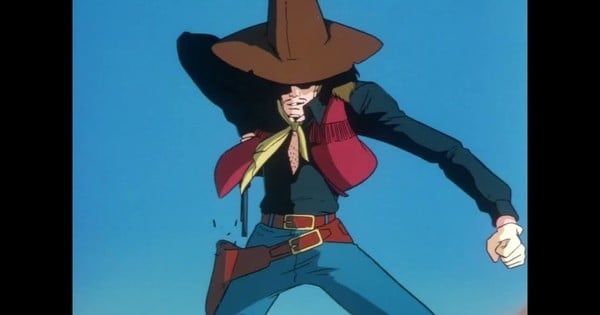
AnimEigo Revives a Ninja Epic: The Dagger of Kamui Blu-ray Arrives After Decades

📷 Image source: animenewsnetwork.com
A Long-Awaited Return to the Shadows
Classic Anime Film Emerges from Obscurity
A landmark film in anime's cinematic history is finally stepping back into the light. AnimEigo, a distributor known for rescuing classic Japanese animation, has announced the North American Blu-ray release of *The Dagger of Kamui*. According to animenewsnetwork.com, the release is scheduled for April 7, 2025. This marks a significant moment for collectors and historians, bringing a complex and visually ambitious work to modern audiences in a high-definition format.
The 1985 film, directed by Rintaro and based on a novel by Tetsu Yano, is a sprawling ninja epic that has long been difficult to access legally in high quality. Its upcoming release follows a pattern for AnimEigo, which specializes in licensing and restoring older anime titles that have fallen out of circulation. The company's announcement, dated December 26, 2024, provides a concrete date for fans who have waited years for a proper home video edition.
Unpacking the Plot: A Quest for Vengeance and Identity
Beyond Simple Ninja Action
*The Dagger of Kamui* follows Jiro, a young man whose adoptive family is murdered, setting him on a path of revenge that unravels a vast conspiracy. His journey is not just physical but spiritual, as he trains under various masters and discovers his own mysterious heritage. The narrative weaves historical figures and events from Japan's Bakumatsu period with mystical elements, creating a unique blend of adventure and folklore.
The story escalates from a personal tragedy into a globe-trotting adventure that spans from Japan to the American frontier. This scale was highly ambitious for an anime film of its time, incorporating themes of colonialism, hidden bloodlines, and the clash between tradition and modernization. The plot's complexity has been both praised for its depth and critiqued for its pacing, making it a fascinating subject for analysis decades later.
The Creative Force Behind the Film
Rintaro's Cinematic Vision
Director Rintaro, a veteran with roots at the famed Mushi Production studio, brought a distinct visual style to the project. Known for works like *Galaxy Express 999* and *Metropolis*, his direction in *The Dagger of Kamui* is noted for its dynamic action sequences and detailed period settings. The film's artistic approach aimed for a cinematic feel that stood apart from standard television anime of the mid-1980s.
The production involved notable talents, including character designs by Satomi Mikuriya. The film's score, composed by Kentaro Haneda, provided an atmospheric and dramatic backdrop to the epic tale. Understanding this creative context is crucial, as the film represents a specific moment in anime production where feature films experimented with more mature and intricate storytelling, targeting an audience beyond children.
The Significance of AnimEigo's Role
More Than Just a Distributor
AnimEigo's announcement is not merely a commercial release; it's an act of preservation. The company has built a reputation for its meticulous work in subtitling and its commitment to presenting works in a form respectful to the original material. Their process often includes extensive research to ensure cultural and historical references in the subtitles are accurate, which is particularly important for a film dense with Japanese history like *The Dagger of Kamui*.
This release strategy highlights a vital niche in the anime industry. While major studios focus on current hits, companies like AnimEigo ensure that foundational works remain accessible. They cater to a dedicated segment of the fandom that values historical context and the artistic evolution of the medium, acting as archivists for anime's rich and varied past.
Technical Restoration: From Film Reels to HD
The Challenge of Bringing Old Animation to New Formats
Releasing a film from 1985 on Blu-ray presents significant technical hurdles. The original film elements must be located, scanned at high resolution, and digitally restored to remove decades of damage like scratches, dust, and color fading. AnimEigo has not disclosed the specific source materials used for this transfer, leaving some uncertainty about the restoration's provenance. However, their track record suggests a commitment to quality.
The restoration process directly impacts the viewing experience. Faithfully reproducing the detailed line work and the specific color palette of cel-animated films is crucial. A poor transfer can make animation look soft or muddy, while an overly aggressive digital cleanup can erase the authentic film grain and texture, making the work look artificially smooth. The success of this technical effort will be a key factor in the release's reception by purists and new viewers alike.
Place in Anime History: The 1980s Feature Film Boom
A Product of Its Ambitious Era
*The Dagger of Kamui* arrived during a fertile period for anime feature films. The early-to-mid 1980s saw the release of seminal works like *Nausicaä of the Valley of the Wind* (1984) and *Night on the Galactic Railroad* (1985). These films pushed boundaries in animation technique and narrative complexity, often with higher budgets and longer production schedules than TV series. They were statements of artistic ambition.
Compared to its contemporaries, *The Dagger of Kamui* is notable for its historical adventure framework, differing from the post-apocalyptic or fantasy settings common at the time. Its attempt to fuse authentic Japanese history with fictional adventure places it in a unique category. Analyzing it now offers insights into the diverse storytelling experiments the industry was willing to fund before the market consolidated around more predictable genres and franchises.
The Collector's Perspective: Packaging and Special Features
What Value Does a Physical Release Add?
In an age of digital streaming, a physical Blu-ray release must justify its existence. Collectors look for high-quality packaging, informative booklets, and substantive special features. While the animenewsnetwork.com report confirms the release date and format, details on supplementary materials are not provided, creating an information gap. Fans will be keen to learn if interviews, commentary tracks, or historical essays are included.
The absence of detailed information on special features is a common point of uncertainty in early announcements. These elements are critical for historical works, as they provide context that enhances understanding and appreciation. A bare-bones disc with just the film may satisfy some, but a release packed with scholarly extras transforms the product from a simple movie into a documented piece of animation history, which is often AnimEigo's strength.
Market Impact and Audience Reception
Who Is This Release For?
The primary audience for this release is multifaceted. It targets longtime anime enthusiasts who remember the film from the 1980s or from obscure VHS releases, as well as film historians and students of animation. Furthermore, it appeals to modern fans of historical and action anime who are curious about the genre's roots. The success of this niche release could signal to other distributors that there is a sustainable market for well-produced editions of classic, non-franchise films.
However, the market is not without risks. The film's age and specific narrative style may not resonate with viewers accustomed to the pacing and visual polish of modern anime. Its value is more cultural and educational than purely entertainment-driven. AnimEigo's business model relies on accurately gauging the size and passion of this dedicated audience, willing to invest in a premium product for a nearly 40-year-old film.
Global Context: Preserving Animation Heritage Worldwide
A Movement Beyond Japan
AnimEigo's work parallels similar preservation efforts in other animation traditions. Studios like America's Disney and Britain's Aardman have dedicated restoration programs for their own classic works. The challenge is universal: celluloid decays, and digital formats become obsolete. What makes anime preservation distinct is the vast quantity of material produced for TV and film since the 1960s, much of which lacks a corporate champion for restoration.
Internationally, the release of *The Dagger of Kamui* contributes to a more complete global understanding of animation history. It moves beyond the most famous Studio Ghibli films to showcase the diversity of Japanese cinematic animation. This allows for more nuanced academic study and cross-cultural appreciation, highlighting styles and stories that influenced creators around the world, even if the original works were not widely seen outside Japan at the time.
Looking Forward: The Future of Classic Anime on Disc
Physical Media in a Streaming World
This release raises broader questions about the long-term preservation of anime. Streaming services are ephemeral; titles rotate on and off platforms based on licensing agreements, which can leave fans stranded. A physical disc, especially one produced with care, is a permanent artifact. For works of historical importance, this permanence is invaluable. AnimEigo's model suggests there is a viable, if specialized, future for physical media as an archival format.
Yet, the economics are challenging. Restoration is expensive, and the potential customer base is limited. Companies like AnimEigo often rely on direct pre-orders from fans to fund their projects. The announcement of *The Dagger of Kamui* on Blu-ray is therefore a test of this community-supported model. Its success could pave the way for more obscure classics to receive similar treatment, while failure might further narrow the already small pipeline for such releases.
Perspektif Pembaca
The return of *The Dagger of Kamui* highlights a tension in how we experience art: between the immediate access of digital streaming and the curated permanence of physical preservation. For classic works, which holds more value?
We want to hear your perspective. Are you a collector who values tangible special editions and the security of owning a disc? Or do you believe easy digital access is more important for keeping older films in the cultural conversation, even if that access isn't guaranteed forever? Share your views on what matters most for the legacy of animation history.
#TheDaggerOfKamui #Animeigo #ClassicAnime #BluRay #NinjaAnime


