

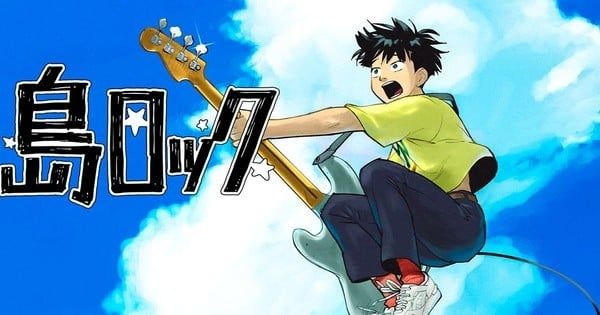
Manga Plus Expands Global Reach with 'Island Rock' Debut, Adding Manose and Miharu's Unique Series

📷 Image source: animenewsnetwork.com
A New Rhythm Hits Digital Shelves
Shonen Jump's Platform Welcomes an Unconventional Musical Tale
The digital manga landscape received a fresh injection of creativity on December 29, 2025, as the official service Manga Plus by Shueisha announced the addition of a new series. According to the announcement on animenewsnetwork.com, the platform has begun publishing Manose and Miharu's manga titled 'Island Rock' for a global English-reading audience. This move represents a continued effort by one of manga's largest publishers to diversify its digital catalog beyond its most famous flagship titles.
Manga Plus operates as a free, official service for reading manga from Shueisha's Weekly Shonen Jump and other magazines. The platform typically simulcasts chapters alongside their Japanese release, making it a primary legal source for international fans. The addition of 'Island Rock' is not merely a new title in a list; it signals a deliberate curation choice, bringing a story with a specific musical and geographical theme to a worldwide readership that increasingly seeks varied narratives.
Meet the Creators: The Duo Behind 'Island Rock'
Introducing Manose and Miharu
The manga is the work of the creative pair known as Manose and Miharu. Based on the information provided in the announcement, Manose is credited as the author, handling the story, while Miharu is the artist responsible for the illustrations. Their collaboration brings 'Island Rock' to life, though the source material does not provide extensive biographical details about their previous works or careers. This lack of prior fame for the creators in the international sphere makes the series' placement on a major platform like Manga Plus particularly noteworthy.
It suggests that Shueisha's editorial team or the platform's curators see significant potential in the series' core concept. For readers, this represents an opportunity to discover a new creative voice from the ground up, without the preconceived expectations that come with established, veteran manga artists. The success or reception of 'Island Rock' could serve as a notable case study for how digital platforms can launch relatively unknown talents onto the global stage.
Decoding 'Island Rock': Premise and Promise
A Fusion of Music and Island Life
The title 'Island Rock' itself offers the first clues about the manga's content. While the source article does not provide a detailed plot synopsis, the name strongly implies a narrative built around rock music set on an island. This combination suggests themes of isolation, community, cultural fusion, and the raw, expressive power of music. The island setting could range from a remote Japanese locale to a fictionalized tropical paradise, serving as a crucible for the characters' dreams and conflicts.
The genre likely falls within the broader scope of slice-of-life, drama, or music-centric storytelling, potentially with comedic or romantic elements. The appeal lies in its niche: rock music narratives in manga are not unheard of, but coupling them with a distinct, potentially limiting island environment creates a unique dramatic container. It forces the story to explore how music is created, shared, and sustained in a setting with limited resources and a small, intimate population, differing greatly from stories set in sprawling urban centers like Tokyo.
The Manga Plus Strategy: Beyond Blockbusters
Curating a Diverse Digital Library
Manga Plus's decision to add 'Island Rock' is a tactical step in platform growth. Since its launch, the service has been instrumental in legally disseminating major hits like 'One Piece,' 'Jujutsu Kaisen,' and 'My Hero Academia' day-and-date with Japan. However, a sustainable platform cannot rely solely on megahits; it must also cultivate a mid-list and introduce variety to retain readers with diverse tastes. Adding series like 'Island Rock' serves this exact purpose, testing new genres and creator partnerships with a lower risk profile than print magazine serialization.
This strategy mirrors broader trends in global streaming services for video and audio, where a deep, varied catalog is as important as having flagship titles. For Shueisha, it allows them to gauge international interest in different story types without the significant upfront costs of physical print runs and distribution. A series that finds a passionate, if not massive, audience online can justify its continued publication and potentially lead to physical releases, anime adaptations, or merchandise down the line, all driven by clear digital engagement metrics.
The Global Manga Distribution Ecosystem
How Services Like Manga Plus Change Access
The existence and operation of Manga Plus represent a paradigm shift in how manga reaches international fans. A decade ago, access to a new, lesser-known series like 'Island Rock' would have been slow, uncertain, and often unofficial. Fans relied on scanlation groups (unauthorized fan translations) or waited years for licensed print volumes. Manga Plus disrupts this model by providing immediate, free, legal access. This is crucial for building a sustainable industry where creators and publishers are compensated for global readership.
However, this model also creates a highly competitive environment for new series. 'Island Rock' is not just competing with other new manga; it's competing for attention within a vast digital library that includes some of the most popular stories in the world. The platform's algorithms, front-page featuring, and social media promotion become critical to a new title's discovery. This system benefits readers with choice and immediacy but places a different kind of pressure on new works to capture interest quickly within the digital stream.
The Niche of Music Manga
Where 'Island Rock' Enters a Storied Genre
Music-themed manga has a rich, if not always mainstream, history within the medium. Classic series like 'Nana' (pop/rock), 'Beck: Mongolian Chop Squad' (rock), 'K-On!' (light music), and 'Your Lie in April' (classical) have demonstrated that stories about musical passion, performance, and personal growth can resonate deeply. These series often succeed by focusing as much on the characters' emotional journeys and interpersonal dynamics as on the technicalities of music itself. 'Island Rock' will inevitably be viewed within this context by seasoned manga readers.
The specific choice of 'rock' music is significant. Rock, as a genre, often carries connotations of rebellion, authenticity, emotional release, and DIY ethos. Translating these themes into a manga narrative allows for explorations of struggle, defiance against societal or personal constraints, and the sheer physicality of performance. The island setting could metaphorically amplify these themes, presenting a community that either stifles or uniquely fosters this rebellious spirit. The series' success may hinge on how convincingly it translates the energy and ethos of rock music into the visual, static medium of comics.
Artistic Expectations and Visual Storytelling
The Challenge of Drawing Sound
A significant challenge for any music manga lies in its visual execution. How does an artist like Miharu convey the power of a guitar riff, the energy of a live performance, or the emotion in a vocal delivery through still images? Successful music manga often employ dynamic page layouts, speed lines, expressive character poses, and visual metaphors to represent sound. The artwork must make the reader 'feel' the music in the absence of actual audio. The quality of Miharu's art in achieving this will be a primary factor in the series' immersive power.
Furthermore, the island setting provides a distinct visual palette. Will the art emphasize lush, detailed backgrounds of beaches, forests, and small towns, or will it use the environment more symbolically? The character designs for the musicians will also be telling; their style, from clothing to hairstyle, will immediately communicate their relationship to rock culture. The artistic direction can either ground the story in a believable world or elevate it into a more stylized, symbolic realm, each choice affecting the reader's connection to the narrative.
Business Implications and Creator Economics
What Digital Serialization Means for Manose and Miharu
For the creator duo, having their work featured on Manga Plus is a substantial career opportunity. The platform offers a direct pipeline to millions of potential readers worldwide. While the article does not specify the financial terms, serialization on such a service typically involves compensation through a revenue share model based on ad views, premium subscriptions, or a flat fee from the publisher. This provides the creators with an income stream and, more importantly, invaluable exposure. A strong performance in terms of readership and engagement metrics can be the foundation for a long-term career.
The digital-first approach also alters the traditional feedback loop. In print magazine serialization, creators receive feedback through reader surveys and editorial guidance, but the process is slower. On a digital platform, while specific metrics are not public, creators and publishers can see real-time data on chapter completion rates and popularity. This can influence the story's direction, though it also raises questions about artistic integrity versus data-driven storytelling. For Manose and Miharu, navigating this new landscape while telling their intended story will be a key part of their digital serialization journey.
Reader Access and Platform Experience
How to Find and Read 'Island Rock'
For interested readers, accessing 'Island Rock' is straightforward through the Manga Plus website or its mobile applications. The service operates on a freemium model: the latest three chapters of a series are typically available for free, while access to the entire backlog often requires a subscription to their premium service, Manga Plus by Shueisha Premium. This model is designed to hook readers with the ongoing narrative while incentivizing support for the creators and platform through subscription for dedicated fans.
The reading experience itself is optimized for digital devices, with vertical scrolling or page-turning options, high-quality image rendering, and official translations that aim for accuracy and natural dialogue in English. The platform's interface will be the primary theater where 'Island Rock' must compete for attention. Its cover thumbnail, chapter titles, and the brief description provided by the platform will be critical first points of contact that determine whether a user scrolling through dozens of titles decides to click and give the series a chance.
Future Trajectory and Potential
From Digital Debut to Cultural Artifact
The future path for 'Island Rock' is unwritten but follows several possible trajectories based on industry patterns. If it garners strong readership and positive reception, it could secure a longer serialization run, eventually leading to a collected volume (tankobon) release in Japan and potentially in other markets. This is the first major step toward establishing the series as a lasting work. Further success could spark discussions about multimedia adaptations, such as an anime, drama CD, or even a live-action film, though such prospects are highly speculative and far in the future.
Conversely, if reader engagement is low, the series may conclude relatively quickly. The digital environment, while offering great opportunity, also allows publishers to make swift decisions based on performance data. This reality underscores the high-stakes nature of a debut on a major platform. Regardless of its commercial fate, the very act of its publication on Manga Plus ensures 'Island Rock' will be preserved as part of the digital record of manga history, accessible to future readers and researchers interested in the evolution of music-themed stories and digital distribution in the late 2020s.
Perspektif Pembaca
The arrival of a niche series like 'Island Rock' on a major platform highlights the evolving tastes of the global manga audience. It prompts reflection on what we seek in these stories beyond epic battles and fantastical adventures.
What unique element in a manga's setting or theme—like remote island life combined with rock music—most effectively captures your interest and makes you want to explore a story from an unknown creative team? Is it the promise of learning about a specific subculture, the appeal of a unique atmospheric backdrop, or the potential for character-driven drama within a constrained environment?
Share your perspective on what draws you to try new, unconventional manga in a vast sea of available titles.
#MangaPlus #IslandRock #ManoseMiharu #DigitalManga #Shueisha


