

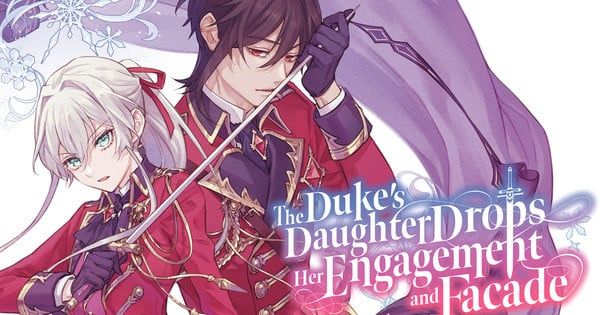
A Royal Farewell: 'The Duke's Daughter Drops Her Engagement and Facade' Manga Concludes Its Run

📷 Image source: animenewsnetwork.com
The Curtain Falls on a Beloved Fantasy Series
Manga adaptation of popular light novel series reaches its final chapter
The world of fantasy manga has bid farewell to one of its distinctive heroines. According to animenewsnetwork.com, the manga adaptation of 'The Duke's Daughter Drops Her Engagement and Facade' has officially ended its serialization. The final chapter was published in the March 2026 issue of Ichijinsha's Monthly Comic Zero-Sum magazine, released on February 9, 2026.
This conclusion marks the end of a journey that began in the pages of the same magazine back in 2020. The series, which captivated readers with its blend of political intrigue and personal liberation, was based on the light novel series written by Reia and illustrated by Umiko Kawahara. The manga adaptation was brought to life by artist Saki Ukai, whose visual storytelling gave a distinct face and form to the protagonist's struggle.
Unmasking the Protagonist: The Story of Diane
A noblewoman's journey from societal puppet to self-determined individual
At the heart of the series was Diane, the daughter of a powerful duke. For years, she meticulously maintained a facade of the 'ideal noblewoman'—docile, graceful, and utterly compliant with the expectations of her station. This performance was most critically tied to her engagement to a crown prince, a union designed for political advantage rather than personal affection.
The story's central pivot, and the source of its title, was Diane's dramatic decision to shatter this carefully constructed illusion. In a move that sent shockwaves through her fictional kingdom's aristocracy, she publicly terminated her engagement and abandoned the persona she had been forced to wear. The narrative then followed her as she navigated the complex and often dangerous fallout of choosing authenticity over obligation, using her genuine intellect and strength to carve a new path in a society that had only valued her mask.
From Page to Panel: The Creative Team Behind the Adaptation
The manga's success was a collaborative effort. The original light novel series, which served as the source material, was penned by author Reia. The character designs and illustrations for the novels were provided by Umiko Kawahara, establishing the visual identity that fans came to love.
Translating this from prose to sequential art was the responsibility of manga artist Saki Ukai. Ukai's adaptation, which ran for approximately six years, was tasked with condensing the novel's internal monologues and detailed world-building into a compelling visual narrative. According to the report from animenewsnetwork.com, Ukai's rendition consistently captured the nuanced emotions of Diane's liberation and the intricate political machinations of the court, earning a dedicated readership within the Monthly Comic Zero-Sum magazine's audience.
A Niche in the Market: The Role of Monthly Comic Zero-Sum
The magazine that hosted Diane's story for its entire run
The manga found its home in a publication known for catering to specific tastes. Monthly Comic Zero-Sum, published by Ichijinsha, has long been a staple for fans of fantasy, romance, and josei-oriented stories. Its pages are a haven for narratives with strong, often complex female protagonists and elaborate fantasy settings.
The conclusion of 'The Duke's Daughter Drops Her Engagement and Facade' in the magazine's March 2026 issue is a significant event for its regular readers. It represents the closing of a long-running chapter within the magazine's ecosystem. Series with multi-year runs like this one become anchor titles, and their conclusion inevitably shifts the magazine's lineup and leaves a space for new stories to emerge, while prompting reflection on the evolving trends in fantasy storytelling for its target demographic.
Beyond the Manga: The Ripples of the Original Light Novel
While the manga has concluded, the source material continues to cast a long shadow. The light novel series that inspired the adaptation remains a key property. This is a common dynamic in Japanese media, where successful light novels often spawn manga adaptations, anime series, and other merchandise to expand their reach.
The end of the manga adaptation does not necessarily mean the end of Diane's story in other formats. It often serves as a gateway for readers to seek out the original, more detailed light novels. The report from animenewsnetwork.com highlights this interconnectedness, reminding us that the manga was an adaptation of Reia's work. The conclusion of Ukai's visual interpretation may lead fans to revisit the prose originals or hold out hope for other forms of media adaptation in the future, keeping the world and its characters alive in the fandom.
Thematic Resonance: Why Stories of Shedding Facades Captivate
Exploring the universal appeal behind Diane's specific struggle
What is it about a noblewoman dropping a royal engagement that resonates with modern readers? The appeal lies in the core, relatable metaphor. Diane's story is, at its heart, about the exhausting performance many people feel compelled to maintain—whether in professional settings, social circles, or family dynamics. Her 'facade' is a literalization of the masks people wear to fit in, gain approval, or meet external expectations.
Her act of casting it aside is a powerful fantasy of autonomy. It's not just about refusing a marriage; it's about rejecting a pre-written script for her life and daring to define success and happiness on her own terms. In a genre often filled with passive heroines waiting for rescue, Diane's active, decisive rebellion against the gilded cage of her privilege provided a refreshing and empowering narrative arc. The series delved into the consequences of that choice, exploring both the liberating triumphs and the steep, real costs of such defiance.
The Legacy of a Completed Series in a Serialized World
In an industry where popular series can sometimes stretch on indefinitely, a planned and executed conclusion is a notable event. It allows for a complete narrative arc, giving characters like Diane a definitive endpoint to their transformation. Readers who have followed the story for years receive a payoff, a sense of closure that is often elusive in ongoing serializations.
The completion of the manga also solidifies its place as a finished body of work, making it more accessible to new readers who prefer to binge a complete story rather than follow monthly updates. It enters a new phase of its lifecycle, where its full impact and legacy can be assessed as a whole. For the creative team, it represents the culmination of years of work, a full story told from its first panel of constrained duty to its final panel of hard-won freedom.
What Remains After the Final Page
The tangible artifacts and intangible impact of the manga's journey
Though the serialization has ended, the story persists. The chapters of Saki Ukai's adaptation remain collected in tankōbon volumes, allowing the complete tale to be read from start to finish. These volumes are the physical legacy of the six-year serialization, preserving the art and narrative for future readers to discover.
Furthermore, the end of the manga adaptation invites a broader consideration of its role within the 'villainess' or 'otome game' subgenre of isekai and fantasy. It contributed to a wave of stories focusing on noblewomen reclaiming their agency, a trend that continues to flourish. The report from animenewsnetwork.com, dated 2026-02-09T12:15:00+00:00, serves as a formal marker of this milestone. For fans, the conclusion is bittersweet—a farewell to a monthly ritual, but also the satisfaction of having witnessed a character's journey reach its destined, and self-determined, end.
#Manga #FantasyManga #Josei #MangaConclusion #MonthlyComicZeroSum


