

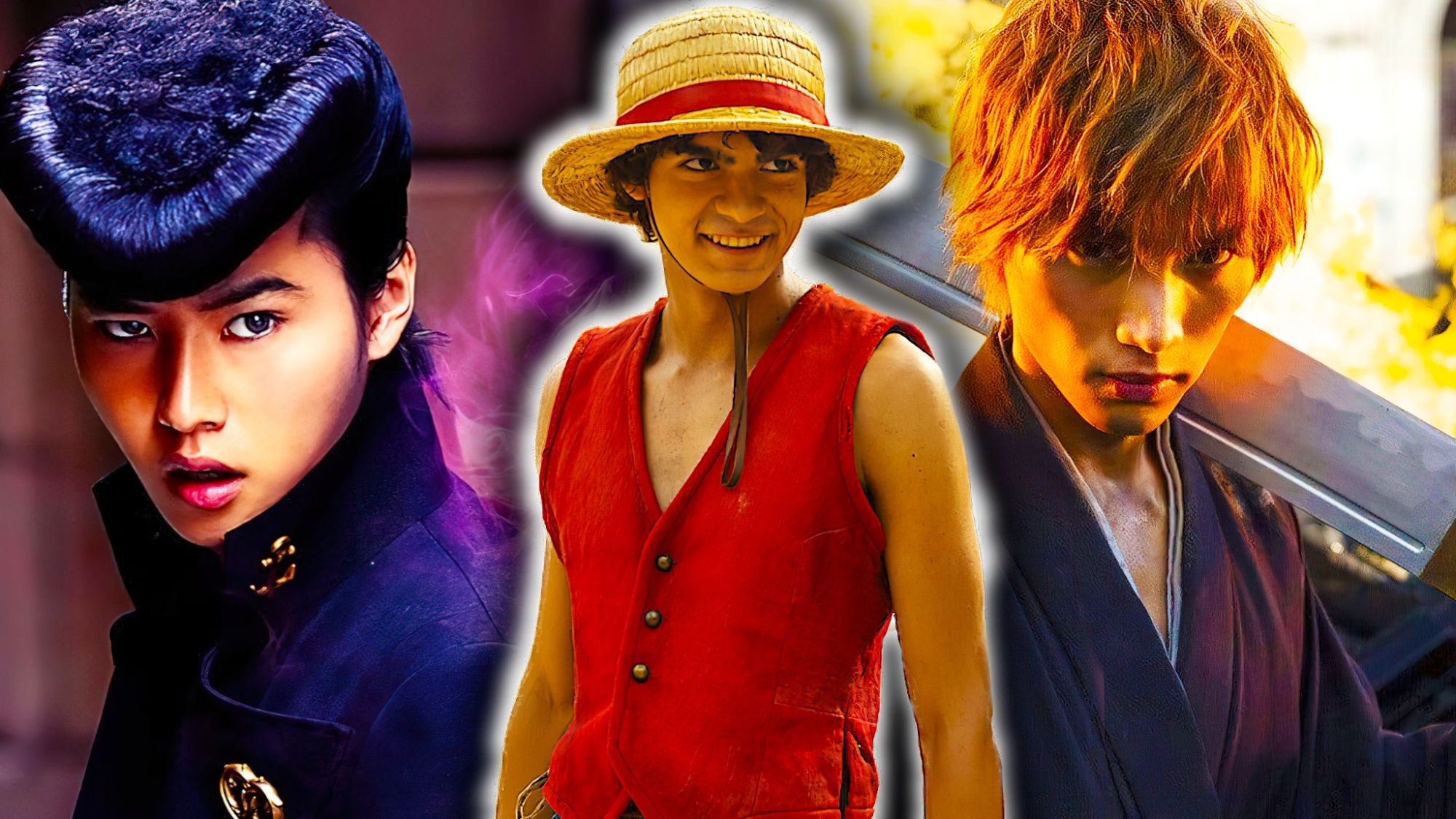
The 10 Best Live-Action Anime Adaptations Ever Made—And Why They Work

📷 Image source: comicbook.com
Why Live-Action Anime Adaptations Are So Hard to Get Right
The curse of the cringe adaptation
For decades, live-action anime adaptations have been the cinematic equivalent of a minefield. Fans brace for impact whenever a beloved series gets the Hollywood or Japanese studio treatment—because more often than not, the result is a trainwreck of awkward CGI, miscast actors, and butchered storylines. Remember the 2009 'Dragonball Evolution'? Exactly.
But against all odds, a handful of adaptations have cracked the code. According to ComicBook.com's August 2025 ranking, these rare gems manage to honor their source material while standing as compelling films or series in their own right. So what separates the triumphs from the tragedies?
1. 'Rurouni Kenshin' (2012-2021) – The Gold Standard
How a samurai epic avoided the usual pitfalls
Topping the list is the 'Rurouni Kenshin' film series, which ran from 2012 to 2021. Unlike most adaptations that compress sprawling arcs into a single movie, this Japanese production wisely split the story across five films. Actor Takeru Satoh didn’t just play Kenshin—he trained for months to replicate the character’s iconic sword styles, blending practical effects with minimal CGI.
The films also nailed the tone: balancing the original’s goofy humor with its darker themes of redemption. It’s proof that respecting the manga’s spirit—not just slavishly copying panels—is key. Box office numbers agreed; the franchise grossed over ¥30 billion (roughly $200 million) in Japan alone.
2. 'Alice in Borderland' (2020–Present) – Survival Drama Done Right
When the adaptation surpasses the source material
Netflix’s 'Alice in Borderland' shocked everyone by being… good. Really good. The streaming giant’s track record with anime adaptations ('Death Note' 2017, we’re looking at you) had fans skeptical. But this dystopian thriller, based on Haro Aso’s manga, leaned into its strengths: intricate game mechanics, psychological tension, and a breakout performance by Kento Yamazaki.
Critically, it expanded on the manga’s world-building without losing its deadly game-show urgency. The show’s success (it trended globally for weeks) also proved that live-action anime doesn’t need to cater solely to existing fans—it can hook newcomers too.
3. 'Kingdom' (2019) – Epic Scale, Real Stakes
How to adapt a historical fantasy without breaking the bank
Adapting Yasuhisa Hara’s 'Kingdom,' a manga about China’s Warring States period, seemed impossible. The battles involve thousands of soldiers; the politics are Byzantine. Yet the 2019 film (and its sequels) pulled it off with a mix of smart choreography and old-school filmmaking tricks—think 'Lord of the Rings' on a tighter budget.
Actor Kento Yamazaki (yes, him again) anchored the story as Xin, a warrior climbing the ranks. The films trimmed some subplots but kept the core themes of ambition and brotherhood. Result? A ¥5.7 billion ($38 million) box office smash in Japan—and a blueprint for adapting action-heavy epics.
4. 'Gintama' (2017) – Embracing the Absurd
Why some anime need to stay weird
Most live-action adaptations sand off their source material’s rough edges. Not 'Gintama.' The 2017 film doubled down on the manga’s fourth-wall-breaking humor, even including a scene where characters complain about the movie’s low budget. Casting Shun Oguri as Gintoki was a masterstroke—his deadpan delivery nailed the character’s lazy-genius vibe.
The film’s secret? It didn’t try to be 'prestige.' Instead, it replicated the manga’s gag-a-minute energy while still delivering solid sword fights. Sometimes, faithfulness means keeping the jokes.
5. 'Blade of the Immortal' (2017) – A Master Director’s Touch
When auteurs meet anime
Takashi Miike, the cult director behind 'Audition' and '13 Assassins,' seemed an odd choice for Hiroaki Samura’s samurai fantasy. But his 'Blade of the Immortal' (2017) distilled the manga’s 30-volume saga into a single, blood-soaked film. Key to its success? Miike focused on Manji’s existential fatigue—his immortality isn’t glamorous, it’s a curse.
The action, shot with minimal CGI, felt visceral. While purists quibbled over cuts, the film’s Cannes premiere signaled that anime adaptations could be art-house fare too.
6. 'Nana' (2005) – The Human Element
How a music drama avoided manga melodrama
Before 'La La Land,' there was 'Nana.' Ai Yazawa’s manga about two women named Nana—one a punk rocker, the other a romantic—could’ve been a soapy mess. But the 2005 film, starring Aoi Miyazaki and Mika Nakashima, grounded its drama in sharp dialogue and killer musical performances (Nakashima’s band scenes were legit).
It helped that the source material was already steeped in real-world fashion and music trends. The film’s success (¥4 billion/$27 million in Japan) showed that quieter, character-driven stories adapt just as well as battle epics.
7. 'Gantz' (2011) – High-Concept Sci-Fi That Works
Proving R-rated anime adaptations have a place
Hiroya Oku’s 'Gantz' is a brutal, horny, philosophically messy sci-fi romp. The 2011 live-action film streamlined its alien-hunting premise but kept the gore and existential dread. Critics called it 'a miracle it got made at all'—studio Toho took a risk on its R-rated violence and bleak ending.
The gamble paid off. Star Kazunari Ninomiya brought pathos to Kei, a selfish teen forced into heroism. While the CGI hasn’t aged perfectly, the film’s willingness to go dark (that subway scene still haunts) set a bar for mature adaptations.
8. 'Lupin III' (2014) – Charisma Over Canon
Why some characters transcend their medium
Monkey Punch’s 'Lupin III' had already inspired decades of anime when Shun Oguri (again!) played the gentleman thief in 2014. The film wisely avoided direct adaptation, instead crafting an original heist story that captured Lupin’s roguish charm. The key was Oguri’s performance—smirking, unpredictable, but never cartoonish.
Supporting cast members like Tetsuji Tamayama (Jigen) and Gou Ayano (Goemon) nailed their roles without mimicry. The lesson? Iconic characters can thrive in live-action if the actor understands their soul.
9. 'Tokyo Revengers' (2021) – Nostalgia as a Superpower
How to make time travel feel personal
Ken Wakui’s manga about a loser traveling back to his delinquent youth had a secret weapon: emotional stakes. The 2021 live-action 'Tokyo Revengers' cast relative unknowns, making Takemichi’s underdog journey feel raw. Director Tsutomu Hanabusa shot the brawls with a scrappy intensity—no polished 'John Wick' sequences here.
The film’s focus on friendship over flashy action resonated. It became Japan’s highest-grossing live-action film of 2021, proving that even a convoluted premise works if the heart’s in the right place.
10. 'Erased' (2016) – A Tight Mystery Thriller
When less is more
Kei Sanbe’s 'Erased' manga spans time jumps, child murders, and a mother-son bond. The 2016 live-action series (not to be confused with Netflix’s anime) trimmed subplots to focus on Satoru’s race to save his mom. Actor Tatsuya Fujiwara brought a weary determination to the role, selling the story’s emotional core.
Unlike many adaptations, it trusted viewers to follow its time-twists without hand-holding. The result? A gripping, self-contained story that honored its source without being shackled to it.
What These Adaptations Got Right—And What Others Keep Getting Wrong
The formula isn’t rocket science (but it’s close)
Looking at these successes, patterns emerge. First, casting matters—not just big names, but actors who 'get' the characters (see: Oguri in two entries). Second, tone is everything; 'Gintama' wouldn’t work as a grimdark saga, just as 'Blade of the Immortal' would flop as a comedy.
Most importantly, the best adaptations aren’t afraid to adapt. They cut, expand, or refocus elements to suit film’s strengths. As 'Alice in Borderland' proved, sometimes the live-action version can even outshine its origin. Maybe it’s time Hollywood took notes.
The Future of Live-Action Anime
Upcoming projects that might (or might not) break the curse
With Netflix’s 'One Piece' adaptation looming and a new 'Attack on Titan' film in development, the genre isn’t slowing down. If history’s any guide, the winners will be those that prioritize storytelling over fan service—and remember that pixels don’t automatically translate to flesh and blood.
After all, as 'Rurouni Kenshin' showed, the best adaptations don’t just replicate anime—they reinvent it for a new medium. Here’s hoping the next decade gives us more exceptions to the rule.
#LiveActionAnime #RurouniKenshin #AliceInBorderland #AnimeAdaptations #NetflixAnime


