

Titan Manga's Bold Bet: Inside the Isekai Metaller Launch That's Shaking Up the Industry

📷 Image source: animenewsnetwork.com
The Cover Reveal That Stopped Scrollers
A Glimpse Into Titan's Newest World
Titan Manga just dropped a visual bomb on the anime and manga community. According to an exclusive from animenewsnetwork.com published on August 20, 2025, the publisher unveiled the cover and several preview pages for its highly anticipated new series, Isekai Metaller. This isn't just another manga announcement; it's a strategic move from one of the industry's quieter power players, and the artwork they've revealed is deliberately turning heads.
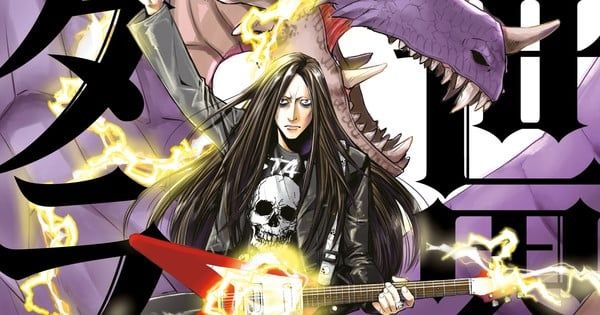
The cover, drenched in aggressive neon hues against a dystopian skyline, features a protagonist clad in a modified battle jacket, wielding what appears to be a guitar-shaped energy weapon. The title, Isekai Metaller, is rendered in a font that mimics shredded metal, leaving little doubt about its core theme. This is a fusion genre piece, and Titan is banking on its uniqueness to carve out a fresh niche in a saturated market.
Preview pages show a meticulous attention to detail—dynamic action sequences where musical notes visibly warp reality, and character designs that blend traditional fantasy armor with punk rock aesthetics. The linework is crisp, suggesting a significant investment in top-tier artistic talent. For fans and industry watchers, this reveal is the first real look at whether Titan's gamble can pay off.
Why Titan Manga's Move Matters Now
Beyond the Hype: Strategic Timing in a Crowded Field
The manga industry is in a constant state of flux, caught between traditional print loyalists and the booming digital subscription model. For a publisher like Titan, which has historically focused on licensed properties and niche genres, launching an original title like Isekai Metaller is a statement of ambition. It signals a desire to create a home-grown hit, to own a property outright from its inception rather than adapt existing work.
This push for original IP is a direct response to market pressures. While series like *Attack on Titan* or *Demon Slayer* generate billions, their studios and publishers must share revenue with a complex ecosystem of creators and licensors. By developing Isekai Metaller internally, Titan positions itself to capture a larger slice of the profits from potential anime adaptations, merchandise, and music spin-offs—if the series succeeds. The announcement timed for late August is no accident; it aims to build momentum ahead of the major autumn publishing festivals, where licensing deals are often cemented.
The stakes are high. The global manga market was valued at over ¥700 billion (approximately $4.8 billion USD) last year, with isekai (other-world) stories comprising a significant portion of new titles. Launching another isekai is risky, but by mashing it with heavy metal culture, Titan isn't just adding a new title to the roster—it's testing the waters for a whole new subgenre.
Deconstructing the Isekai Metaller Concept
When Power Chords Open Portal Doors
So how does this premise actually work? Based on the preview pages described by animenewsnetwork.com, the core mechanic revolves around sound and music as a source of power. The protagonist, seemingly a disillusioned metal guitarist from our world, is transported to a fantasy realm where music is forbidden magic. His ability to play blistering solos becomes a weapon, literally conducting lightning or shattering enemy fortifications with sonic waves.
This isn't a entirely novel idea—series like *Beck* or *Fuuka* centered on music, and *Symphogear* combined music with combat. However, Isekai Metaller appears to lean harder into the aesthetic and ethos of heavy metal. Think battle jackets instead of robes, mosh pits instead of ceremonial dances, and amplifiers that look like siege engines. The fantasy world isn't the typical medieval European landscape; preview art hints at a rusted, industrial wasteland, a dying world that resonates with the genre's themes of rebellion and decay.
The potential here is for a rich power system. Different musical genres or specific songs could produce different effects. A thrash metal riff might be an area-of-effect attack, while a doom metal dirge could slow enemies. The creative team's challenge will be to make this system feel consistent and logical, not just a flashy gimmick. Will the music be notated in the margins? Will real-world band references be woven in? These details could make or break the immersion for its core audience.
The Creative Engine Behind the Hype
The Names Titan is Betting On
While the animenewsnetwork.com exclusive did not name the writer or artist, this level of preview typically indicates confidence in the creative team. Titan has a history of partnering with veterans from the doujinshi (self-published) scene or talented newcomers with a distinctive style. The artwork shown suggests an artist proficient in both intricate mechanical detail—the guitars and gear look authentically weighted and complex—and fluid, impactful character motion.
The writer’s task is equally daunting. They must balance world-building a unique fantasy realm with the very specific, culturally loaded tropes of metal music. This requires a deep understanding of both, avoiding cliché on either side. Will the story delve into the history of metal subgenres? Will it tackle the themes of alienation and non-conformity that are central to the music? Or will it just use the aesthetic as a backdrop for standard fantasy battles?
The success of niche genre blends often hinges on the creators' authentic passion. If the team are genuine metal fans, it will show in the loving details—the correct patches on a vest, the way a character holds a pick, the references to obscure bands. If it feels like a marketing committee's idea of 'cool,' readers will smell the inauthenticity immediately. Titan's silence on the team might be a strategy to build mystery, or it could mean they're banking on the concept itself to sell the book before the names are revealed.
Isekai Fatigue? Not So Fast
How Metaller Fits Into a Saturated Genre
Let's be real: the isekai genre is overflowing. We have isekai about chefs, accountants, and vending machines. Readers and editors alike are suffering from protagonist-transported-to-a-game-world fatigue. So why would another one work? Isekai Metaller's potential lies in its specific cultural hook. It's not just another power fantasy; it's a power fantasy for a specific subculture that feels historically underrepresented in mainstream manga.
Heavy metal has a massive, dedicated global fanbase. It's a culture built on community, identity, and a shared love for something often seen as outside the mainstream—a feeling that resonates deeply with many manga and anime fans. This series isn't just asking 'what if you were powerful in another world?'; it's asking 'what if the very thing that made you an outsider here made you a hero there?'
This angle could transcend the usual isekai demographics. It might pull in older readers who grew up with metal, or music fans who don't typically read manga but are curious about the concept. The risk, of course, is that it becomes too niche, alienating readers who don't get the references or find the aesthetic off-putting. The preview pages suggest Titan is aiming for a broad shonen/seinen appeal, using the metal theme as a flavor rather than a barrier to entry. They need the action and story to be compelling even for someone who's never heard of Metallica.
The Ripple Effect: Industry Impact and Market Calculations
More Than Just a Manga: The Multimedia Dream
Titan Manga isn't just publishing a comic; they're launching a potential franchise. The very concept of Isekai Metaller is multimedia-ready in a way that few new properties are. The obvious next step is an anime adaptation, but unlike most series, the soundtrack wouldn't be an afterthought—it would be the centerpiece. We're talking about original songs, potentially performed by famous seiyuu (voice actors) with actual musical talent or collaborations with real metal bands.
Then there's merchandise. This is a license to print money on battle jackets, guitar picks, vinyl records, and figurines of characters wielding iconic axes. The market for music-related anime merch is proven, from the enduring popularity of *K-On!* goods to the dedicated fanbase of *Bocchi the Rock!*.
For the industry, a successful Isekai Metaller could open the floodgates for more genre mash-ups that leverage specific, passionate subcultures. Imagine a hardcore punk isekai, a K-pop idol isekai, or a classical composer isekai. Titan is effectively testing a new formula for IP creation: start with a strong, marketable cultural identity and build a fantasy world around it, rather than creating a world and hoping the culture follows. If it works, every publisher will be scrambling to find the next untapped niche.
Potential Pitfalls: Where the Concept Could Fail
Navigating the Tightrope of Theme and Execution
For all its promise, Isekai Metaller is walking a razor's edge. The first major risk is authenticity. The metal community is notoriously discerning and quick to criticize posers. If the manga gets the details wrong—misrepresenting subgenres, depicting playing technique inaccurately, or using clichéd 'edgy' imagery without substance—it will be eviscerated by its target audience online. This could kill word-of-mouth promotion before it even starts.
Secondly, there's the risk of the concept overshadowing the story. A cool premise is not a substitute for compelling characters, a coherent plot, and emotional stakes. If the series devolves into a series of battles where the solution is always 'play a sicker solo,' it will get repetitive fast. The writer needs to ensure the music is integral to the character's growth and the world's lore, not just a flashy combat system.
Finally, there's the commercial risk. While the niche is passionate, it might not be large enough to support a major publishing push. Titan needs this title to break out beyond metal fans to achieve real success. If it's perceived as 'too weird' or inaccessible for the average manga reader, it could become a cult classic that's beloved by a few but a commercial disappointment for the publisher. Balancing niche appeal with mainstream accessibility is their greatest challenge.
A Glimpse into the Future: What Success Looks Like
From Preview Pages to Global Phenomenon
The preview pages are just the first chord in what Titan hopes will be a long and loud symphony. If Isekai Metaller finds its audience, its influence could be significant. We could be looking at the birth of a new pillar for Titan Manga, a franchise that defines the publisher for years to come, much like *Akira* did for Kodansha or *Dragon Ball* for Shueisha in their respective eras.
Success would likely trigger a rapid expansion into other media. An anime announcement would be a given, probably within a year if the manga's first volume sells well. The real intrigue would be in the production: would they hire a renowned music producer? Would they animate full music sequences with the same budget and care as a major battle? This could set a new standard for music integration in anime.
Furthermore, it could revitalize the isekai genre by proving that innovation and specific cultural grounding are the keys to longevity, not just rehashing the same video game logic. It could inspire a wave of creativity, pushing other creators to mine their own passions and subcultures for fresh stories. For now, all we have are a few stunning images and a killer title. But in those images, Titan Manga is betting that they've found the next big noise.
The journey from an exclusive preview to a bookshelf staple is long and fraught with competition. But with this reveal, Titan has confidently plugged in their amp and turned it up to eleven. The only question left is whether the world is ready to headbang along.
#IsekaiMetaller #TitanManga #MangaNews #Isekai #HeavyMetalManga #AnimeNewsNetwork


