

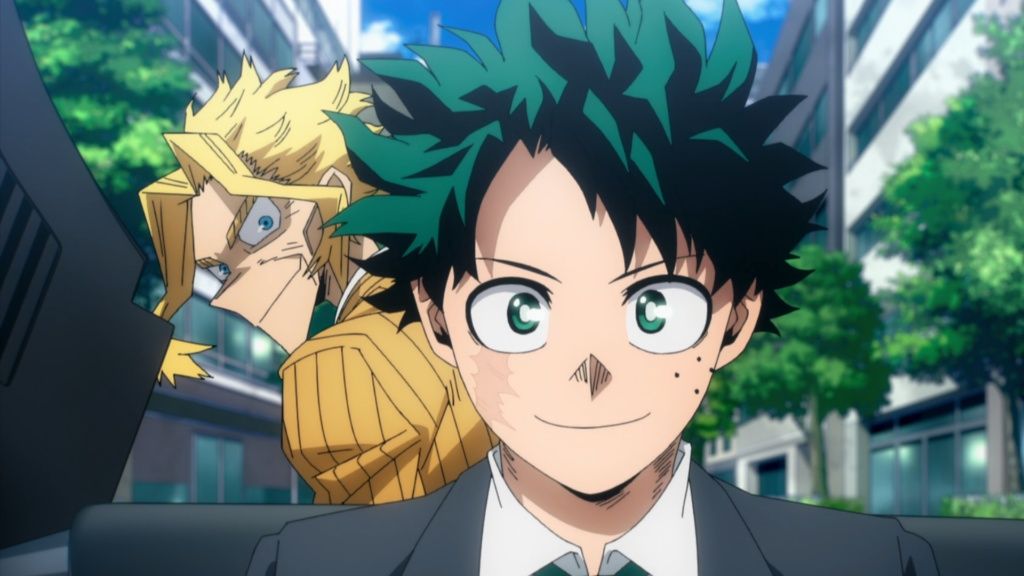
A Final Smile: Horikoshi's New Illustration Marks the End of an Era for My Hero Academia

📷 Image source: static.animecorner.me
The Final Frame
An Image That Speaks Volumes
On December 13, 2025, the creator of the global anime and manga phenomenon My Hero Academia, Kohei Horikoshi, shared a new, poignant illustration. According to the report from animecorner.me, published at 2025-12-13T09:59:29+00:00, the artwork features the series' two central figures, Izuku "Deku" Midoriya and his mentor Toshinori Yagi, the legendary hero All Might, sharing a bright, heartfelt smile. This piece was created specifically to commemorate the airing of the anime's final episode, serving as a visual epilogue to a story that has spanned over a decade.
The illustration is not merely promotional art; it is a direct communication from the author to the global fanbase, known as the MHA community. It captures a moment of pure, unburdened joy between the student who inherited the world's greatest power, One For All, and the teacher who passed on both his ability and his ideals. This single image encapsulates the core theme of the entire narrative: the successful passing of the torch and the hope for a peaceful future, free from the existential threats that defined much of the series.
Decoding the Symbolism
More Than Just Grins
The choice to depict both characters smiling holds profound narrative weight. For much of the series, All Might's smile was a calculated symbol of peace, a performative act to reassure a nervous public, even as his body was failing. Deku's early smiles were often born of anxiety, fanboy enthusiasm, or sheer determination through pain. In this final illustration, those complex layers seem to have fallen away. Their smiles appear genuine, relaxed, and mutual—a shared moment of triumph and contentment that was hard-won through countless battles and personal sacrifices.
Furthermore, their positioning and demeanor speak to their evolved relationship. They are depicted as equals, side-by-side, rather than in the classic mentor-student dynamic of All Might towering over a smaller, awe-struck Deku. This visual equality signifies Deku's full arrival as the world's new Symbol of Peace. The absence of their hero costumes, shown in simple casual wear, underscores that this peace is not a temporary state between crises but a lasting normalcy they can now enjoy as individuals, not just as public symbols.
The Creator's Voice
Horikoshi's Direct Message
While the animecorner.me article does not include a direct statement from Kohei Horikoshi accompanying the illustration, the image itself functions as his statement. In the world of manga and anime, a 'kantoku' or commemorative illustration from the original creator for a finale is a significant cultural gesture. It is a final, direct artistic contribution to the anime adaptation, a blessing and a closing note that affirms the animated version's conclusion aligns with his vision for the characters' ultimate destination.
This practice carries more weight than standard promotional material. It is an act of closure offered by the author. For a creator known to be deeply involved and often physically strained by the demanding weekly manga schedule, this illustration can be interpreted as a personal sigh of relief and a gesture of gratitude. It is his way of smiling back at the audience through his characters, confirming that their journey, and his marathon of creation, has reached a satisfying and harmonious endpoint worthy of celebration.
A Global Phenomenon's Legacy
My Hero Academia's Cultural Footprint
To understand the resonance of this final image, one must consider the scale of the story it concludes. My Hero Academia, often abbreviated as MHA or Boku no Hero Academia, premiered as a manga in 2014 and quickly became one of the defining titles of the modern shonen genre—stories typically aimed at young male audiences but with massive cross-demographic appeal. Its anime adaptation, which began in 2016, catapulted the series into global stratosphere, making characters like Deku, Bakugo, and All Might household names among international anime fans.
The series distinguished itself by modernizing the classic superhero trope within a Japanese context. It presented a world where superpowers, called 'Quirks,' are the norm, and heroism is a professionalized, systemic career. This framework allowed Horikoshi to explore complex themes of legacy, societal responsibility, the nature of good and evil, and the immense pressure placed on symbols of hope. The series' impact is measured not just in sales of over 85 million copies, but in its influence on a generation of new anime viewers and its role in sustaining the global popularity of the shonen genre throughout the late 2010s and early 2020s.
The Student-Teacher Dynamic Redefined
Beyond the Typical Mentor Archetype
The core relationship between Deku and All Might is the emotional engine of My Hero Academia. It redefined the classic shonen mentor-student trope. Unlike many predecessors where the teacher is an infallible guide, All Might was presented as profoundly human and vulnerable from the start. His power was fading, his body was grievously injured, and his role as the Symbol of Peace was a crushing burden. He chose Deku not just for his heart, but out of a desperate need for a successor, making their bond one of mutual salvation.
This dynamic was explored with remarkable depth. Their journey wasn't just about training to punch harder; it was about the psychological transfer of a world's expectations. Deku had to learn to bear the weight of a legacy, while All Might had to learn to live without the power that defined his identity. The final illustration is the culmination of this arc. It shows a mentor who can finally rest, his duty fulfilled, and a student who has fully matured, carrying the legacy forward without being broken by it. Their smiles confirm that the transfer is complete and successful on every level.
The Anatomy of a Finale
How Major Series Say Goodbye
The conclusion of a long-running, beloved narrative is a high-stakes cultural event. Different franchises employ different strategies. Some opt for open-ended conclusions that allow for future stories, while others seek definitive, unambiguous closure. The release of a special finale illustration from the original creator strongly suggests the latter approach for My Hero Academia. It serves as a visual period at the end of a very long sentence, offering fans a concrete, happy image to associate with the characters' futures, beyond what may have been shown in the final episode's narrative.
This method of closure is particularly effective in visual media like manga and anime. It provides emotional reassurance. Fans invest years, even decades, in these characters, and a vague or melancholic ending can feel like an emotional betrayal. By presenting Deku and All Might in a state of peaceful, smiling camaraderie, Horikoshi directly alleviates that anxiety. He assures the audience that the struggles were worth it and that the characters they love are, unequivocally, happy. This final artistic control is a gift to the fandom, allowing the story to live on in the collective imagination with a defined, positive emotional tone.
The Business of Goodbye
Finales in a Franchise-Driven Industry
In the modern media landscape, especially within anime and manga, a 'finale' is often not the end of commercial activity. A series like My Hero Academia exists as a sprawling franchise encompassing movies, video games, merchandise, and spin-offs. The conclusion of the core anime narrative is a major milestone, but it also opens new phases for the brand. The final illustration acts as a key piece of marketing for this transitional moment, generating massive social media engagement and news coverage, as seen with its feature on animecorner.me, to officially mark the event and maintain fan engagement.
However, there is a delicate balance. The drive to continue monetizing a popular IP can sometimes lead to sequels, prequels, or spin-offs that risk diluting the impact of a well-crafted ending. The authoritative nature of an illustration from the original creator helps cement the finale's legitimacy. It sets a boundary, signaling that while the franchise may continue in other forms, the central story of Izuku Midoriya's rise as the successor to All Might has reached its intended and authentic conclusion. This protects the artistic integrity of the narrative's endpoint even as the commercial engine continues.
Fandom's Emotional Reckoning
Processing a Decade-Long Journey
For the global MHA fandom, this illustration is a trigger for a complex mix of emotions. It is a point of collective celebration, a shared symbol of achievement for having followed the story to its end. Social media platforms immediately light up with reactions, fan art tributes, and nostalgic reflections on key moments from the series. The image becomes a communal touchstone, a way for millions of disparate fans to experience the closure simultaneously and to articulate their feelings about the journey.
Yet, it also prompts a sense of loss and reflection. A story that has been a weekly or seasonal constant for nearly ten years is now officially over. Fans who grew up with Deku—who may have started the series as teenagers and are now adults—confront their own passage of time. The smiling faces of Deku and All Might are not just characters reaching their goal; they are mirrors for the audience's personal growth. This shared conclusion creates a powerful, generational bonding experience, where the end of the narrative becomes a milestone in the personal histories of its viewers, remembered through the lens of this final, joyful illustration.
The Illustrator's Evolution
Horikoshi's Artistic Journey
The technical quality of the final illustration also offers a silent testament to Kohei Horikoshi's own growth as an artist. Comparing this piece to early promotional art or manga chapters reveals a significant evolution in line confidence, character modeling, and emotional expression. The early art was energetic but sometimes uneven under the pressure of weekly deadlines. This commemorative piece, likely created without such constraints, showcases a refined and assured style.
This evolution is not just aesthetic; it is narrative. The ability to convey a deep, nuanced, and earned emotional state—like the specific smiles of contentment on Deku and All Might—is a skill honed over years of developing these characters. Every line in their faces tells a story of past trials overcome. For students of illustration and manga, this final image serves as a masterclass in character-driven art, demonstrating how to use posture, expression, and composition to communicate a complete character history and relationship without a single word of dialogue.
Looking Beyond the Smile
Unanswered Questions and Lasting Impact
While the illustration provides emotional closure, it inherently leaves narrative questions unanswered, by design. The source article from animecorner.me does not specify the fates of other beloved characters like Katsuki Bakugo, Shoto Todoroki, or Ochaco Uraraka. It focuses solely on the central duo. This selective focus reinforces that this image is about the core thematic conclusion—the succession of One For All—rather than an epilogue for every subplot. It trusts the anime's final episode to handle those details and uses the illustration to underscore the most important emotional beat.
The lasting impact of My Hero Academia, and by extension this final image, will be its contribution to the superhero genre and shonen storytelling. It proved that a story deeply inspired by Western comic book archetypes could achieve unprecedented global success through a distinctly Japanese lens. It raised the bar for character development and thematic depth in mainstream action series. The final illustration of Deku and All Might smiling will endure as the iconic capstone of that achievement, a bookmark in the history of anime signifying where one major era ended, leaving a legacy for future creators to inherit, much like One For All itself.
Perspektif Pembaca
The conclusion of a major series like My Hero Academia is a shared cultural moment. For over a decade, fans across the globe have followed Deku's journey, debated theories, and found inspiration in its themes of perseverance and heroism.
We want to hear from you. Looking back, what single moment or theme from My Hero Academia resonated with you the most personally, and why? Was it a specific character's struggle, a particular fight, or a quieter moment of dialogue that stuck with you long after the episode ended? Share your perspective on what made this story meaningful in your view.
#MyHeroAcademia #KoheiHorikoshi #Deku #AllMight #AnimeFinale


