

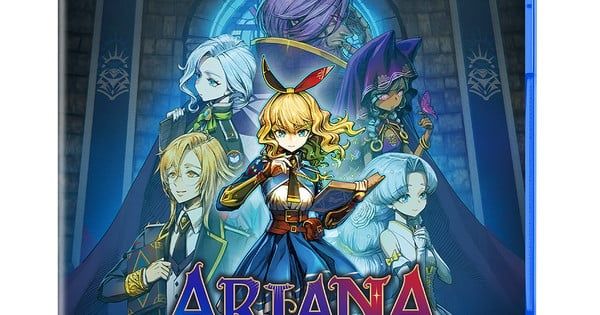
Ariana and the Elder Codex: The West's Long-Awaited Portal to a Cult Japanese RPG Opens This March

📷 Image source: animenewsnetwork.com
A Western Release Date, Finally Set in Stone
After Years of Speculation, a Launch Window Crystallizes
For Western fans of Japanese role-playing games (JRPGs), March 24 has just been marked on the calendar. Publisher NIS America has announced that the fantasy adventure 'Ariana and the Elder Codex' will launch in North America and Europe on that date for PlayStation 4, PlayStation 5, and Nintendo Switch. This news, reported by Anime News Network on December 16, 2025, ends a prolonged period of uncertainty for a title that has developed a cult following overseas despite its Japan-exclusive status.
The announcement provides concrete details for a release that had been broadly anticipated but lacked a specific timeline. The game will be available both physically and digitally across all three major console platforms, ensuring broad accessibility. This multi-platform strategy is crucial for capturing the diverse console preferences within the JRPG community, from dedicated Nintendo handheld users to PlayStation console enthusiasts.
Decoding 'Ariana and the Elder Codex'
What Is This Game and Why Has It Garnered Attention?
'Ariana and the Elder Codex' is a turn-based JRPG developed by the Japanese studio KAZESAW. The game originally launched in Japan, where it carved out a niche with its distinctive art style and narrative-driven gameplay. For audiences outside Japan, the title has been an object of curiosity, primarily known through import reviews, gameplay snippets on video-sharing platforms, and discussions in online gaming forums dedicated to untranslated Japanese games.
The core premise, as understood from its Japanese release, involves the protagonist Ariana's quest involving ancient, powerful tomes known as Elder Codexes. These artifacts are central to the game's world-building and combat mechanics. The lack of an official Western version until now meant that non-Japanese-speaking players had to rely on fan-made translation guides or simply appreciate the game's visual and mechanical elements, a significant barrier to full enjoyment.
The Publisher's Role: NIS America's Niche Expertise
A Specialist in Bridging the East-West Gaming Divide
The selection of NIS America as the publisher is a strategic fit, not a coincidence. NIS America has built a reputation over decades as a specialist in localizing and distributing niche Japanese games, particularly JRPGs and strategy titles, for Western markets. Their portfolio includes series like 'Disgaea,' 'The Legend of Heroes,' and 'Yomawari,' which often possess dedicated but not necessarily mainstream audiences. This expertise is critical for a title like 'Ariana and the Elder Codex.'
Their involvement suggests a commitment to more than a basic translation. NIS America typically handles full localization, which involves adapting text, adjusting cultural references for clarity, and ensuring the user interface is intuitive for an English-speaking audience. This process is vital for preserving the game's original creative intent while making it accessible. The publisher's established channels with retailers and digital storefronts also guarantee the game will have a visible presence upon release.
The Console Landscape: PS4, PS5, and Switch
Analyzing the Strategic Platform Choices
The decision to release the game on PlayStation 4, PlayStation 5, and Nintendo Switch covers the vast majority of the contemporary console market but with specific audience targeting. The inclusion of the legacy PlayStation 4 console is a pragmatic move to capture players who have not yet upgraded to newer hardware, a common scenario in cost-conscious gaming segments. The PlayStation 5 version will presumably offer enhanced performance, such as faster load times or higher graphical fidelity, for those with the current-generation console.
The Nintendo Switch version is arguably the most significant from a market perspective. The Switch's hybrid portable-home console design has proven exceptionally popular with JRPG fans, making it a dominant platform for the genre. The ability to play a lengthy, story-driven RPG in handheld mode aligns perfectly with player habits. By ensuring a day-one release on Switch, NIS America places 'Ariana and the Elder Codex' directly in the preferred ecosystem of its most likely core audience.
The Challenge of Localization: More Than Just Translation
The Invisible Work Behind Bringing a JRPG West
Localization is a complex, multi-layered process that goes far beyond substituting Japanese words for English ones. For a narrative-heavy JRPG, translators and editors must convey character personalities, humor, drama, and world-specific terminology in a way that feels natural to a Western player. Terms like 'Elder Codex' themselves are localization choices; the original Japanese term might carry different nuances. This work requires deep understanding of both cultures and the game's lore.
Furthermore, technical localization involves adapting the game's code to support English text, which can include reworking menus, item descriptions, and tutorial systems. Fonts must be changed to accommodate the Latin alphabet, and sometimes graphical assets containing text must be recreated. For a smaller studio's game, this technical integration, managed by NIS America, is essential for a polished final product. The announcement does not detail the localization team's specific challenges, but their success will directly impact the game's critical reception abroad.
Market Context: The West's Enduring Appetite for JRPGs
A Genre That Has Successfully Globalized
The Western release of 'Ariana and the Elder Codex' occurs within a robust and growing market for Japanese RPGs outside Japan. Once considered a niche genre, JRPGs have seen a significant resurgence and mainstream acceptance over the past decade, fueled by critical and commercial hits like the 'Persona' series, 'Final Fantasy VII Remake,' and 'Xenoblade Chronicles.' This has created a more receptive environment for mid-tier and cult titles, as audiences hungry for classic turn-based mechanics and rich storytelling seek new experiences.
This environment allows publishers like NIS America to take calculated risks on localizing games that might not have been considered viable 15 years ago. Digital storefronts and direct consumer marketing via social media have reduced the reliance on massive retail shelf space, enabling more specialized titles to find their audience. The pre-existing awareness of 'Ariana and the Elder Codex' among import-savvy gamers provides a foundational fanbase that can amplify word-of-mouth upon its localized release.
Potential Hurdles and Uncertainties
What the Announcement Does Not Reveal
While the release date and platforms are now confirmed, several key details remain unclear from the initial announcement. The pricing strategy for the physical and digital editions has not been disclosed, which will influence its accessibility and perceived value against other JRPGs on the market. Furthermore, the specifics of the localization's quality—the nuance of the script, the voice acting (if any), and the adaptation of cultural jokes—will only be apparent upon the game's release or in preview builds.
Another uncertainty is the extent of any technical enhancements for the PlayStation 5 version beyond basic backwards compatibility. Will it feature haptic feedback, activity cards, or significant visual upgrades? For the Switch version, a critical question will be its performance profile: can it maintain a stable frame rate in both handheld and docked modes, a known challenge for some multi-platform ports? These technical aspects are crucial for modern player satisfaction but are often detailed closer to launch.
The Physical vs. Digital Debate for Niche Titles
Why a Cartridge or Disc Still Matters
The confirmation of a physical release is a notable point for collectors and niche game enthusiasts. For many JRPG fans, a physical copy represents ownership, collectibility, and resistance to digital license revocation. Physical editions of niche games often become sought-after items if print runs are limited. NIS America has a history of producing special 'Limited Edition' sets for its titles, bundling the game with art books, soundtracks, and other collectibles, though no such edition for 'Ariana' has been announced yet.
Conversely, the simultaneous digital release caters to the growing segment of players who prefer the convenience of not swapping cartridges or discs, especially on the Switch. Digital sales also provide a longer tail for revenue, as the game remains permanently available without inventory constraints. For a smaller title, the dual approach maximizes potential sales by appealing to both traditionalist and modern purchasing habits. The balance between physical production quantity and digital promotion will be a key factor in the game's commercial performance.
Historical Parallels: Other Cult JRPGs That Crossed the Pacific
Learning from Past Localization Stories
The journey of 'Ariana and the Elder Codex' mirrors that of other Japanese games that found belated success in the West. Titles like 'Mother 3' (which famously never received an official translation) or the early 'Dragon Quest' games developed fervent Western fanbases through emulation and fan patches before official releases. More recently, games like 'The Legend of Heroes: Trails from Zero' saw official Western releases years after their Japanese debut, fueled by persistent fan demand. These cases demonstrate a proven, if slow, pipeline for certain genres.
However, the landscape is now more favorable. The success of crowdfunding platforms has shown publishers there is direct financial demand for localizing niche games. Furthermore, the rise of digital distribution eliminates the risk of unsold physical inventory that once deterred publishers. 'Ariana and the Elder Codex' is benefiting from this evolved ecosystem. Its announcement is less a risky gamble and more a response to a measurable, if specific, market signal.
The Road to March 24: Marketing and Community Buildup
How Awareness Transforms into Anticipation
With the release date set, the focus now shifts to the marketing and community engagement campaign leading up to March 24. NIS America will likely begin a steady drip-feed of information: character profiles, deep dives into the turn-based combat system, showcases of the game's world and music, and finally, review copies to media outlets. Engaging with established JRPG content creators on YouTube and Twitch will be crucial for generating visible, authentic hype.
The existing community of import players and followers of Japanese gaming news will serve as organic ambassadors. Their firsthand accounts of the game's strengths and weaknesses, now contextualized by an impending official release, will fuel discussion forums and social media. The challenge for the publisher will be to expand awareness beyond this core group to the broader JRPG audience who may not have followed the game's Japanese release. Effective marketing will need to articulate what sets 'Ariana and the Elder Codex' apart in a crowded field.
Perspektif Pembaca
The arrival of a once-obscure Japanese RPG like 'Ariana and the Elder Codex' highlights how globalized gaming tastes have become. For every major franchise, there are dozens of intriguing titles that previously remained locked behind language barriers.
What is your personal threshold for trying a niche, imported game? Do you seek out titles based on specific gameplay mechanics, art styles from particular developers, or recommendations from tight-knit communities? Share your experiences and the factors that guide your discovery of games from other regions.
#JRPG #ArianaAndTheElderCodex #NISAmerica #Localization #GamingNews


