

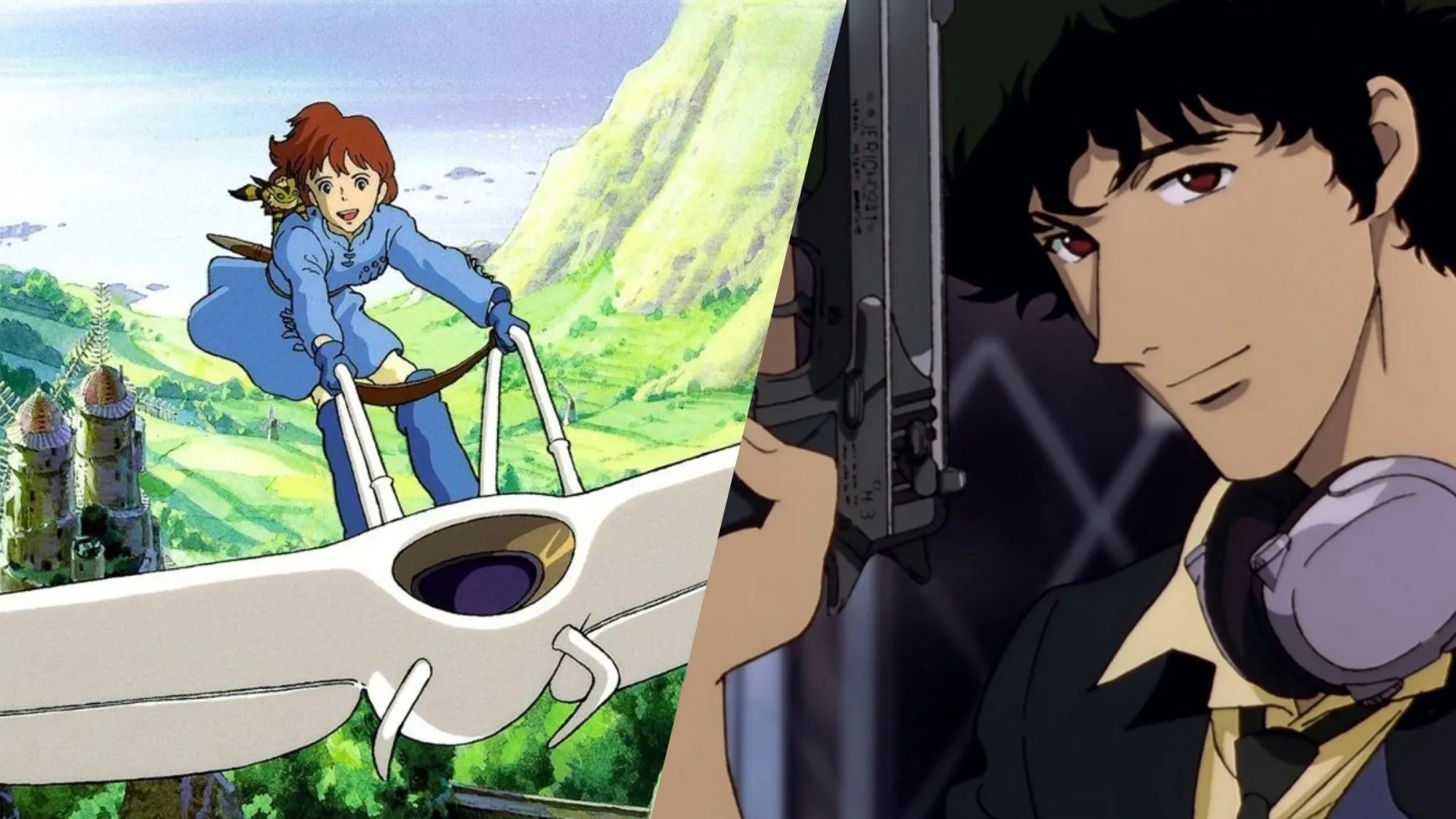
Essential Viewing: Ten Anime Classics That Define the Genre

📷 Image source: comicbook.com
The Enduring Legacy of Anime's Foundational Stories
Why These Series Remain Unskippable Decades Later
In the vast and ever-expanding universe of anime, where new titles debut every season, a core group of foundational series continues to stand as essential viewing. According to a list from comicbook.com, published on December 12, 2025, these are the timeless classics that no fan should skip. Their influence echoes through modern animation, storytelling, and global pop culture, forming the bedrock upon which countless contemporary shows are built.
What is it about these particular series that grants them such enduring power? It isn't merely nostalgia; it's their groundbreaking narratives, iconic characters, and the sheer ambition of their creators that cemented their status. They are more than just entertainment; they are cultural touchstones that introduced complex themes and artistic styles to a worldwide audience, proving that animation could tackle subjects as diverse as existential philosophy, anti-war sentiment, and profound human connection.
Neon Genesis Evangelion: A Psychological Deconstruction
Redefining the Mecha Genre and Audience Expectations
Topping many essential lists, and this one from comicbook.com, is Hideaki Anno's 'Neon Genesis Evangelion.' Far more than a simple robot-versus-monster saga, the series became a landmark for its deep dive into the fractured psyches of its teenage pilots. The report states that it masterfully blends intense mecha action with a harrowing exploration of depression, trauma, and human loneliness.
The genius of 'Evangelion' lies in its audacious subversion. It took the familiar tropes of the giant robot genre and used them as a framework to ask unsettling questions about identity, purpose, and the very nature of human existence. Its controversial and abstract finale forced viewers to engage with the material on a level rarely demanded by television, leaving a legacy of debate and analysis that continues decades after its original broadcast. The series didn't just tell a story; it challenged the form itself.
Cowboy Bebop: The Genre-Defying Space Opera
Jazz, Noir, and the Melancholy of Drifters
Defined by its unparalleled style, 'Cowboy Bebop' crafted a universe that feels both lived-in and effortlessly cool. The comicbook.com list highlights the series for its seamless fusion of jazz, film noir, westerns, and Hong Kong action cinema into a cohesive and timeless whole. It follows the bounty hunter crew of the spaceship Bebop—Spike Spiegel, Jet Black, Faye Valentine, Ed, and Ein—as they chase warrants and run from their pasts.
Each episode functions almost as a standalone short film, yet collectively they weave a poignant narrative about characters unable to escape their histories. The show’s philosophical backbone, encapsulated in its famous closing line, 'You're gonna carry that weight,' resonates because it treats its spacefaring adventures as a backdrop for very human stories of regret, loneliness, and the search for belonging. Its soundtrack, composed by Yoko Kanno, is not merely accompaniment but a vital character that defines the show's soulful atmosphere.
The Ambitious Scale of Mobile Suit Gundam
Introducing Realism and Politics to Giant Robots
Before 'Evangelion' deconstructed it, Yoshiyuki Tomino's 'Mobile Suit Gundam' fundamentally reinvented the mecha genre. As noted in the source, it moved away from simple superhero narratives to present a complex, wartime drama where giant robots, or Mobile Suits, were treated as realistic tools of industrial warfare. The series is credited with creating the 'Real Robot' subgenre.
Set during the brutal conflict between the Earth Federation and the Principality of Zeon, the story is seen through the eyes of young, reluctant civilian Amuro Ray, who pilots the prototype RX-78-2 Gundam. The narrative doesn't offer clear-cut heroes and villains; instead, it delves into the cyclical nature of war, the propaganda fed to soldiers and civilians, and the tragic cost of conflict. This grounded, political approach gave the spectacle weight and consequence, establishing a narrative depth that would define the sprawling, decades-long Gundam franchise that followed.
Akira: The Anime Blockbuster That Changed Everything
A Cinematic Landmark of Technical Ambition
Katsuhiro Otomo's 'Akira' was a seismic event in anime history. When it was released, its sheer scale and technical prowess were unprecedented. The comicbook.com report emphasizes its status as a monumental achievement in animation, with a level of detail and fluidity that set a new global benchmark for the medium. The film’s dystopian depiction of a cyberpunk Neo-Tokyo, crumbling under social unrest and psychic explosions, became an iconic visual language copied for years.
Beyond its technical mastery, 'Akira' told a dense, challenging story of teenage biker gang rivalries, government conspiracies, and terrifying psychic evolution. It was a film that refused to condescend to its audience, presenting a complex world with its own history and jargon. Its international success proved that anime could be a serious, artistic, and profitable cinematic export, directly paving the way for the global anime boom of the subsequent decades. It wasn't just a movie; it was a statement of potential.
The Foundational Shonen Journey of Dragon Ball
Blueprint for the Modern Battle Anime
It is almost impossible to overstate the influence of Akira Toriyama's 'Dragon Ball' and its sequel, 'Dragon Ball Z.' The source list identifies it as the quintessential blueprint for the battle shonen genre that dominates anime today. The story of Goku's journey from a naive, tailed boy to the universe's greatest defender established a formula of training, powerful transformations, and escalating battles that countless series have followed.
What 'Dragon Ball' mastered was a potent mix of lighthearted adventure, humor, and genuinely thrilling combat. Its power scaling, where characters constantly break their limits to face ever-stronger foes, created a compelling engine for ongoing storytelling. The series created a global lexicon of anime tropes—from the Spirit Bomb to screaming power-ups—and introduced Goku, a hero whose pure-hearted love for fighting and protecting others became an archetype. For millions, it was the gateway into anime fandom.
Sailor Moon: Revolutionizing the Magical Girl Genre
A Legacy of Female Empowerment and Friendship
Naoko Takeuchi's 'Sailor Moon' did for magical girls what 'Dragon Ball' did for shonen fighters. As highlighted, it transformed the genre from stories about individual witches or fairies into a team-based epic about warrior goddesses reincarnated as schoolgirls. Usagi Tsukino, the clumsy crybaby who transforms into the heroic Sailor Moon, became a relatable icon for a generation.
The series was groundbreaking in its unabashed embrace of romance, friendship, and female camaraderie as narrative drivers just as important as its battles against evil. It featured a diverse cast of heroines, each with distinct personalities and struggles, and famously included positive portrayals of LGBTQ+ relationships, which were remarkably progressive for mainstream 1990s television. 'Sailor Moon' argued that love, justice, and girl power were forces strong enough to save the world, a message that cemented its timeless, cross-generational appeal.
Ghost in the Shell: Philosophizing the Cybernetic Future
Grappling with Identity in a Digital World
Mamoru Oshii's 1995 film adaptation of Masamune Shirow's manga, 'Ghost in the Shell,' is a cornerstone of cyberpunk and philosophical anime. The comicbook.com list points to its profound exploration of consciousness and identity in an age where the line between human and machine has blurred. The story follows Major Motoko Kusanagi, a fully cybernetic intelligence agent, as she hunts a mysterious hacker known as the Puppet Master.
The film is a slow-burning, atmospheric treatise on what constitutes a soul—or a 'ghost'—in a world of synthetic bodies and downloadable memories. Its iconic visuals, blending traditional animation with early digital techniques, created a rain-slicked, technologically dense cityscape that feels both futuristic and decayed. 'Ghost in the Shell' asked difficult questions about the nature of self that have only grown more relevant with advances in AI and neural interfaces, ensuring its status as a work of enduring intellectual and artistic significance.
Why These Classics Demand Your Attention
The common thread binding these ten series, according to the source from comicbook.com, is not just their quality but their foundational impact. Each one, in its own way, broke molds and expanded the possibilities of what anime could be, both as art and as popular storytelling. They moved beyond their genre constraints to tackle universal themes—the search for self, the horrors of war, the bonds of friendship, and the anxiety of a technological future.
Watching them today is not an exercise in archaeology; it is an education in the language of modern anime. The narrative techniques, character archetypes, and visual styles they pioneered are the grammar used by creators today. To skip these classics is to miss the origin points of the medium's most powerful ideas. They remain unskippable because, decades later, they still speak to us with clarity, ambition, and an artistic vision that time has done nothing to diminish.
#AnimeClassics #NeonGenesisEvangelion #CowboyBebop #EssentialAnime #GenreDefining


