

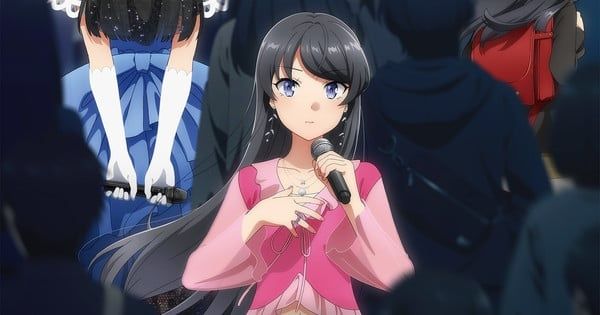
Seishun Buta Yarō Returns: Final Film 'A Dear Friend' Sets Fall 2026 Release, Concluding Beloved Supernatural Saga

📷 Image source: animenewsnetwork.com
The Dream Continues: A Final Chapter Announced
Franchise Confirms New Film to Complete Story Arc
The popular Seishun Buta Yarō series, known internationally as Rascal Does Not Dream, will receive a conclusive new film. Titled Rascal Does Not Dream of a Dear Friend, the project was announced on December 14, 2025, with a planned theatrical debut in Japan for Fall 2026, according to the official announcement covered by Anime News Network. This film is positioned as the final installment in the current story arc, bringing closure to the narrative that has spanned television, a previous film, and a recent sequel film.
The announcement confirms ongoing production at studio CloverWorks, with key staff members returning. Director Sōichi Masui and scriptwriter Masahiro Yokotani are set to reprise their roles, ensuring continuity with the established tone and style of the franchise. Character designer Satomi Tamura will also return, maintaining the visual identity fans have come to recognize. The core voice cast, including Kaito Ishikawa as Sakuta Azusagawa and Asami Seto as Mai Sakurajima, is expected to return, though specific casting details beyond the initial announcement were not provided.
Understanding the 'Adolescence Syndrome' Phenomenon
The Franchise's Core Supernatural Mechanic
Central to the Seishun Buta Yarō series is the concept of 'Adolescence Syndrome,' a supernatural phenomenon affecting teenagers. The series defines it as a manifestation of intense psychological stress, anxiety, and societal pressure into physical reality. These manifestations are unique to each character and often serve as metaphors for their personal struggles, ranging from public invisibility and body duplication to time loops and memory alteration.
The protagonist, Sakuta Azusagawa, often finds himself at the center of these mysterious events, working to understand and resolve the underlying emotional trauma causing each syndrome. The series distinguishes itself by blending romantic comedy and slice-of-life elements with psychological drama and speculative fiction. This approach has allowed it to explore complex themes of mental health, social ostracization, and the pains of growing up within a framework that includes fantastical occurrences.
A Legacy of Success: From Light Novels to the Screen
The Path to a Cinematic Finale
The franchise originated from a series of light novels written by Hajime Kamoshida and illustrated by Kēji Mizoguchi, which began publication in 2014. The property's first major adaptation was a 13-episode television anime series titled Rascal Does Not Dream of Bunny Girl Senpai, which aired in Fall 2018. Despite its misleading title, the series garnered critical and commercial success for its intelligent writing and character-driven storytelling.
This success led to the 2019 film Rascal Does Not Dream of a Dreaming Girl, which continued the story directly from the television series' conclusion. After a significant hiatus, the franchise returned with the 2023 film Rascal Does Not Dream of a Sister Venturing Out. The announcement of Rascal Does Not Dream of a Dear Friend confirms that the cinematic route will continue to be the medium for advancing the core narrative, a pattern now established for the franchise's later story arcs.
The 'Five Numbers' Defining the Franchise's Impact
Key Metrics of a Modern Anime Success Story
The journey to this final film can be understood through several pivotal numbers. First is the '13' episodes of the original 2018 TV series that introduced a global audience to Sakuta, Mai, and the puzzling Adolescence Syndrome. This foundational season established the franchise's unique voice and emotional core, creating a dedicated fanbase that propelled it forward.
Second is the '4-year' gap between the first film in 2019 and the sequel film in 2023, a period that tested fan loyalty but ultimately culminated in a successful theatrical return. Third is the number of light novel volumes this new film will likely adapt, though the specific source material volume count was not detailed in the initial announcement. Fourth is the consistent creative team, with director Masui and writer Yokotani collaborating across all major animated adaptations to date. Finally, the 'Fall 2026' release window sets a target that is approximately three years after the previous film, suggesting a deliberate production pace for this concluding chapter.
CloverWorks: The Studio Behind the Vision
A Partnership Forged in Consistency
The production studio CloverWorks has been intrinsically linked to the Seishun Buta Yarō anime adaptations since their inception. A subsidiary of Aniplex founded in 2018, CloverWorks has developed a reputation for high-quality animation and faithful adaptations. Their work on the franchise is characterized by a distinct visual style that balances everyday realism with the subtle, eerie visuals required for the supernatural elements of Adolescence Syndrome.
This long-standing partnership between the source material creators, the core staff, and the animation studio is a significant factor in the franchise's cohesive identity. For fans, the confirmation of CloverWorks' involvement provides assurance of visual and tonal consistency with previous entries. The studio's current portfolio, which includes titles like Spy x Family and Bocchi the Rock!, demonstrates its capacity to handle both character-centric drama and popular, widely-loved series, making it a fitting home for this finale.
Global Fandom and the Wait for Localization
The International Audience's Anticipated Journey
While the Fall 2026 date is for the Japanese theatrical release, the international fanbase immediately faces the familiar waiting game for localization. Previous films in the series have seen international theatrical releases through distributors like Aniplex of America and Crunchyroll, but these typically occur months after the Japanese premiere. This gap creates a period where spoilers become a significant concern for fans wishing to experience the story fresh.
The series enjoys substantial popularity in North America, Europe, and Southeast Asia, supported by the availability of the light novels in English and other languages, as well as streaming for the anime series and films on platforms like Crunchyroll and Funimation (now Crunchyroll). This global footprint means the announcement of a final film is an international event. However, the lack of a simultaneous global release plan, which remains uncommon for most anime films, introduces a logistical and emotional challenge for the worldwide community built around the series.
Narrative Expectations and Unresolved Threads
What Could 'A Dear Friend' Conclude?
The title Rascal Does Not Dream of a Dear Friend immediately sparks speculation about its focus. In the series' naming convention, the 'Dear Friend' likely refers to a key character central to the film's conflict. Based on the trajectory of the light novels and the conclusion of the previous film, narrative threads concerning Sakuta's own past, the full nature of Adolescence Syndrome, and the future of his relationship with Mai Sakurajima are all potential candidates for resolution.
The term 'final' attached to this film suggests it aims to provide a conclusive endpoint for the current saga, potentially wrapping up the overarching plot that has connected the various cases of Adolescence Syndrome. However, the announcement did not specify if this conclusively ends all anime adaptations forever or simply concludes this major story arc, leaving room for potential future stories in the same universe. The focus will likely be on delivering emotional payoff and a sense of completion for the characters fans have followed for nearly a decade.
The Economics of a Cinematic Finale
Box Office Precedents and Market Context
The decision to produce another film is underpinned by strong commercial performance. The 2019 film, Rascal Does Not Dream of a Dreaming Girl, was a box office success in Japan, demonstrating the franchise's ability to draw audiences to theaters. The 2023 sequel film further proved the property's lasting appeal and profitability in the cinematic market, solidifying this distribution model for its major story advancements.
A final chapter film often carries inherent box office advantages, as dedicated fans are motivated to see the story's conclusion, potentially driving higher attendance. The production committee, which includes Aniplex and other stakeholders, is likely banking on this culmination event to perform strongly. Furthermore, a successful film fuels continued sales of the source material, Blu-rays, and merchandise, creating a synergistic economic effect that extends far beyond the theatrical run. The Fall 2026 release slot also avoids direct competition with the summer blockbuster season, positioning it for a strong performance in a slightly less crowded market.
Comparative Context: Anime Franchises and Final Films
Where Does 'Seishun Buta Yarō' Fit?
The trajectory of Seishun Buta Yarō—from TV series to a series of films concluding the story—follows a pattern established by other successful anime franchises. Notable examples include the Puella Magi Madoka Magica series, which continued its narrative with the Rebellion film, and the Sword Art Online Progressive film series. This model allows for higher production values, longer narrative formats, and event-style releases that generate significant buzz.
However, the franchise distinguishes itself through its grounded, contemporary setting and its focus on psychological and emotional conflicts rather than large-scale action or fantasy warfare. Its closest comparisons might be series like The Monogatari Series, which also blends supernatural mystery with dense dialogue and character exploration, or the more recent Insomniacs After School, which shares a focus on realistic character dynamics amidst a unique central premise. The success of this final film could influence how other character-driven, non-action properties consider structuring their major adaptations.
Production Realities and the Road to 2026
The Work Begins Behind the Scenes
The announcement of a Fall 2026 release, made in late 2025, indicates a production timeline of roughly two to three years. This is a standard but tight schedule for a feature-length anime film, which requires meticulous work in storyboarding, key animation, in-between animation, background art, color design, and post-production including sound and music. The returning staff may streamline pre-production, but the core animation process remains labor-intensive.
This timeline also hints that core planning and early production stages are already underway. Key visuals, a formal trailer, and more specific plot details are likely to be released in stages over the coming months and years as marketing builds toward the release. Fans should expect updates around major anime industry events. The schedule also must account for potential delays, which are not uncommon in anime production, though the announcement of a specific season (Fall) rather than just a year suggests confidence in the current planning.
Reader Perspective
The announcement of a final film for a beloved series is a moment that mixes anticipation with a touch of melancholy. For a story so deeply engaged with the turbulence of youth and connection, its conclusion invites personal reflection on the journeys we've witnessed and our own.
What element of the Seishun Buta Yarō series has resonated most deeply with you? Was it a specific character's struggle with Adolescence Syndrome that mirrored a real-world feeling, the dynamic between Sakuta and Mai, or the series' unique approach to blending the supernatural with the emotional realities of growing up? Share which aspect of the story you hope finds meaningful resolution in 'A Dear Friend.'
#SeishunButaYarou #RascalDoesNotDream #ADearFriend #AnimeFilm #CloverWorks


