

Steel Ball Run Races to Screens: JoJo's Bizarre Adventure Part 7 Anime Sets March 19 Premiere, Expands Cast

📷 Image source: animenewsnetwork.com
The Starting Line is Drawn
A Long-Awaited Adaptation Finally Gets a Date
The long-rumored and fervently anticipated anime adaptation of 'Steel Ball Run' is officially on the calendar. According to an announcement on animenewsnetwork.com dated 2025-12-20T02:09:03+00:00, the first stage of 'JoJo's Bizarre Adventure Part 7: Steel Ball Run' will begin its broadcast on March 19. This confirmation ends years of speculation from the global fan community regarding if and when the critically acclaimed manga arc would receive an animated version.
This premiere date marks a significant milestone for the JoJo franchise, which has steadily released anime adaptations of its previous six narrative parts over the past decade. 'Steel Ball Run,' originally serialized from 2004 to 2011, represents a major shift in the series' universe, introducing a new continuity and a radically different setting far removed from the modern or 20th-century backdrops of earlier storylines. The announcement confirms the production will be released in distinct 'stages,' suggesting a multi-cour or split-season approach to covering the manga's substantial 24-volume length.
A New Cast for a New World
Voice Actors Announced for Key Rival Roles
Alongside the premiere date, the announcement revealed additional casting for two pivotal characters central to the story's dynamic. Johnny Joestar, the protagonist of Part 7, will be voiced by Kensho Ono. Ono is known for his roles as Giorno Giovanna in 'JoJo's Bizarre Adventure: Golden Wind' and Tetsuya Kuroko in 'Kuroko's Basketball.' His casting creates a unique meta-connection within the franchise, as he now voices protagonists in two separate, unconnected parts of the JoJo saga.
His rival and eventual companion, Gyro Zeppeli, will be portrayed by Yuki Kaji, a voice actor renowned for his work as Eren Yeager in 'Attack on Titan' and Todoroki in 'My Hero Academia.' The pairing of Ono and Kaji signals a significant investment in star power for the production. The characters' complex relationship—evolving from competitors in a cross-country race to reluctant allies bound by a shared goal—forms the emotional core of the narrative, making this casting choice crucial to the adaptation's success.
Trailer Teases a Vast Canvas
Visuals Hint at the Epic Scale of the Race
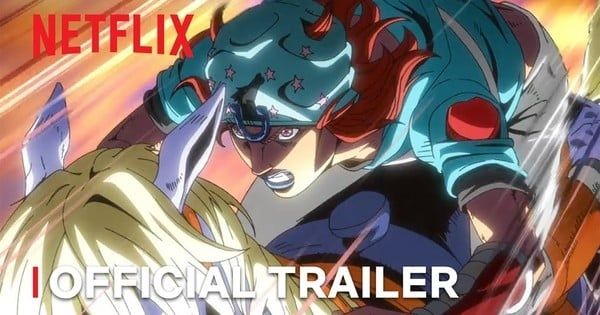
A new promotional trailer released with the announcement offers the first extended look at the anime's visual direction and tone. The footage emphasizes the vast, open landscapes of the American frontier, a stark contrast to the urban and enclosed settings prevalent in earlier JoJo parts. Scenes showcase the lead characters on horseback, highlighting the historical setting of the late 19th century and the core premise of the Steel Ball Run race itself.
The trailer also provides glimpses of the series' unique visual language, including the stylized 'Stand' abilities—psychic manifestations of a user's fighting spirit that are a franchise hallmark—though specific Stand designs for the new characters are kept largely under wraps. The animation style appears to build upon the digital techniques used in the recent 'Stone Ocean' adaptation, but with a color palette and aesthetic tailored to the story's Western and adventure genres. The source material does not specify the animation studio handling production, leaving this a point of ongoing interest for fans.
Understanding the 'Steel Ball Run'
What Makes Part 7 a Radical Departure
For audiences unfamiliar with the manga, 'Steel Ball Run' is not a direct sequel to the previous six parts of JoJo's Bizarre Adventure. It initiates a completely rebooted continuity, often referred to as the 'SBR-Verse' or 'Irene-Verse' by fans. The story transplants the series' signature themes of fate, legacy, and flamboyant combat into a new context: the American West of 1890. The narrative follows the eponymous Steel Ball Run, a coast-to-coast horse race with a massive cash prize, serving as the backdrop for a grander, more spiritual conflict.
The protagonist, Johnny Joestar, is a former horse-racing champion who was paralyzed from the waist down after a shooting. He is a far more vulnerable and psychologically complex lead than his predecessors. He enters the race to follow Gyro Zeppeli, an executioner-turned-racer from the Kingdom of Naples who wields a mysterious spinning steel ball technique. Their goal transcends the prize money; they seek the scattered corpse parts of a mystical saint, which grant incredible power and are sought by other dangerous racers. This quest framework allows for a sprawling narrative filled with unique villains and inventive battles.
The Challenge of Adaptation
Translating a Beloved Manga to Animation
Adapting 'Steel Ball Run' presents distinct creative and logistical challenges not faced by earlier JoJo anime projects. The manga, created by Hirohiko Araki, is renowned for its highly detailed artwork, intricate page layouts, and a narrative pace that balances intense action with long stretches of travel and character development. Capturing the epic scale of the race—which traverses diverse environments from San Diego to New York City—requires consistent, high-quality background art and a strong sense of geographical progression, which can be resource-intensive for an anime production.
Furthermore, the story's tone is a unique blend of Western, adventure, supernatural thriller, and philosophical drama. Maintaining this tonal balance in animation, where pacing is often accelerated, will be a key test for the directors and writers. The decision to produce the anime in 'stages' is likely a strategic one, allowing the production team focused periods of work on specific arcs of the story while managing the overall scale of the project. This approach has been used successfully for other long-running shonen adaptations but is a first for the modern JoJo anime series.
Global Anticipation and Franchise Impact
Why This Announcement Resonates Worldwide
The announcement of the 'Steel Ball Run' anime has triggered significant discussion across international anime communities. In regions like North America and Europe, where Western genres have deep cultural roots, the setting provides an unusual point of entry and curiosity. The manga is frequently ranked among the highest-rated comic series on aggregate review sites, creating a 'prestige' expectation for the adaptation that extends beyond the existing fanbase. This positions the anime not just as another season of a popular franchise, but as a potential major standalone hit.
For the JoJo franchise's business strategy, a successful 'Steel Ball Run' adaptation secures its future for years to come. With Parts 8 ('JoJolion') and the ongoing Part 9 ('The JOJOLands') also set in the rebooted continuity, animating Part 7 establishes the foundation for a potential second long-running anime series. It also opens new merchandising avenues, from character figures based on the distinctive 1890s designs to potential collaborations with Western-themed brands. The global fanbase, already large due to the previous anime parts and ubiquitous internet memes, is poised for considerable growth.
Historical Context and Creative Inspirations
The Real-World Echoes in a Bizarre Adventure
While firmly a work of supernatural fiction, 'Steel Ball Run' draws inspiration from real historical periods and concepts. The setting of 1890 America captures the closing years of the 'Wild West' era, a time of rapid industrialization, territorial consolidation, and cultural clash. The cross-country horse race premise, while fantastical, echoes the popularity of endurance contests and the human fascination with conquering vast distances during that period, similar to the later craze for transcontinental automobile races.
Creator Hirohiko Araki has cited influences ranging from classical art and sculpture to fashion and rock music, all of which are expected to be woven into the anime's aesthetic. The character designs, particularly for Gyro Zeppeli with his flamboyant Renaissance-inspired attire, deliberately contrast with the rugged Western environment. This fusion of disparate historical and cultural elements into a cohesive visual and narrative whole is a hallmark of Araki's style and will be a critical aspect for the anime's production design team to faithfully interpret and animate.
The 'Stand' Power System Evolves
New Rules for Psychic Abilities in a New World
A key mechanical shift in 'Steel Ball Run' is the evolution of the Stand power system. In previous parts, Stands were primarily spiritual entities used for combat, with abilities ranging from super strength to reality manipulation. In Part 7, while Stands remain central, their manifestation and rules are deeply intertwined with the new concept of the 'Spin.' The Spin, exemplified by Gyro Zeppeli's steel balls, is a perfected rotational technique that channels golden ratios and can grant Stand-like abilities, effectively serving as a bridge between martial skill and supernatural power.
This introduces a more grounded, pseudo-scientific layer to the franchise's mechanics. Stand abilities in 'Steel Ball Run' are often more conceptually abstract and tightly linked to the user's personal history or philosophy, leading to battles that are as much intellectual puzzles as they are physical confrontations. Animating these complex abilities—which can involve visual representations of mathematical concepts, sound-based attacks, or territory manipulation—will require innovative visual effects work to translate the manga's often-static depictions into dynamic, understandable animated sequences.
Potential Risks and Creative Pitfalls
Navigating Fan Expectations and Narrative Pacing
The adaptation faces several inherent risks. The primary challenge is managing the immense weight of fan expectations. 'Steel Ball Run' is often considered the pinnacle of Hirohiko Araki's writing, with a deeply emotional story and celebrated character arcs. Any perceived simplification, rushed pacing, or deviation in character portrayal could meet with strong criticism from the dedicated manga readership. The anime must walk a fine line between being accessible to newcomers and satisfying for long-time fans who have meticulously imagined these scenes for years.
Another risk lies in the pacing of the 'stage' release format. If the first stage covers too little story, it may feel insubstantial; if it crams in too much, it could compromise character development and the sense of a long, arduous journey. Furthermore, the success of the adaptation hinges on its ability to make the quieter, introspective moments—Johnny's struggles with his disability, philosophical debates between characters—as compelling as the high-octane race sequences and Stand battles. Balancing these elements is crucial for the anime's narrative cohesion and emotional impact.
Looking Beyond the First Stage
The Future of the JoJo Anime Franchise
The announcement of 'Steel Ball Run' as a multi-stage project implicitly maps out a long-term roadmap for the JoJo anime. A complete adaptation of the 95-chapter manga will likely require multiple years and several production cycles. This commitment suggests confidence from the rights holders and production committee in the franchise's enduring commercial and cultural viability. It also provides a stable workflow for the animators, voice actors, and composers involved, allowing for long-term planning and potentially higher consistency in quality across the project's lifespan.
This model also sets a precedent for how subsequent parts in the new continuity might be handled. A successful 'Steel Ball Run' anime paves the way for adaptations of 'JoJolion' and 'The JOJOLands,' which share its universe and increasingly complex narrative structures. For the global audience, it means the prospect of new JoJo anime content for the foreseeable future, solidifying the series' position as a mainstay of the industry. The March 19 debut is not just the start of a new series, but the beginning of a new major chapter in the anime history of 'JoJo's Bizarre Adventure.'
Reader Perspective
The announcement of 'Steel Ball Run' brings a beloved story to a new medium, but adaptation always involves interpretation. For readers familiar with the manga, which elements are you most eager to see realized in animation, and which scenes or character moments do you think will be the greatest challenge for the studio to adapt faithfully?
For viewers who may be new to JoJo or who have only seen the previous anime parts, what are your initial impressions based on the trailer and premise? Does the shift to a historical Western setting, combined with supernatural elements, make the series more or less appealing to you compared to its modern-day predecessors?
#SteelBallRun #JoJoAnime #JohnnyJoestar #GyroZeppeli #AnimeNews


