

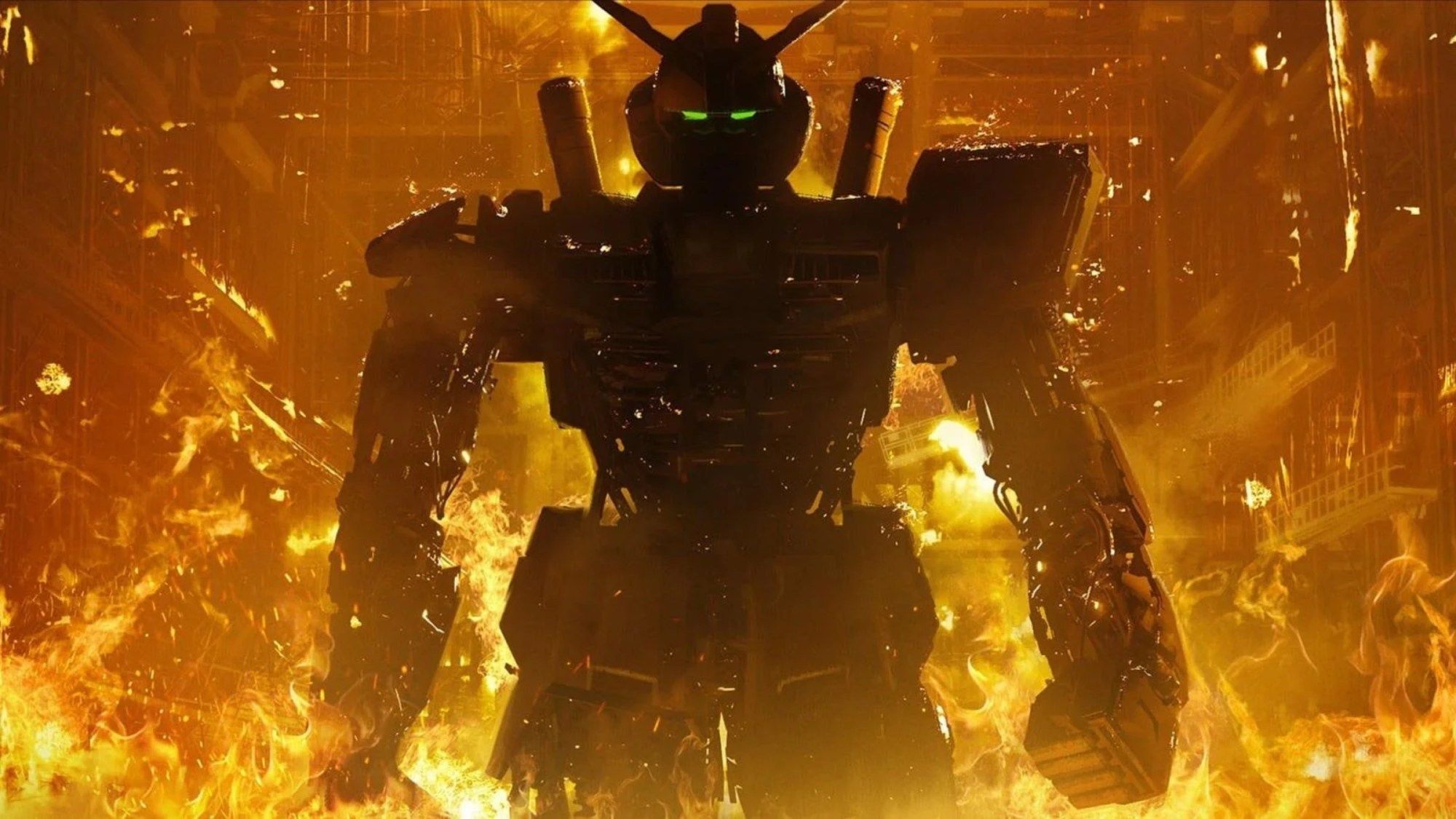
A Major Step Forward: Netflix's Live-Action Gundam Film Secures Director and Enters Active Development

📷 Image source: comicbook.com
A Long-Awaited Mobilization
From Anime Legend to Cinematic Ambition
For over four decades, the towering humanoid war machines of the Gundam franchise have dominated anime, defining the 'real robot' genre with stories of political strife and the human cost of conflict. The leap from animation to live-action, however, has been a notoriously difficult maneuver, fraught with fan skepticism and technical challenges. According to comicbook.com, that leap is now entering a critical new phase.
On January 28, 2026, a significant update emerged for the long-gestating project, first announced by Legendary Entertainment and Netflix in 2018. The report confirms that the live-action film adaptation of the iconic Mobile Suit Gundam has secured a director and is officially moving into active development. This marks a pivotal shift from a announced concept to a project with concrete creative leadership, signaling that the film is finally moving beyond the planning stages.
The Creative Pilot Takes the Helm
Jordan Vogt-Roberts Assumes Directorial Control
The major update, as reported by comicbook.com, centers on the attachment of director Jordan Vogt-Roberts. Vogt-Roberts is known for directing the 2017 adventure film Kong: Skull Island, a project that demonstrated his ability to handle large-scale, effects-driven action while building a distinct visual atmosphere. His involvement suggests a vision that prioritizes both spectacle and a cohesive directorial style.
This appointment ends years of speculation about who would steer the colossal undertaking. Directing a Gundam film is a formidable task, requiring a balance between honoring the dense, often philosophical source material and crafting a blockbuster accessible to a global Netflix audience. Vogt-Roberts' previous work indicates a filmmaker comfortable with blending human drama against a backdrop of immense, cinematic creatures—a skill set directly transferable to piloting Mobile Suits.
The Production Powerhouse
Legendary, Netflix, and Sunrise Align
The film is a collaboration between three major entities, each bringing a crucial component to the project. Legendary Entertainment, the production company behind major franchise films like the MonsterVerse series and Dune, is shepherding the production. Their experience with large-scale, intellectual property-driven filmmaking is a key asset in physically realizing the world of Gundam.
Netflix serves as the global distributor and financial backer, continuing its aggressive push into major anime and manga adaptations following mixed receptions to projects like Cowboy Bebop and One Piece. The streaming giant's global platform provides the film with a potential instantaneous worldwide reach unmatched by traditional theatrical releases. Crucially, Sunrise, the legendary Japanese animation studio that created and has stewarded the Gundam franchise since 1979, is directly involved to protect the integrity of the source material.
The Core Narrative Challenge
Adapting a Foundation of War and Ideology
The original 1979 Mobile Suit Gundam series is not a simple tale of good versus evil. It is a war story set in the Universal Century timeline, where the Earth Federation battles the independence-seeking Principality of Zeon. The narrative follows young civilian Amuro Ray as he accidentally pilots the RX-78-2 Gundam, a powerful new prototype weapon, and is thrust into the horrors of war. The series is renowned for its complex characters, moral ambiguity, and anti-war themes.
The live-action film's greatest challenge will be condensing this nuanced ideology and sprawling narrative into a roughly two-hour format. It must decide whether to directly adapt the original series' plot, create a new story within the Universal Century, or take a completely different approach. The involvement of Sunrise offers reassurance that the adaptation will respect the core tenets of the franchise, even if the specific story beats are altered for a new medium and audience.
The Visual and Technical Frontier
Bringing Mobile Suits to Tangible Life
A primary concern for fans is how the film will realize the Mobile Suits, the 18-meter-tall piloted robots central to the franchise. Anime allows for a certain stylistic fluidity, but live-action demands a grounded physicality. The design philosophy will be critical: will the mecha look like sleek, agile superheroes or cumbersome, industrial instruments of war weighed down by their own immense mass?
The production must also navigate the depiction of space combat and colony interiors, hallmarks of the Gundam universe. The aesthetic of the Universal Century is a specific blend of futuristic technology and lived-in, almost mundane realism. Achieving this balance through cinematography, set design, and visual effects will be a massive undertaking. The film's success will hinge on making these iconic elements feel both awe-inspiring and believable within a live-action framework.
A Landscape of Adaptation Attempts
Learning from Precedent, Both Good and Bad
The journey of anime and manga to live-action Hollywood productions is a minefield of critical failures and rare successes. High-profile disappointments have made audiences deeply wary. This film enters a market still evaluating the lessons from other adaptations, where tonal missteps and a perceived lack of understanding of the source material have often led to downfall.
Conversely, more recent efforts have shown a path forward through greater cultural fidelity and creative passion. The live-action Gundam movie must analyze this landscape carefully. It must determine what core elements are sacrosanct and what can be evolved for a different medium. The project's multi-year development period suggests a cautious, deliberate approach rather than a rushed one, which could be a positive indicator of its creative priorities.
The Global Audience Equation
Serving the Core Fans and the Curious Newcomer
The film faces a dual mandate. It must satisfy a dedicated, knowledgeable, and protective global fanbase that has sustained Gundam for generations. These fans have specific expectations regarding mecha design, character motivation, and thematic depth. Any perceived disrespect or dilution of the franchise's essence could trigger a severe backlash that undermines the project before it even launches.
Simultaneously, to justify its budget as a Netflix tentpole, it must be compelling and comprehensible to millions of viewers who have never seen a Gundam series. It must explain its universe—concepts like Newtypes, Minovsky physics, and the political factions—without resorting to cumbersome exposition. Striking this balance is perhaps the single most difficult creative task facing Vogt-Roberts and the writing team.
Unanswered Questions and Future Reveals
Casting, Timeline, and Story Details Remain Under Wraps
While the director announcement is a major step, comicbook.com's report highlights that numerous vital details remain unknown. No casting choices have been revealed, leaving open the crucial questions of who will pilot the Gundam and who will command the opposing forces. The casting approach—whether it will feature a predominantly Asian cast reflective of the anime's characters or a more internationally assembled group—will be a significant point of discussion and scrutiny.
Furthermore, the specific plot and its fidelity to any existing Gundam timeline are still mysteries. The production has not indicated whether this will be a direct adaptation of the 1979 series, a new story in the Universal Century, or a standalone interpretation. The lack of a confirmed release window or start of production date also means the project, while active, is likely still years away from reaching audiences.
Potential Impact and Franchise Mobilization
A Catalyst for a New Era of Gundam
A successful live-action film could act as a powerful catalyst, introducing the Gundam franchise to a mainstream audience on an unprecedented scale. This could drive significant new interest toward the extensive back catalog of anime series, films, and model kits (Gunpla), potentially revitalizing merchandising and viewership numbers for the entire brand. It could redefine Gundam's global cultural footprint for the 21st century.
However, a failed adaptation carries its own risks. It could reinforce the stigma around anime-to-live-action adaptations and potentially create a negative association with the Gundam name for a generation of casual viewers. The stakes are therefore extraordinarily high, not just for this single film, but for the perception and growth potential of the entire franchise moving forward. The pressure on the creative team to deliver a respectful and compelling film is immense.
The Road Ahead to Launch
A Long Development Path Still Awaits
With a director now attached, the next phases will involve finalizing a script, assembling a cast, and moving into pre-production design for mecha, costumes, and sets. The visual effects pipeline, which will be monumental, will need to be planned and tested extensively. Given the scale and the need to get it right, a production timeline of two to three years from this point would not be unusual.
The report from comicbook.com, dated 2026-01-28T19:59:56+00:00, provides a snapshot of a project finally gaining momentum. Fans should anticipate further updates on casting and concept art in the coming months, but must also brace for the inherent delays of blockbuster filmmaking. The mobilization has been ordered, but the battle to create a definitive live-action Gundam is only just beginning in earnest.
Reader Perspective
The announcement of a director for the live-action Gundam film is a moment that will be dissected from countless angles. For a franchise built on the clash of ideologies and the personal trauma of war, adaptation is its own kind of battlefield.
What single element from the original Gundam series—a specific theme, a character dynamic, or a visual design principle—do you believe is absolutely non-negotiable and must be preserved for the live-action film to feel authentically like Gundam to you? Conversely, what aspect of the classic anime do you think could benefit from a fresh interpretation or update for a modern, global audience?
#Gundam #Netflix #LiveAction #AnimeAdaptation #MobileSuitGundam


