

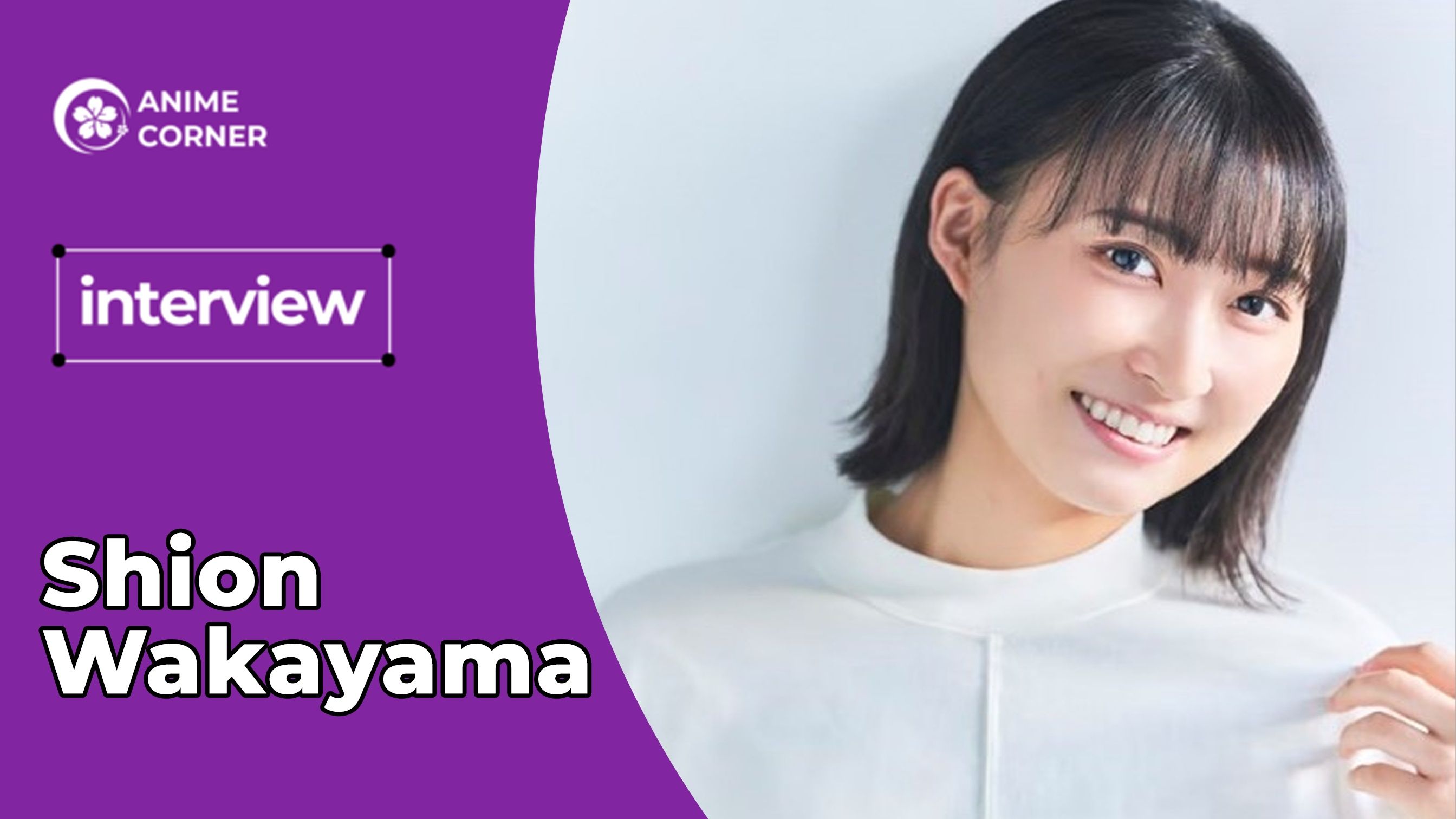
Shion Wakayama on Voicing a Legend: The Craft and Pressure Behind 'The One Piece'

📷 Image source: static.animecorner.me
Stepping into a Legacy: The Audition for Nico Robin
A voice actor's dream and daunting reality
For any voice actor in Japan, the opportunity to join the cast of 'One Piece' is a career-defining moment. For Shion Wakayama, that moment arrived with the chance to voice Nico Robin in the new anime series, 'The One Piece'. According to the interview published by animecorner.me, the audition process was an intense experience she describes as 'a dream come true,' but one immediately tempered by the sheer weight of the responsibility. The role meant not just performing a beloved character, but succeeding Yuriko Yamaguchi, the original voice of Robin for over two decades. Wakayama recalls the profound pressure she felt, knowing she was stepping into a role with an immense, established legacy and a deeply passionate global fanbase.
Her initial reaction, as reported, was a mix of overwhelming joy and immediate anxiety. How does one approach a character so intimately known to millions? The interview reveals that Wakayama's process began not with imitation, but with a deep, personal study of Eiichiro Oda's original manga. She immersed herself in the source material, aiming to understand Robin's core essence—her intelligence, her resilience, her quiet strength—from the ground up. This foundational work was her first step in building a performance that would honor the past while bringing a fresh authenticity to the new production.
Building Robin from the Page Up
Manga immersion as the primary source
Wakayama's methodology highlights a key difference in the approach for 'The One Piece'. The new series, a remake starting from the East Blue saga, is being produced by Wit Studio. According to the interview, the production team encouraged the cast to go back to the manga as their principal guide. For Wakayama, this directive was crucial. She spent significant time analyzing Robin's introductions, her key scenes, and her subtle emotional shifts directly from Oda's panels and dialogue.
This focus on the original text allowed her to form her own interpretation, separate from the previous anime adaptation's performance. She sought to capture the nuances of Robin's character as first conceived: the archaeologist's sharp intellect, the layered trauma behind her calm demeanor, and the gentle warmth she shows the Straw Hat crew. The report states that this back-to-basics approach was central to the entire project's philosophy, aiming for a rendition that feels both new and fundamentally true to the creator's vision.
The Technical Craft of Voice Matching
A delicate balance between homage and originality
A significant technical challenge discussed in the interview is the concept of 'voice matching'. In dubbing or recasting scenarios, actors sometimes aim to closely mimic a previous performance. Wakayama clarifies that this was not her goal, nor was it the direction given by the sound director. The instruction was not to copy Yuriko Yamaguchi's iconic portrayal but to build her own version of Nico Robin, grounded in the manga.
However, the interview reveals an inherent, almost subconscious form of matching that occurs. When performing lines that are legendary within the fandom—specific catchphrases or emotional declarations—the shadow of the original performance is undeniable. Wakayama describes navigating this by focusing on the emotional truth of the moment for Robin as a character, rather than the sound of the line as previously delivered. It’s a delicate act: delivering a line like 'I want to live!' with the same devastating impact, but filtered through her own vocal instrument and understanding of the character's journey at that precise point in the narrative.
Pressure and Support from the Cast
A collective journey into a beloved world
Wakayama was not alone in facing this daunting task. The entire main cast for 'The One Piece' is new, meaning each actor was undertaking a similar challenge. According to the interview, this created a powerful sense of camaraderie and mutual support on the recording floor. They were all, as Wakayama puts it, 'in the same boat,' navigating the pressures and expectations together.
This shared experience helped alleviate the isolation of the pressure. They could discuss their approaches, share their anxieties, and encourage one another to find their unique voices for these iconic roles. The collaborative environment, as reported, was essential in allowing the actors to take creative risks and build chemistry that would hopefully resonate with audiences, both new and long-time fans. It transformed a potentially intimidating process into a collective artistic endeavor.
The Evolution of a Character Voice
From early sketches to a fully realized performance
Developing a character voice is rarely a linear process. For Wakayama, Robin's voice evolved through trial and error during recording sessions. The interview details how she worked closely with the sound director to refine her tone, pitch, and delivery. Early takes might have leaned too far in one direction—perhaps too soft, or not carrying enough underlying strength. Through feedback and exploration, she gradually honed in on the vocal quality that felt right for Robin.
This evolution is continuous. As 'The One Piece' progresses through its story arcs, Robin herself undergoes significant development. Wakayama discusses the need to subtly shift her performance to reflect this growth, from the more reserved and cautious Robin of the Alabasta and Water 7 sagas to the more open and secure member of the crew she becomes. The voice must mature alongside the character, a process that requires constant attention to the script and the narrative context of each scene.
Connecting with the Fandom's Expectations
Acknowledging the legacy while forging a new path
A recurring theme in the animecorner.me interview is Wakayama's acute awareness of the fans. She understands that for many, the original voices are inseparable from the characters. Her goal, as stated, is not to replace that connection but to offer a new perspective that can coexist with it. She hopes that viewers will be able to appreciate both performances as valid interpretations of Oda's work.
This requires a thick skin and a focus on the craft. Online reactions to recasting are often intensely passionate. Wakayama's strategy, as revealed, is to channel that awareness into her work, using the responsibility as motivation to deliver the most sincere and well-considered performance she can. Ultimately, she trusts that the audience will recognize the care and respect poured into the project by the entire new cast and production team.
The Unique Demands of 'The One Piece' Project
Why this remake is a distinct creative challenge
'The One Piece' is not a simple reboot. As explained in the interview, the project aims to revisit the story with modern animation technology and a pacing potentially more aligned with the manga. For the voice cast, this means performing classic scenes that may be framed or paced differently than in the original anime. They are creating the definitive audio for a new visual interpretation.
This adds another layer to Wakayama's task. Her performance must sync perfectly with Wit Studio's new visual style and directorial choices. The emotional beats, the comedic timing, the dramatic pauses—all must be calibrated for this specific production. It’s akin to performing a beloved classic play with a new director and set design; the lines are the same, but the overall production demands a performance tailored to its unique vision.
Looking Forward: Carrying the Role into the Future
A long-term commitment to the Straw Hat crew
Voicing a main character in 'One Piece' is a commitment that could span years, if not decades. Wakayama is fully aware of this. The interview concludes with her reflections on the journey ahead. She expresses a determination to grow alongside Robin, to ensure her performance remains vibrant and truthful as the story advances toward its final saga.
For Wakayama, the role of Nico Robin is more than a job; it's a lifelong dream that has become a profound professional responsibility. She ends by expressing her hope that her performance will help both new audiences discover the series and long-time fans find new appreciation for Robin's character. Her story, as detailed by animecorner.me on January 12, 2026, is a compelling look at the immense craft, pressure, and passion involved in revoicing a legend for a new generation.
#OnePiece #NicoRobin #ShionWakayama #VoiceActor #AnimeRemake #WitStudio


