

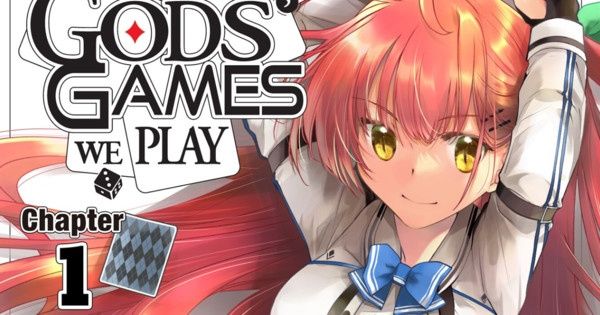
The Final Move: 'Gods' Games We Play' Manga Adaptation Concludes Its Run

📷 Image source: animenewsnetwork.com
A Divine Contest Reaches Its Conclusion
The manga adaptation of the popular light novel series wraps up its serialization
The pages have turned for the final time on one manga's journey through a world of celestial competition. According to animenewsnetwork.com, the manga adaptation of 'Gods' Games We Play' has officially ended its serialization. The report, published on January 5, 2026, confirms that the final chapter has been released, bringing the illustrated version of this high-stakes fantasy story to a close.
This marks the end of a specific creative interpretation of the source material, leaving fans to reflect on the adaptation's unique contributions to the franchise's growing universe. The conclusion naturally prompts questions about the legacy of the manga and the ongoing vitality of the original light novel series from which it sprang.
The Source of the Story
From prose to panels: tracing the adaptation's origins
The manga was, of course, an adaptation of the light novel series 'Kami-tachi no Ryouriban' written by Kei Sazane and illustrated by Toiro Tomose. The original work, which translates to 'Gods' Games We Play,' established the core premise that the manga would later visualize. It is a world where deities, bored with eternity, create elaborate games and challenges for their own amusement, often with humanity caught in the middle.
The light novels, published by Fujimi Shobo under their Fujimi Fantasia Bunko imprint, provided the foundational plot, characters, and intricate game systems. The manga's task was to translate these textual descriptions of divine arenas and complex rules into compelling sequential art, a challenge that defined its entire run.
The Creative Team Behind the Adaptation
The artists who brought the gods' games to life
The visual translation of this world was handled by a specific creative duo. The manga adaptation was illustrated by neco, with composition assistance from Akiyoshi Ohta. This partnership was responsible for character designs, page layouts, and the overall artistic tone that distinguished the manga from the light novel's illustrations by Toiro Tomose.
Their work involved not just drawing characters, but also depicting the often surreal and logic-bending game environments concocted by the gods. Every panel had to communicate both the strategic tension of the contests and the overwhelming power of the divine beings orchestrating them, a balance that required consistent artistic vision throughout the serialization.
Serialization History and Platform
Where readers followed the story
The manga found its home in a major publication. According to the report from animenewsnetwork.com, it was serialized in Kodansha's Monthly Shonen Magazine. This platform placed it alongside other popular shonen titles, exposing the story to a broad readership interested in action, strategy, and fantasy narratives.
The monthly release schedule meant readers received substantial chapters, allowing for the development of complex game scenarios within each installment. The magazine's reach was a significant factor in building the manga's audience, providing a steady, periodic engagement with the unfolding divine contests until the final chapter was delivered.
The Plot's Core Appeal
What defined the narrative of 'Gods' Games We Play'
At its heart, the story explored a fascinating and perilous dynamic. The gods, in their search for entertainment, devise games that mortals are compelled to participate in, often with their lives or souls on the line. The protagonist, like others, is thrust into this relentless system where victory requires outwitting omnipotent beings at their own arbitrary games.
The central appeal lay in the 'how' rather than the 'what.' Readers were drawn into the intricate puzzle-solving and strategic innovation required to survive games where the rules could be unfair or even paradoxical. It was a narrative built on intellectual tension and desperate ingenuity, with the manga's art serving to heighten the stakes and clarify the often-complex game mechanics.
The Distinction Between Adaptation and Source
Understanding what ends and what continues
It is crucial to distinguish between the concluded project and the ongoing one. The announcement specifically concerns the manga adaptation. The original light novel series by Kei Sazane remains separate and, according to available information, is not necessarily concluded by this manga's end.
This is a common but important distinction in media franchises. An adaptation's conclusion reflects the completion of a specific artistic retelling, not necessarily the end of the core story. The light novels may continue to explore new arcs, characters, and divine games, meaning the world of 'Gods' Games We Play' itself is not shutting down, merely one of its windows.
The Role of Manga in Media Ecosystems
How adaptations serve and expand a franchise
A manga adaptation like this serves multiple purposes within a franchise's ecosystem. For existing light novel readers, it offers a new visual perspective on familiar characters and events. For new audiences, it acts as a more accessible, visually-driven entry point into the story that might lead them to seek out the original novels.
Furthermore, a successful manga can significantly boost the profile of the source material, driving sales and broadening fan engagement. It tests the story's appeal in a different format and demographic. The conclusion of this adaptation provides a complete, bounded story for manga-only fans, while also marking a specific chapter in the franchise's overall history.
Legacy and Fan Response
Looking back at the completed work
With the serialization complete, the entire work now exists as a finished body of art. Readers can revisit it from beginning to end, assessing the full narrative arc and the consistency of its artistic execution. The manga's legacy will be judged on how effectively it captured the spirit of the light novels and whether it stood as a compelling work in its own right.
Fan response will likely be mixed, as it often is with conclusions. Some will appreciate having a complete story, while others will mourn the end of a monthly ritual. The ultimate test is whether the adaptation fostered a deeper appreciation for the world of 'Gods' Games We Play' and if its final chapter provided a satisfying sense of closure to the journey it undertook.
What Comes After The Final Page?
The future for the franchise and its fans
The end of the manga adaptation does not mean silence for the franchise. Attention will naturally shift back to the ongoing light novel series, where the core narrative continues to evolve. There is also always potential for other media adaptations, though none are indicated by the current report from animenewsnetwork.com.
For now, fans are left with a complete manga series to collect, reread, and discuss. The conclusion invites a retrospective analysis of how the adaptation handled key plot points from the novels and where it might have carved its own path. It represents not an extinction, but a completion—a full set of volumes on the shelf that tells a specific version of a story that continues to be told elsewhere, in the prose that started it all.
#GodsGamesWePlay #Manga #MangaEnding #LightNovel #MonthlyShonenMagazine


