

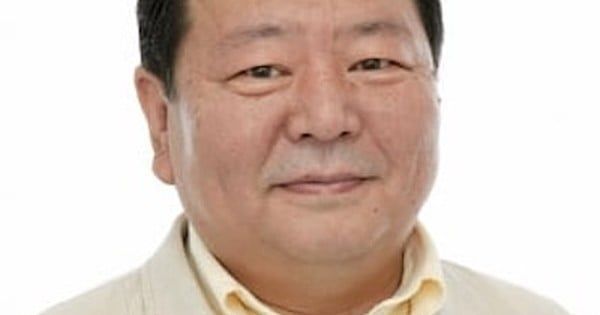
The Voice of Chaos Silenced: Kōzō Shioya, Who Brought Dragon Ball's Majin Buu to Life, Dies at 71

📷 Image source: animenewsnetwork.com
A Legendary Voice Falls Silent
The anime world mourns the loss of a distinctive talent
The voice that gave life to one of anime's most chaotic and memorable villains has been stilled. Kōzō Shioya, the Japanese voice actor renowned for his portrayal of the mischievous and powerful Majin Buu in the Dragon Ball franchise, has died. He was 71 years old.
According to the report from animenewsnetwork.com, published on 2026-01-28T07:02:33+00:00, the news was confirmed. The specific cause of his death was not disclosed in the initial announcement, highlighting a common practice of respecting the privacy of the bereaved family in such reports. His passing marks the end of a career that spanned decades and left an indelible mark on global pop culture through a single, iconic role.
The Many Faces of Buu
Shioya's vocal range defined a complex character
Kōzō Shioya's performance was not limited to a single version of Majin Buu. He voiced the character through its multiple, wildly different transformations in the Dragon Ball Z and Dragon Ball GT series. This required immense vocal flexibility, shifting from the childlike, high-pitched innocence of the initial "Innocent Buu" to the deeper, more sinister tones of "Super Buu" and the calm, yet terrifying, presence of "Kid Buu."
This vocal journey mirrored the character's narrative arc from a naive, cake-obsessed entity to the universe's most potent threat. Shioya’s ability to capture both the playful absurdity and the genuine menace of Buu was central to the character's enduring popularity. He made Buu feel unpredictably real, a being of pure id whose whims could shift from comedy to catastrophe in an instant, a challenge few voice actors could navigate so deftly.
Beyond the Pink Menace
A career of diverse and supporting roles
While Majin Buu remains his most globally recognized role, Shioya's career was extensive and varied within the Japanese voice acting industry, known as seiyū. His filmography includes roles in other major anime series. For instance, he voiced the character Dorry in the massively popular One Piece, a giant warrior from the land of Elbaf.
He also lent his voice to Brocken Jr. in the classic fighting anime Kinnikuman, and provided narration and various character voices for the long-running Sazae-san, a staple of Japanese television. These roles, often for large, boisterous, or distinctive characters, showcased a professional versatility that supported the lead actors, forming the essential vocal fabric of the anime world. His work exemplifies the depth of talent in supporting roles that build the immersive universes fans cherish.
The Seiyū Profession and Its Demands
Understanding the craft behind the character
The profession of a seiyū in Japan is highly competitive and requires a unique set of skills beyond just having a pleasant voice. Actors must master breath control, emotional projection, and often perform in isolation in a sound booth, reacting to pre-drawn animation. For a character like Buu, Shioya would have had to deliver exaggerated emotional states—from gleeful laughter to world-ending rage—with consistent energy and clarity, take after take.
The physicality of the performance, though unseen, is intense. Voice actors frequently use their entire bodies to generate the right sound, making the job physically demanding over long recording sessions. Shioya’s longevity in the field, contributing to major series over many years, is a testament to his professional stamina and dedication to the craft, often under tight production schedules and the high expectations of passionate fanbases.
Global Impact of a Localized Performance
How a Japanese voice resonates worldwide
Dragon Ball is a cultural phenomenon with a massive international audience. For many non-Japanese speaking fans, their first encounter with Majin Buu was through dubbed versions in English, Spanish, French, and numerous other languages. However, the original Japanese performance by Shioya served as the foundational blueprint for all these adaptations. The directors and actors for the dubs studied his delivery to understand the character's core essence—his pitch, rhythm, and emotional cues.
In the age of streaming and simulcasts, more fans than ever experience the original Japanese audio with subtitles, directly hearing Shioya's work. This has created a global appreciation for the original seiyū performances, making artists like Shioya internationally recognized figures. His death is thus felt not just in Japan, but across continents by millions who grew up with his voice as the definitive sound of a chaotic god.
The Legacy of Late-Career Iconicity
Achieving legendary status through a defining role
Kōzō Shioya's career presents a fascinating case of an actor becoming eternally linked to a single, iconic role later in his professional life. While he was a working seiyū for years, it was his casting as Majin Buu in the 1990s that catapulted him to a different level of recognition. This phenomenon is common in entertainment; an actor's body of work becomes crystallized in the public consciousness by one particularly resonant character.
For Shioya, this meant that for the last three decades of his life, his public identity was intertwined with a pink, shapeshifting being. He attended fan conventions, gave interviews, and participated in Dragon Ball video games and media, forever returning to the voice that made him famous. This legacy is double-edged: it guarantees immortality within fandom, but can also overshadow a lifetime of other contributions, a trade-off inherent in achieving such distinctive success.
The Mechanics of Voice Matching and Continuity
The challenge of preserving a character's sound
With Shioya's passing, a practical question for the industry arises: what happens to Majin Buu in future projects? Dragon Ball remains an active franchise with new video games, movies, and specials. The role of a seiyū is so personal that replacing them is a sensitive task. Studios may use archived voice clips from previous recordings for minor appearances, but for new dialogue, a new actor must be found.
This process involves careful auditions to match the unique timbre, pitch, and cadence Shioya established. It is not mere imitation, but an effort to capture the spirit of the performance while ensuring continuity for the audience. This has happened before in anime history with other legendary roles, and it is a solemn responsibility for the chosen successor, who must honor the original while making the role their own for the franchise's future.
A Generation of Voices Fading
Shioya's death in a broader industry context
The passing of Kōzō Shioya is part of a larger, inevitable transition within the anime industry. The seiyū who voiced characters in the seminal series of the 1980s and 1990s, the era that cemented anime's global popularity, are now aging. Each loss is a reminder of the passage of time and the mortal individuals behind immortal characters. This generational shift prompts both reflection on the classics and attention to the new voices rising to define the next era.
It also places increased importance on preservation—archiving interviews, behind-the-scenes footage, and celebrating the histories of these performers. Their work is not just entertainment; it is a key part of Japan's soft power and cultural export. The respect shown upon their passing, as seen in the widespread reporting of Shioya's death, underscores their significant cultural status.
The Unseen Labor of Supporting Actors
Valuing the ensemble that builds a story
Mainstream coverage often focuses on lead actors or franchise creators. However, the death of a prolific supporting actor like Shioya highlights the essential, yet frequently overlooked, network of talent that brings an anime world to life. These actors populate the universe with believable beings, from major antagonists like Buu to one-off comic relief characters. Their collective work creates the texture and depth that makes a fictional setting feel lived-in and authentic.
This event serves as a prompt to appreciate the broader cast list. For every Goku voiced by a superstar like Masako Nozawa, there is a Majin Buu, a Dorry, and a hundred other roles filled by dedicated professionals like Shioya. Their contributions are synergistic; the hero is only as compelling as the villain he faces, and Shioya provided one of the most memorable challenges in anime history.
Cultural Memory and Digital Immortality
How performances live on beyond the performer
In a digital age, Kōzō Shioya's performance as Majin Buu achieves a form of immortality. Through DVDs, streaming services, video games, and countless clips on social media platforms, his voice will continue to be heard by new generations of fans. This creates a permanent, accessible archive of his artistry. Unlike stage actors of the past, whose performances vanished after the final curtain, voice actors leave a precise and repeatable record of their work.
This digital legacy means that while the man is gone, the character remains eternally alive with his original voice. Future fans discovering Dragon Ball for the first time in 2030 or 2040 will still experience Shioya's unique interpretation. In this way, his creative contribution is permanently etched into global pop culture, a lasting testament to his skill that transcends his physical lifetime.
Perspektif Pembaca
The loss of an iconic voice actor makes us reflect on the intangible connections formed through storytelling. For many, these voices are the soundtrack to childhoods, formative years, or shared cultural moments.
We invite your perspective. When you think of a beloved animated character whose voice is inseparable from their identity, what makes that performance so special to you? Is it a unique vocal quality, a particular line delivery that stuck with you, or the sheer emotional authenticity the actor brought to a fictional being? Share your thoughts on what makes a voice acting performance truly timeless and how it shapes your connection to a character.
#KozoShioya #MajinBuu #DragonBall #Seiyuu #VoiceActor


