

From 8-Bit Gridiron to Silver Screen: The Surprising Journey of Tecmo Bowl's Film Adaptation

📷 Image source: animenewsnetwork.com
A Pixelated Legacy Gets the Hollywood Treatment
Tongal's Ambitious Plan to Transform a Gaming Relic
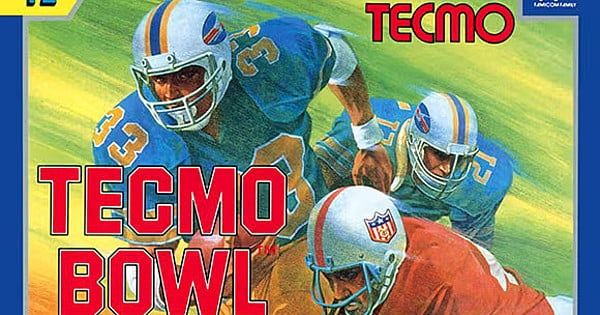
In a move that bridges decades of pop culture, the creative platform Tongal has announced plans to develop a feature film based on Koei Tecmo's classic 8-bit American football video game, Tecmo Bowl. The news, first reported by animenewsnetwork.com on February 7, 2026, signals a continued mining of nostalgic intellectual property for cinematic potential, but this source material presents unique challenges and opportunities. Unlike modern sports simulations, Tecmo Bowl is remembered for its simplified, fast-paced gameplay and a roster of players whose pixelated exploits became legendary in the late 1980s and early 1990s.
Tongal, which operates as a crowdsourced creative studio connecting brands with filmmakers and writers, will spearhead the development. The company's model typically involves sourcing concepts and talent from its global community, suggesting the film's direction may emerge from a wide pool of ideas rather than a single top-down vision. This approach is distinct from traditional studio development and could result in a more unconventional take on the sports film genre. The original game was developed by Tecmo (now part of Koei Tecmo) and became a defining title for the Nintendo Entertainment System (NES), known for its accessible play and memorable, if not entirely accurate, digital athletes.
Deconstructing the Source: What Was Tecmo Bowl?
The Mechanics of a Digital Football Classic
For the uninitiated, Tecmo Bowl was not a simulation in the modern sense. Released for arcades in 1987 and the NES in 1989, it featured a select group of 12 National Football League (NFL) teams and their corresponding star players, though without official NFL licensing for the NES version, leading to the use of city names and player numbers only. The game's mechanics were famously straightforward: a simple play selection for offense and defense, followed by execution that relied heavily on player speed and a few special moves. Its legacy is built on this addictive, pick-up-and-play simplicity and the exaggerated abilities of its digital stars.
The game's technical limitations forced creative abstractions. A 100-yard (91-meter) football field was condensed into a side-scrolling view. Player statistics were boiled down to essentially speed and strength. The result was a fast, often chaotic experience that prioritized fun over realism. This abstraction is the core creative puzzle for the filmmakers: how to translate a feeling of energetic, simplified sport into a narrative feature film. The game itself contained no story mode or characters beyond the athletes on the field, leaving the plot a completely blank slate.
The Five Key Numbers Defining the Challenge
A Framework for Understanding the Adaptation
This article will use a 'Five Key Numbers' framework to analyze the prospects and hurdles of this unusual adaptation. The numbers are not speculative data points, but lenses through which to view the factual information provided by the announcement and the game's history. They help structure the immense creative leap from a minimalistic video game to a full-length motion picture.
Each number corresponds to a fundamental aspect of the project, from its historical context to its narrative void. By examining these figures, we can move beyond simple surprise at the announcement and into a substantive analysis of what such a film could be, the precedents it might follow, and the inherent risks of adapting a property with almost no built-in narrative. This approach allows for a detailed exploration where traditional reporting might only scratch the surface of the oddity of the news.
Number 1: The 8-Bit Aesthetic
Visual Language and Cinematic Translation
The first defining number is '8-bit,' referring to the processing power and graphical style of the original game. The visual language of Tecmo Bowl is one of large, blocky pixels, a limited color palette, and repetitive animation cycles. A direct, literal translation of this aesthetic to film would be a highly stylized choice, perhaps akin to the CGI-pixel hybrid used in movies like 'Pixels' (2015) or the more artistic approach of 'The Lego Movie.' The challenge is to evoke nostalgia without seeming gimmicky or alienating audiences unfamiliar with the source material.
Alternatively, the filmmakers could use the 8-bit concept as a thematic springboard rather than a visual mandate. The story could be set in the late 1980s, the era of the game's peak popularity, using its aesthetics in title sequences, transitions, or fantasy sequences. The '8-bit' number thus represents the core tension between homage and accessibility. It forces the question: should the film look like the game, or should it feel like the experience of playing the game? The answer will fundamentally shape the project's artistic direction.
Number 2: The 12 Original Teams
Cast, Scope, and Legal Foundations
Tecmo Bowl on the NES featured only 12 teams, a fraction of the NFL's size at the time. This limitation, born from cartridge memory constraints, now presents a narrative opportunity. A film could focus on a fictional championship between a handful of these teams, allowing for deeper character development within a manageable scope. The teams were based in major American cities like Chicago, San Francisco, and New York, providing immediate geographic identity. However, the lack of official NFL licensing in the original game creates a complex legal landscape for the film.
According to the announcement, the film is based on Koei Tecmo's game, not directly on the NFL. This means the production must carefully navigate trademarks related to team names, logos, and uniforms. They may create fictionalized analogues, much like the game did, or they may seek a new licensing agreement with the NFL—a costly and uncertain endeavor. The '12 teams' number therefore symbolizes the project's need to build a believable sports world while operating within significant intellectual property boundaries that are more tangled than those of a typical sports drama.
Number 3: The Zero-Page Script
The Absolute Narrative Void
Perhaps the most daunting number is zero. Tecmo Bowl provided zero pages of script, zero defined characters beyond athletic avatars, and zero narrative premise outside of winning a football game. This complete lack of inherent story is the project's biggest hurdle and its greatest creative freedom. The filmmakers must invent everything: protagonists, antagonists, personal stakes, and thematic depth. They cannot rely on a known plot like a 'Super Mario Bros.' or a built-in universe like 'Pokémon.'
This void pushes the adaptation firmly into the realm of 'inspired by' rather than 'based on.' The film will likely use the game as a tonal and aesthetic foundation for an original sports story. Potential angles could include a period piece about the rise of video games in sports culture, a meta-story about a programmer creating the game, or a straightforward underdog team story where the game's style influences the football choreography. The 'zero' forces Tongal's community to function as pure creators, not adapters, making the crowdsourcing model particularly relevant.
Number 4: The 30-Plus Year Gap
Nostalgia, Modern Audiences, and Period Setting
Over three decades have passed since Tecmo Bowl's heyday. This gap defines the primary target audience: adults who played the game in their youth, now in their 30s, 40s, and beyond. The film's success will depend on tapping into potent nostalgia for a simpler era of gaming and sports fandom. This nostalgia is not just for the game, but for the late-80s/early-90s cultural moment. A period setting seems a strong possibility, leveraging fashion, music, and a pre-internet sensibility to enhance the nostalgic appeal.
However, this long gap also creates a barrier for younger audiences with no connection to the property. The film must therefore work as a compelling sports drama first and a deep-cut reference second. It must explain its own context without becoming a history lesson. The '30-plus years' number highlights the balancing act between servicing a dedicated niche and crafting a story with universal sports movie themes—teamwork, perseverance, and redemption—that can resonate with any viewer, regardless of their gaming history.
Number 5: The Crowdsourced Creative Engine
Tongal's Model as a Wild Card Variable
The fifth key number is 'one,' representing the single, but unconventional, creative engine behind the project: Tongal's crowdsourced platform. Unlike a studio hiring a known director-writer team, Tongal's process is open and iterative. Ideas, pitches, and scripts can come from its global network of creators. This model is relatively untested for major feature film adaptations of this nature and introduces a significant variable. It could yield a fresh, unexpected take unburdened by Hollywood conventions, or it could result in a disjointed development process.
The announcement, as reported by animenewsnetwork.com, does not specify a writer, director, or star attachment, which is typical for projects at this early stage. The success will hinge on Tongal's ability to curate and unify the best ideas from its crowd into a coherent vision. This method contrasts sharply with the top-down development of most video game films and could either be the project's innovative strength or its Achilles' heel. The model itself becomes a part of the story, testing whether a decentralized creative process can successfully tackle a property with such a stark narrative void.
International Precedents and the Sports Film Genre
Global Context for a Very American Game
While Tecmo Bowl is an American football game, its film adaptation enters a global marketplace for both sports cinema and video game adaptations. Sports films from other countries, like Japan's 'Slam Dunk' or the UK's 'Bend It Like Beckham,' show how universal narratives can transcend the specific sport. The filmmakers may look to these examples to find emotional cores that travel well. Furthermore, the history of video game adaptations is fraught with failure, but recent entries like 'The Last of Us' series have shown that success lies in prioritizing character and theme over slavish recreation of gameplay.
Internationally, American football itself has a niche following. A film purely about the sport may have limited appeal abroad. Therefore, the adaptation will likely need to embed the football action within a more relatable human story—perhaps about fandom, creation, or family—to gain traction outside North America. The global box office is a crucial consideration for any feature film's financial viability, pushing the creative team to find angles that resonate beyond the gridiron.
Mechanisms of Adaptation: How Will They Do It?
Potential Pathways from Console to Cinema
The 'how' of this adaptation is its central mystery. One plausible mechanism is a story set in the world of the game's creation, following the developers at Tecmo as they navigate the challenges of early sports gaming, possibly culminating in the game's launch. This would be a period drama about innovation and pop culture. Another mechanism is a direct, stylized translation where the film's reality bends to match the game's rules—think characters moving with exaggerated speed or the film incorporating visual elements like the game's iconic play selection menu and status bars.
A third, more abstract mechanism would use the game as a metaphorical framework. For instance, a story about a struggling high school or minor league team whose journey mirrors the simplified, deterministic struggle of a Tecmo Bowl season. The game's mechanics—pick a play, execute—could mirror the characters' straightforward, determined approach to overcoming odds. The chosen mechanism will determine whether the film feels like a clever expansion of the source material or a tenuous marketing exercise using a familiar name.
Risks, Limitations, and the Privacy of Nostalgia
The Challenges Inherent in the Project
The project faces clear risks. The primary limitation is the narrow, aging fanbase. While passionate, it may not be large enough to guarantee box office success, requiring significant outreach to general audiences. Another risk is the potential for creative dissonance; a film that leans too hard into video game aesthetics may fail as a drama, while one that abandons the game's spirit may alienate core fans. Furthermore, the crowdsourced development model, while innovative, could lead to production delays or conflicts if a clear creative leader does not emerge.
An interesting, less-discussed limitation involves the privacy of nostalgic memory. For fans, Tecmo Bowl exists in a personal space of childhood or adolescence. A film defines and codifies that memory, potentially conflicting with individual recollections and feelings. A failed adaptation could tarnish the game's legacy for some, making this a sensitive endeavor. The filmmakers must respect the source while boldly reimagining it, a difficult line to walk when the source is so abstract and personally cherished.
Perspektif Pembaca
The announcement of a Tecmo Bowl film is a fascinating case study in how far the net for adaptable intellectual property can be cast. It raises fundamental questions about the nature of inspiration and the minimum narrative elements required to build a feature film.
Given the complete lack of a built-in story, what should be the core narrative focus of a Tecmo Bowl movie? Should it primarily be a period-piece sports drama set in the era of the game's release, a meta-commentary on the creation and culture of early sports gaming, or a modern story that uses the game's stylized football as a visual motif for an underdog tale? The choice will define whether this project becomes a curious footnote or a genuinely innovative entry in both the sports and video game adaptation genres.
#TecmoBowl #VideoGameMovie #NES #KoeiTecmo #FilmAdaptation #Nostalgia


