

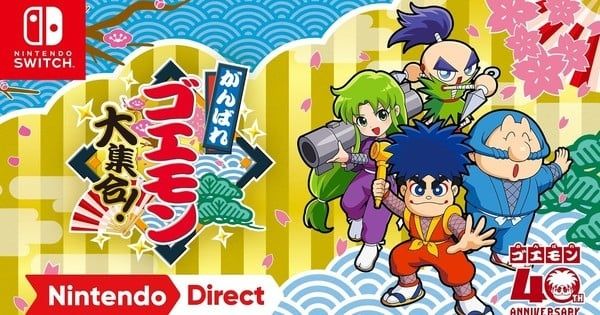
Konami Revives Cult Classic with Ganbare Goemon Collection Launching This Summer

📷 Image source: animenewsnetwork.com
A Legend Returns
Konami Announces Definitive Retro Compilation
Konami has officially announced the release of a comprehensive game collection dedicated to its long-dormant Ganbare Goemon series. Titled simply the 'Ganbare Goemon Game Collection,' the package is scheduled to launch on July 2, according to the publisher's announcement on animenewsnetwork.com, dated 2026-02-06T05:35:27+00:00. This marks a significant revival for a franchise that has been largely absent from the modern gaming landscape, sparking immediate excitement among retro gaming enthusiasts and fans of Japanese folklore-inspired adventures.
The collection promises to bundle several classic titles from the series, which first debuted in arcades and on home consoles like the Super Famicom and Nintendo 64. For the uninitiated, Ganbare Goemon—known as 'Legend of the Mystical Ninja' in Western markets—is a beloved series of action-adventure games starring the heroic thief Goemon and his eclectic companions. The games are renowned for their vibrant, anachronistic blend of Edo-period Japan with futuristic elements, slapstick humor, and inventive gameplay that mixes side-scrolling action with exploration and mini-games.
What's in the Box?
Dissecting the Collection's Contents
While the exact, complete list of included games has not been fully detailed in the initial announcement, the report confirms the collection will feature multiple titles from the series' heyday. Historically, the core entries include 'Ganbare Goemon: Yukihime Kyūshutsu Emaki' (The Legend of the Mystical Ninja) and its sequels, which introduced larger worlds and character-switching mechanics. The later Nintendo 64 titles, known for their expansive 3D environments and local multiplayer mayhem, are also strong candidates for inclusion.
The value proposition for fans hinges on how Konami handles this compilation. A bare-bones emulation package would be met with disappointment, whereas a collection featuring quality-of-life improvements, such as save states, rewind functions, and a robust museum mode with original artwork and developer commentary, would signify a true celebration of the IP. The publisher's recent track record with classic collections is mixed, leaving the community cautiously optimistic about the final product's curation and presentation.
The Goemon Legacy
Understanding a Cult Phenomenon
To appreciate this announcement, one must understand Goemon's unique place in gaming history. Debuting in 1986, the series carved a niche distinct from other ninja franchises like 'Ninja Gaiden' or 'Shinobi.' Its tone was decidedly more whimsical and less severe, filled with anachronisms like Goemon riding a giant robotic carp (Impact) or using a pipe to shoot coins as a primary weapon. This created a charming, irreverent identity that resonated deeply with Japanese audiences and cultivated a dedicated, if smaller, international following.
The cultural fusion is a key part of its appeal. The games are steeped in references to Japanese history and folklore, featuring figures like the historical thief Ishikawa Goemon and the ninja Kirigakure Saizō, while also incorporating giant mecha battles and parody elements. This blend made the series a fascinating cultural export, though its humor and specific references sometimes faced challenges in translation, contributing to its 'cult classic' status outside Japan rather than mainstream blockbuster success.
Konami's Retro Strategy
A Broader Trend in Game Preservation
This Goemon collection is not an isolated move but part of Konami's ongoing, if sometimes inconsistent, effort to monetize its deep back catalog. In recent years, the company has released collections for iconic series like Castlevania, Contra, and TwinBee. These releases serve a dual purpose: they generate revenue from existing intellectual property with relatively low development costs and help maintain brand relevance for franchises that are no longer producing new mainline entries.
From an industry-wide perspective, such collections are crucial for game preservation. As original hardware ages and becomes scarce, legal, accessible ways to experience these titles are vital for cultural history. However, the quality of these efforts varies significantly between publishers. Some offer meticulously crafted experiences with historical context, while others provide basic, functional emulation. The gaming community will be watching closely to see which category the Ganbare Goemon collection falls into, as it will signal Konami's current commitment to its legacy content beyond its most famous franchises.
The Localization Question
A Hurdle for International Fans
A major point of discussion and concern within the global fanbase is the issue of localization. While several Goemon games were officially translated and released in North America and Europe in the 1990s, many entries remained exclusive to Japan. This includes beloved titles like 'Ganbare Goemon: Uchū Kaizoku Akogingu' for the Super Famicom and the sequel 'Ganbare Goemon 2: Kiteretsu Shōgun Magginesu.'
Will Konami invest in translating these previously Japan-only games for a worldwide audience? The announcement did not specify, leaving a significant information gap. The cost and effort of translating full games—including text, voice acting, and culturally specific jokes—is non-trivial. Konami may opt to include them only in their original Japanese, with perhaps a basic menu translation, or skip them entirely in favor of the already-localized titles. This decision will greatly impact the collection's appeal to non-Japanese speaking fans who have waited decades to officially experience these missing chapters.
Technical Expectations and Modern Features
Beyond Simple Emulation
The technical execution of the collection will be paramount. Modern audiences expect certain standard features from retro re-releases that were absent from the original cartridge-based experiences. The most requested features include customizable display filters (to mimic CRT scanlines or provide sharp pixel rendering), control remapping, and the aforementioned save states and rewind functions. These features lower the barrier to entry, making often-difficult classic games more approachable.
Furthermore, online functionality could be a game-changer. While the original games featured legendary local multiplayer modes, the potential for online co-op—allowing friends to play through the adventures of Goemon and Ebisumaru together over the internet—would be a massive selling point. However, implementing netcode for older games is complex. Konami's announcement is silent on these details, leaving the scope of modern enhancements a subject of speculation and hope within the community until more concrete information is released.
Market Impact and Target Audience
Who Is This Collection For?
The primary audience for this collection is unmistakably existing fans—those who have nostalgic memories of renting 'The Legend of the Mystical Ninja' from a video store or importing Japanese cartridges. For them, this is a convenient and official way to revisit childhood favorites. The secondary audience is the retro-curious modern gamer and historians interested in experiencing a seminal, quirky piece of game design history they may have missed.
Financially, the success of niche collections like this one helps publishers gauge ongoing interest in a franchise. Strong sales can sometimes greenlight more ambitious projects, such as a full-fledged remake or even a new entry. Conversely, poor sales can further cement a series as a relic of the past. Konami is likely testing the waters with this compilation, using it as a low-risk metric to measure the commercial viability of the Ganbare Goemon brand in the current market before committing to any larger, more expensive projects.
Comparative Analysis: Goemon vs. Other Retro Revivals
Standing Out in a Crowded Field
The retro compilation market has become increasingly crowded. Companies like Capcom, Sega, and Square Enix regularly release collections of their classic titles. For the Ganbare Goemon collection to stand out, it must leverage the series' unique personality. Unlike the grim atmosphere of Castlevania or the pure run-and-gun action of Contra, Goemon offers humor, exploration, and cultural specificity. Highlighting these differences in marketing will be key.
Furthermore, the package's completeness will be judged against high-water marks set by competitors. Collections like Capcom's 'Street Fighter 30th Anniversary Collection' or M2's 'Sega Ages' line are praised for their exhaustive features and careful emulation. If Konami's offering feels sparse or technically flawed by comparison, it will be criticized more harshly. The shadow of these well-received compilations sets a high bar that Konami must consciously strive to meet, not just for Goemon fans, but to maintain credibility in the classic games space.
Potential Pitfalls and Community Concerns
What Could Go Wrong?
History provides reasons for caution. Konami and other publishers have occasionally released subpar collections plagued by input lag, poor emulation accuracy, or a lack of meaningful extras. The most common fear is that the collection will be a quick, cash-grab port with minimal effort, failing to do justice to the source material. Another concern is regional locking or staggered releases, where Japan gets a more complete edition than other regions.
There is also the risk of missed opportunities. The Goemon series is rich with supplementary material—soundtracks, promotional art, and manga adaptations. Omitting a digital museum that archives these elements would be a lost chance to create the definitive historical resource for the franchise. The community's hope is for a loving tribute, but their experience has taught them to temper expectations until detailed previews and reviews confirm the collection's quality and scope, making the period between announcement and release one of anxious scrutiny.
The Road to July 2
What to Watch For Next
Between now and the July 2 release date, fans and analysts will be monitoring for several key pieces of information. The first is a formal, detailed list of included games, which will confirm or dash hopes about the inclusion of Japan-only titles. Next will be the announcement of specific modern features, such as online play, museum content, and quality-of-life enhancements. Pricing and platform announcements (beyond the initial confirmation) are also critical; a multi-platform release on current Nintendo, PlayStation, Xbox, and PC systems would maximize reach.
Finally, the marketing tone will be revealing. Will Konami treat this as a premium product for enthusiasts or a budget-friendly nostalgia trip? Trailers that highlight the series' unique charm, its historical context, and the care put into the compilation will build confidence. Conversely, silent treatment or minimal promotion could indicate lower internal priority. The coming months will determine whether this collection is a mere footnote or a landmark release in the ongoing effort to preserve and celebrate video game history.
Perspektif Pembaca
The revival of a series like Ganbare Goemon raises broader questions about how we value and access gaming's past. For many, these games are more than old code; they are childhood memories and cultural artifacts.
What has been your experience with game preservation? Have you found official collections like this to be satisfying ways to revisit classics, or do you feel they often fall short of honoring the original experience? Share your perspective on what makes a retro game compilation truly worthwhile, whether it's flawless emulation, abundant bonus features, or simply the joy of having legitimate access to forgotten gems.
#GanbareGoemon #Konami #RetroGaming #GameCollection #LegendOfTheMysticalNinja


