

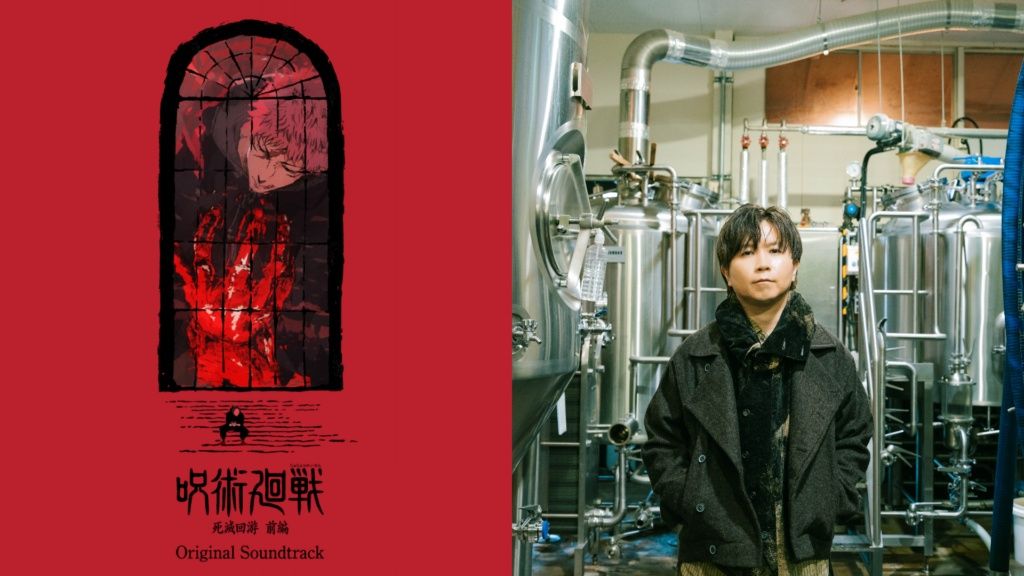
Yoshimasa Terui's Musical Sorcery: The Culling Game Soundtrack Emerges

📷 Image source: static.animecorner.me
The Sound of Battle Begins
A New Chapter in Anime Scoring
The sonic landscape of one of anime's most intense story arcs is now available for immersion. According to animecorner.me, the official soundtrack for 'Jujutsu Kaisen: The Culling Game Part 1,' composed by Yoshimasa Terui, has been released on major streaming platforms. This marks the first full musical suite from the anime's highly anticipated adaptation of the manga's pivotal 'Culling Game' storyline.
This release follows the premiere of the anime's second season, which began airing the 'Culling Game' arc in late 2025. The soundtrack serves as the auditory backbone for a narrative defined by high-stakes, magical battles and complex character motivations. For fans, it offers a chance to relive the tension and drama of the series away from the screen.
Meet the Composer: Yoshimasa Terui
The Architect of Jujutsu Kaisen's Sound
Yoshimasa Terui is not a newcomer to the world of 'Jujutsu Kaisen.' He has been the primary composer for the anime since its inception, crafting the distinctive musical identity that blends traditional Japanese instrumentation with aggressive modern orchestration and electronic elements. His work is credited with amplifying the series' core themes of cursed energy, existential dread, and visceral combat.
Before his defining work on 'Jujutsu Kaisen,' Terui built a reputation through scores for other anime and video games, developing a style that is both atmospheric and powerfully kinetic. His approach involves creating distinct leitmotifs, or recurring musical themes, for characters and concepts, a technique that adds a layer of narrative depth to the soundtrack. This album represents the culmination of his evolving work on the series' most chaotic arc.
Decoding 'The Culling Game' Arc
The Narrative Canvas for the Score
Understanding the soundtrack requires context for the story it accompanies. The 'Culling Game' is a central saga in Gege Akutami's 'Jujutsu Kaisen' manga, a deadly, rule-bound battle royale forced upon sorcerers and cursed spirit users. Participants are thrust into designated colonies across Japan and must accumulate points by defeating others, with severe consequences for failure. The arc is renowned for its rapid escalation of power scales, moral ambiguity, and relentless action.
This narrative framework creates unique demands for a composer. The score must mirror the claustrophobic tension within the game's barriers, the explosive chaos of sorcery-fueled clashes, and the poignant character moments that occur amidst the carnage. Terui's music functions as an essential narrative tool, guiding the audience's emotional response to a plot where alliances are fragile and survival is never guaranteed.
Album Structure and Release Strategy
From Digital Streams to Physical Collection
The current release, as reported by animecorner.me on 2026-02-02T21:42:36+00:00, is a digital streaming release of the Part 1 soundtrack. This allows for immediate, global access to the music on services like Spotify, Apple Music, and YouTube Music. The strategy caters to the modern consumption habit of integrating favorite scores into personal playlists, whether for study, work, or exercise.
However, a more complete experience is on the horizon. The report confirms that the full, official album will receive a comprehensive release in April 2026. This physical and likely high-resolution digital release is expected to include additional tracks, extended suites, and detailed liner notes. For audiophiles and collectors, this April drop represents the definitive version of Terui's work for this portion of the arc.
Musical Themes and Instrumentation
How Sound Defines Sorcery
Terui's score for 'The Culling Game' is anticipated to expand on his established palette. The composer frequently uses the shakuhachi (a Japanese bamboo flute) and taiko drums to root the music in a cultural context that mirrors the series' setting. These are layered with sweeping, often dissonant, string arrangements to create a sense of epic scale and underlying horror.
Contrasting these traditional elements are pulsing synthesizers, distorted guitars, and complex percussion programming. This fusion represents the clash between ancient cursed techniques and the modern world where they are deployed. Specific character themes, such as the chaotic melody for Yuji Itadori or the more calculated, cold motifs for antagonists, are expected to evolve in this arc to reflect their desperate growth and changing circumstances within the game's deadly rules.
The Role of Sound in Modern Anime
Beyond Background Music
The release of a high-profile soundtrack like Terui's highlights the elevated role of music in contemporary anime production. No longer mere background filler, a series' score is a critical pillar of its identity, marketing, and fan engagement. Successful soundtracks can achieve chart success independently, introduce viewers to classical or niche music genres, and define the emotional memory of a series for years.
This trend is driven by both artistic ambition and commercial strategy. Streaming data from soundtrack releases provides studios with valuable metrics on fan engagement. Furthermore, iconic themes become instantly recognizable, strengthening brand identity across games, merchandise, and promotional material. A powerful score is now seen as indispensable for a flagship title like 'Jujutsu Kaisen.'
International Reception and Global Trends
A Soundtrack Without Borders
The simultaneous global streaming release underscores anime's status as a worldwide cultural export. Fans from Tokyo to Toronto can access the music at the same moment, fostering a shared, global fan experience. This immediacy breaks down the traditional delay between a show's domestic Japanese broadcast and its international ancillary releases.
This global audience influences composition itself. While retaining a distinct Japanese acoustic signature, composers like Terui are consciously crafting music that resonates with international sensibilities shaped by Hollywood film scores, video game music, and global pop. The result is a hybrid sound that feels both uniquely tied to its source material and accessible to a listener with no knowledge of the Japanese language, relying on universal emotional cues in the music.
Comparative Analysis: Anime's Musical Giants
Terui's Place in the Pantheon
Yoshimasa Terui's work on 'Jujutsu Kaisen' inevitably invites comparison with other legendary anime composers. The complex, character-driven leitmotifs recall the work of Yuki Kajiura ('Demon Slayer', 'Sword Art Online'), though Terui's sound is generally more percussive and less reliant on ethereal vocals. His blend of orchestral and electronic elements shares DNA with the scores of Hiroyuki Sawano ('Attack on Titan'), albeit often with a tighter, more focused instrumental palette.
What sets Terui's 'Jujutsu Kaisen' score apart is its specific marriage to the series' tone. Where 'Attack on Titan' evokes despairing grandeur and 'Demon Slayer' leans into tragic beauty, 'Jujutsu Kaisen' under Terui is raw, frantic, and mechanically intricate, mirroring the precise yet brutal system of cursed energy. This distinct audio identity helps the franchise stand out in a crowded field of action-oriented shonen anime.
The Business of Anime Soundtracks
More Than Just an Album
The release cycle for this soundtrack reveals the multi-layered business model of modern anime. The initial digital streaming release generates immediate buzz, sustains conversation between anime episodes, and contributes to royalty streams. The subsequent full album release in April targets the dedicated collector market, often including premium packaging and exclusive content that commands a higher price point.
Furthermore, individual tracks are licensed for use in promotional trailers, video games, and live events. The music's popularity can drive sales of sheet music for musicians and inspire official live concerts, which have become major revenue-generating events for popular series. Thus, a soundtrack is a core asset, monetized across multiple platforms and formats throughout a franchise's lifecycle.
Technical and Artistic Challenges
Scoring Chaos and Character
Composing for an arc like 'The Culling Game' presents distinct challenges. The narrative involves multiple simultaneous battles across different locations with shifting participant rosters. The music must provide continuity while also distinguishing the mood of each confrontation. Terui has to score both large-scale, destructive clashes and intimate, strategic dialogues without causing auditory whiplash for the viewer.
Another challenge is pacing. The arc is notoriously fast-paced in the manga, with minimal downtime. The score must match this intensity without becoming monotonous, requiring careful dynamic range—from quiet, suspenseful cues to overwhelming crescendos. The composer must also decide when to hold back, using silence or minimal sound design to make the moments when the music swells truly impactful, a technique crucial for highlighting key emotional or plot turns.
Anticipating the Full Album
What April's Release May Hold
While the streaming release provides the core listening experience, the full album slated for April 2026 promises a deeper dive. Typically, such releases include bonus tracks not featured in the streaming version. These could be early demo concepts, alternative mixes of key themes, or pieces composed for scenes that were ultimately trimmed for broadcast. Such content is invaluable for understanding the composer's creative process.
The physical edition will likely offer superior audio fidelity for those with high-end equipment, presenting the score as it was heard in the studio. Furthermore, comprehensive liner notes may provide Terui's own commentary on specific tracks, revealing his inspirations and the specific narrative beats he aimed to accentuate. This transforms the album from a simple collection of music into a companion art object for the series' most devoted followers.
Perspektif Pembaca
The music of an anime often becomes the unofficial soundtrack to fans' own lives, evoking memories of specific scenes, characters, and emotions long after the credits roll. For a series as viscerally impactful as 'Jujutsu Kaisen,' the score is a direct conduit to that experience.
What is your personal relationship with anime soundtracks? Do you seek them out for focused work, as a nostalgic reminder of favorite stories, or perhaps as an introduction to new genres of music? Share your perspective on how a powerful score changes your connection to an animated series, and whether you find yourself appreciating the composition more upon standalone listens, away from the visuals it was designed to accompany.
#JujutsuKaisen #YoshimasaTerui #CullingGame #AnimeSoundtrack #JJK


